The price, and the arithmetic underneath it
Every journey on this site carries a from-price. This page explains what sits underneath it: the tier your country falls into, what a room, a car, a guide and a gate ticket cost before we add anything, and the six things a cheaper quote has usually left out.
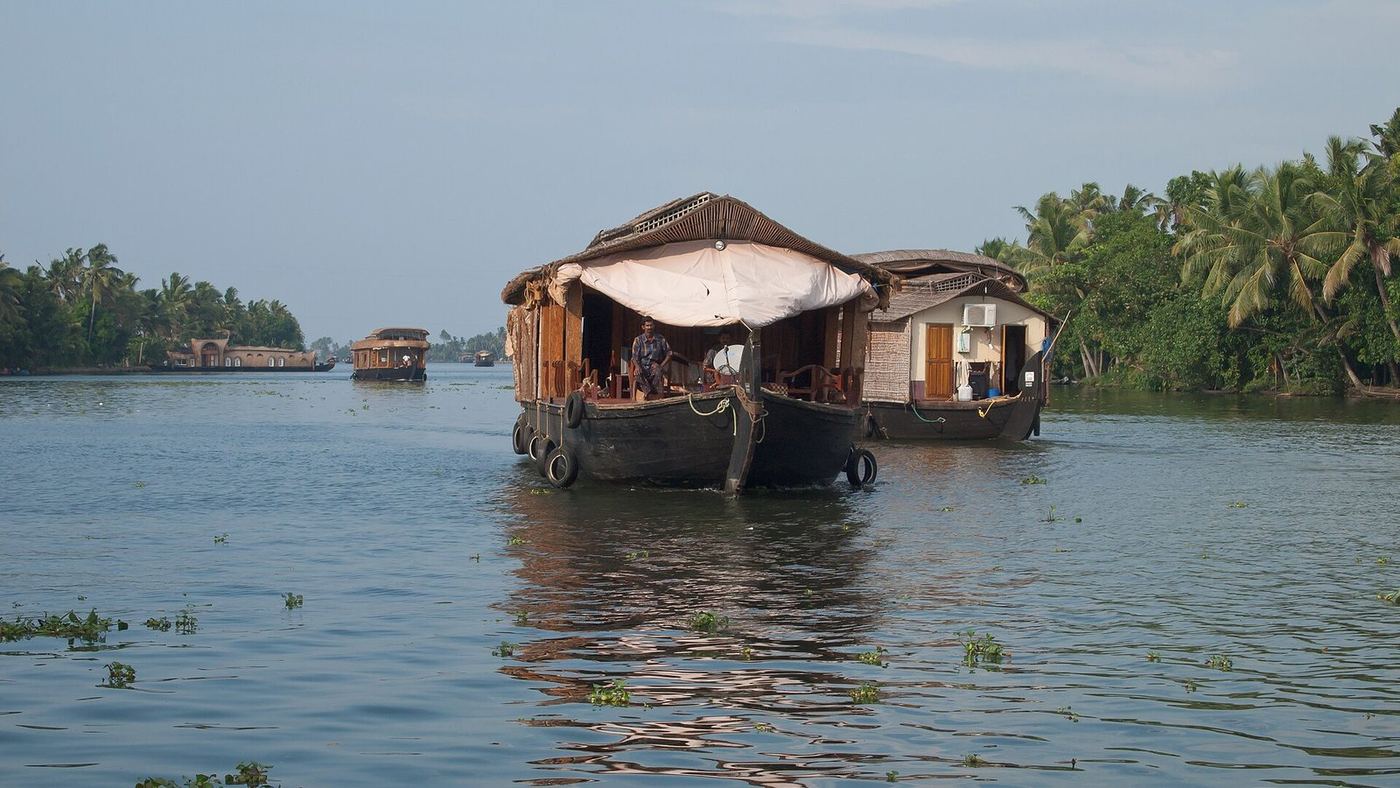
What a day costs, by country
Asia is not one price. A day in Vietnam and a day in Japan differ by a factor of roughly two and a half, and no amount of operator cleverness closes that gap, because the gap is the room rate, the wage bill and the government fee.
The figures below are per person, per day, twin share, land only, for a party of four, at the middle of our band. They are the numbers our own quotes are built from. A journey that crosses two tiers lands between them, weighted by where the nights fall: Japan and Vietnam in one voyage sits nearer Japan, because Japan holds the expensive half of the itinerary.
| Tier | Countries | USD per person per day | What the day holds |
|---|---|---|---|
| A | Japan, Bhutan | 480 – 650 | A four-star city room at Tokyo or Kyoto rates, reserved rail rather than standing, a national guide who is licensed and paid as a professional. In Bhutan, USD 100 per adult per night of Sustainable Development Fee before a single room is booked. |
| B | South Korea, Taiwan, Oman, Singapore | 340 – 460 | Good hotels at first-world rates, high-speed rail or a private 4x4 where the road demands one, and guiding that is scarcer than in Southeast Asia because fewer people do it for a living. |
| C | Thailand, Indonesia, Sri Lanka, Jordan, Georgia, Armenia, Malaysia, Philippines | 250 – 360 | Four-star hotels with room to spare in the budget, a private car and driver all day rather than for transfers only, and national park or heritage fees that in Jordan and Indonesia are now a real line rather than a rounding error. |
| D | Vietnam, Cambodia, Laos, India, Nepal, Uzbekistan, Kyrgyzstan | 190 – 300 | The same private car, driver and national guide as everywhere else on this site, with the money going further on hotels: at the top of this band you are buying five-star nights in Hanoi or Udaipur, not merely surviving. |
Those bands assume a party of four. Two travellers pay roughly 36 per cent more per head for the identical journey, for a reason set out further down this page that has nothing to do with pricing policy.
What the money buys, before we add anything
Most operators will not print this section, and it is the section that decides whether the rest of the page is worth reading. Below is what the components cost at the supplier, as at September 2026. Where a figure is government-set we quote it exactly. Where our sources could not confirm a clean rate, we say so rather than print a plausible-looking number.
Rooms, per night
The room is the largest single line in almost every quote, and it is the line that moves most between countries and between months.
| Where | A good four-star night | Five-star, where it exists |
|---|---|---|
| Tokyo | ¥18,000 – 30,000, roughly USD 113 – 188 | ¥50,000 upwards, with no real ceiling |
| Kyoto | ¥20,000 – 35,000, and it commands a premium over Tokyo in blossom and autumn weeks | ¥60,000 upwards |
| Osaka | 20 to 40 per cent below Tokyo and Kyoto for the same quality | Same discount applies |
| Hanoi | USD 130 – 230 | USD 260 – 600 |
| Ho Chi Minh City | USD 140 – 240 | USD 280 – 650 |
| Hoi An | USD 80 – 170 | USD 200 – 500 |
| India, broadly | USD 60 – 120 for mid-range | USD 180 – 400 and up for the palace-hotel tier |
| Wadi Rum | From about USD 28 per person in a basic camp | Deluxe and bubble camps run well above that |
Vietnamese four-star rates swing about 30 per cent either side of the average across the year. The top of every band is Christmas, New Year and Tet. This is why the same eleven days can be quoted twice with a several-hundred-dollar gap and both quotes be honest.
A private car and driver, per day
In India a sedan runs about USD 45 to 60 a day and a larger vehicle about USD 65 to 90, inclusive of fuel, tolls, parking and the driver's own allowance. In Jordan a private car with driver is typically 57 to 106 JOD a day, and 92 to 113 JOD a day on the multi-day Petra, Wadi Rum and Aqaba circuit, where the distances and the hours are longer.
For Vietnam, Cambodia and Thailand we are not going to print a figure. Our research pass could not confirm a clean published day rate from a source we would stand behind, and the number varies by city, vehicle age and whether the driver sleeps at home that night. What matters more than the exact figure is the shape of it: a car and driver costs the same whether two people or six sit in it.
A licensed guide, per day
A private guide in Tokyo for a full day of six to eight hours runs ¥60,000 to ¥80,000 — and that is per group, not per person, excluding the guide's own transport and meals and any admissions, which add roughly ¥2,000 to ¥5,000 a head. Rates elsewhere in Asia are lower in absolute terms and identical in structure.
Two lines — the car and the guide — are fixed daily costs that do not divide by the number of travellers. Together they are the whole reason a party of two pays about 36 per cent more per head than a party of five. Nothing you choose about hotels or seasons moves the number as far as that.
Internal flights
There is no honest fixed fare to publish. Asian domestic fares move by hundreds of per cent between a Tuesday in June and the week of Lunar New Year, and any operator quoting you a flat internal-flight allowance a year out is quoting an average, not a price. We price each sector from a live search at the moment we build the itinerary and show it as its own line.
What we will not do is buy the cheapest seat on the screen. In Vietnam we book Vietnam Airlines, which runs at roughly 77 per cent on-time, rather than VietJet at about 55 per cent, and the difference is perhaps twenty dollars a sector against a one-in-two chance of losing an afternoon. Bamboo Airways stopped scheduled flying in August 2026 and appears in nobody's itinerary any more.
Entrance fees
These are government-set, published, and identical for us and for you. They are also the fastest-rising line in Asian travel: three of the figures below did not exist in this form two years ago.
| Fee | Amount, as at September 2026 |
|---|---|
| Angkor pass, 1 / 3 / 7 days | USD 37 / 62 / 72 |
| Bhutan Sustainable Development Fee | USD 100 per adult per night, confirmed to 31 August 2027 |
| Taj Mahal, foreign visitor | INR 1,300, plus INR 200 for the inner chamber |
| Himeji Castle, non-resident | ¥2,500 since 1 March 2026, against ¥1,000 for residents |
| Mount Fuji, all four trails | ¥4,000, with compulsory pre-registration and a 4,000-climber daily cap on the Yoshida trail |
| Petra, 1 / 2 / 3 days, staying in Jordan | 50 / 55 / 60 JOD |
| Jordan Pass | 70 / 75 / 80 JOD by the number of Petra days |
| Wadi Rum protected area | 5 JOD |
| Jerash | 12 JOD |
| Komodo National Park | IDR 700,000, roughly USD 43, plus a harbour fee of IDR 25,000 |
| Bali tourist levy | IDR 150,000 per person, cashless only |
| Nepal conservation permits | USD 25 for Annapurna, USD 28 for Sagarmatha |
A night on a boat
A boat night is priced like a hotel night with all meals attached, and it is quoted per cabin from the operator's own rate sheet rather than from a public tariff. There is a fee on top: the Ha Long and Lan Ha bay route tickets, which we confirm at the time of booking rather than publish, because the tariff is set provincially and the last figure we could verify is out of date. Komodo charges its park fee per calendar date whether you sleep aboard or not.
This is the one line where the gap between a cheap booking and a good one is visible from the deck. The difference between the two is cabin size, how many other boats anchor within earshot, and whether the operator has a licence for the quieter water.
What moves the number, in order
Four things change a quote materially. They are listed here in the order of how much they move it, which is not the order most people assume.
- How many of you are travelling. Two people carry a whole car, a whole driver and a whole guide between them. Across every journey on this site the two-traveller column runs about 36 per cent above the same itinerary for a party of five. Adding a third and fourth traveller is the single cheapest way to improve the trip, and it is the first thing we look at when a budget will not reach.
- Which country. The tier table at the top of this page is the second lever and it is not negotiable, because it is the wage bill and the room rate in that country. Twelve days in Vietnam and twelve days in Japan are different products at different prices, and swapping the country is a far bigger saving than trimming days.
- When you go. Room rates swing roughly 30 per cent either side of the annual average in Vietnam, and Kyoto commands a premium of its own in the blossom and autumn weeks. Christmas and New Year are the global peak. Lunar New Year falls on 6 February 2027 and China's Golden Week runs 1 to 7 October 2027, and both push prices and fill trains far beyond the countries celebrating them.
- Hotel grade. Last, and this surprises people. Moving from Comfortable to Considered on a Vietnam journey is the difference between a USD 130 to 230 four-star night in Hanoi and a USD 260 to 600 five-star one — real money, but a smaller share of the total than the party size that precedes it.
Two things that do not move it: how far ahead you book, and how hard you negotiate. Our from-prices are the prices. There is no discount held back for a traveller who asks twice.
What is never in the price, and why
Everything on this site is quoted land only. Five things sit outside it, always, and they are excluded for reasons rather than for the look of the headline number.
- International flights. You will nearly always beat us on your own long-haul ticket, with your own miles, your own airline preference and your own routing. Japan's departure tax tripled to ¥3,000 on 1 July 2026 and is already inside your ticket, not a fee at the airport.
- Visas and entry fees. These are paid direct to the government portal, at the government price, in your own name: Vietnam's e-visa is USD 25 single entry or USD 50 multiple, Cambodia's is USD 36, Laos USD 50, India USD 10 for April-to-June arrivals and USD 25 for the rest of the year, Nepal's visa on arrival USD 30 to 125 by length. Sri Lanka's ETA has been free since 25 May 2026. We will not add a handling fee to any of them.
- Travel insurance. We require it and we do not sell it, so there is no commission for us in what you buy. For central Vietnam between September and November we ask you to hold named-storm cover, and if you are trekking in Nepal above 4,000 metres, helicopter rescue cover is a legal requirement rather than a suggestion.
- Tips. Customary across the region and never bundled into our price, because a tip inside a package is a service charge that may or may not reach the guide. We tell you the local norm and you decide.
- Lunches and dinners not listed. Every included meal is named day by day in the itinerary. The rest are yours, which on a three-week journey is both a meaningful sum and the best part of the trip.
What is inside the price is set out journey by journey. The included and excluded lists on Grand Indochina and Vietnam in eleven days are the pattern every quote follows.
How a quote 25 per cent cheaper than ours is built
You will get cheaper quotes for the same country and the same day count. Some of them are from good operators making different choices. Most of them are built from the list below, and every item on it is invisible until you are standing in it.
- Fewer guided days. The commonest one. A twelve-day itinerary with four guided days and eight "at leisure" reads identically to ours in a summary table and costs about two-thirds as much. Count the days that actually have a guide attached before you compare two documents.
- Hotels described by star rating rather than by name. "Four-star or similar" is not a hotel. It is the right to substitute, and it is exercised downwards in peak weeks, which is exactly when you are travelling. Every hotel in our quotes is named before you pay anything.
- A coach seat sold as a private transfer. The line reads "transfer to Hoi An". It can mean a car for you, or a seat on a shared minibus with a nine-stop pickup loop that turns two hours into four. Both are honestly described by the same three words.
- An internal flight swapped for eight hours of road. This is where the largest single saving usually hides. Phnom Penh to Siem Reap is a 45-minute flight or a six-hour drive; Vientiane to Luang Prabang is two hours by fast train or five to six by minivan. The cheaper quote is not wrong, but it has bought that discount with a day of your holiday.
- Commission stops. The lacquerware factory outside Hanoi, the gem showroom in Bangkok, the carpet workshop in Jaipur. Forty minutes of your day, a coffee, a sales pitch, and a commission to the operator and the driver that funds the discount you were quoted. If a day says "visit to a local handicraft village" and nothing else, ask who is paid.
- A "five-star" that is a local five-star. Star ratings in much of Asia are awarded nationally, against a national standard, and a five-star in a secondary city can be a good four-star anywhere else. This is not a scandal, it is a measurement system — but it means the word alone tells you nothing, and the property name tells you everything.
- A Bhutan quote with the fee outside the price. The Sustainable Development Fee is USD 100 per adult per night. On our eight-night Bhutan itinerary that is USD 800 a head before a room, a car or a guide. A quote that puts it in a footnote is not cheaper; it is USD 800 short.
Ask both operators for the hotel names, the number of days with a guide, and whether each road transfer is a private vehicle. Three questions, one email. Any operator who cannot answer all three within a working day has told you something more useful than the price did.
There is also an honest version of a cheaper quote, and it deserves saying: a small group departure with eight strangers, sharing the same car and the same guide, genuinely costs less than a private journey and is the better buy for some travellers. The comparison is set out on private or group. We do not run group departures, so we have nothing to gain from that page.
What happens after you agree a price
A first draft itinerary comes back within two working days of your enquiry, with named hotels and a price. Revisions are free and unlimited until it is right. Thirty per cent holds the journey, the balance falls due 45 days before arrival, and the full sequence, including what you get back at each cancellation band, is on how to book, with the account details on how to pay and the contract on booking terms.
For what a day costs on the ground country by country, before any operator margin at all, see cost by country.
Ask for a quote with the numbers showing
Send the month, the countries, the number of travellers and a budget per person per day if you have one. You will get a named-hotel itinerary and a price within two working days, and we will tell you if what you want costs more than you have said.
Questions travellers ask most
Why is your quote higher than the one I have from another operator?
Usually one of six reasons, and they are all listed above: fewer guided days, hotels described by category rather than named, a shared minibus behind the words "transfer", a long road leg where we have put a flight, commission stops built into the day, or a national five-star rating doing work that a property name would not.
Send us the other itinerary. We will tell you which of those it is, and occasionally we will tell you it is a good quote and you should take it. That happens more often than you would expect, because an operator who lives in one country can beat us on that country.
Are your prices per person or for the whole party?
Per person, twin share, land only, in US dollars. Every price table on this site shows three party sizes because the per-person figure changes sharply with the number of travellers.
A single traveller is quoted separately. We take parties of two upwards, and a solo journey carries the whole car and guide alone, which is a different conversation rather than a supplement.
Do prices go up if I book a long way ahead?
No. The price on your confirmed quotation is fixed in writing before you pay a deposit and does not change afterwards, whatever happens to hotel rates in the meantime.
The pressure runs the other way. Japan in blossom season and the Christmas and New Year weeks across the region need six to twelve months, and a late booking in those windows costs more because what is left is what nobody wanted.
Can you work to a fixed budget?
Yes, and it is a more useful starting point than a wish list. Tell us the total per person, land only, and we will tell you honestly what it reaches: which country, how many days, and at which hotel grade.
Where the budget will not stretch, we say so rather than thinning the itinerary to meet it. The three levers that actually work are travelling as four rather than two, choosing a tier C or D country over a tier A one, and moving out of the peak weeks. Cutting the guide is not on that list.
Read next
Tell us about the journey you have in mind
Dates, party size and the places you care about are enough to start. You get a draft route and an indicative price, not a brochure.