Five questions, in the order they arrive
When to go, how long you need, what it will cost, whether it is safe, and whether it has to be private. Settle those five in that order and the route mostly writes itself.
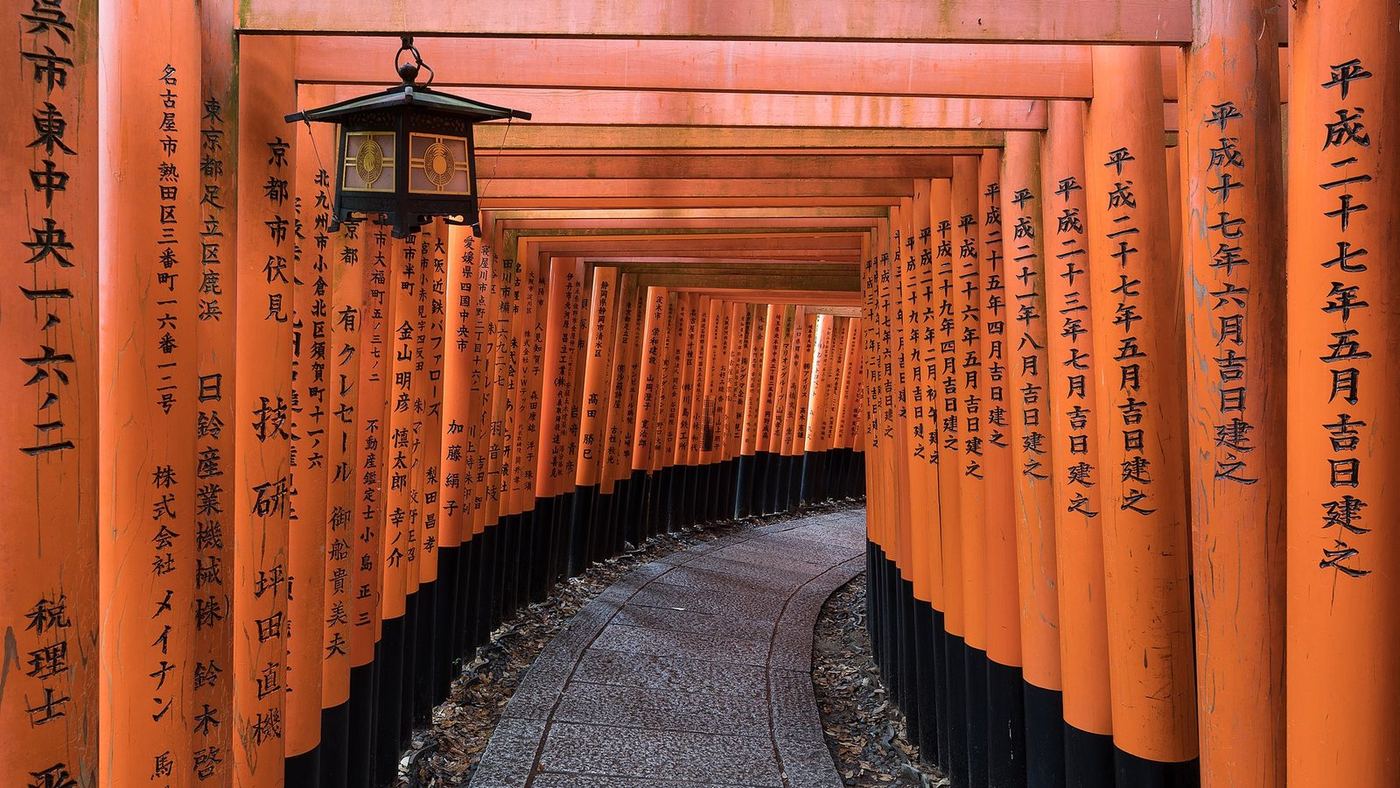
The five questions, and why the order matters
Almost every enquiry that reaches this office contains the same five questions. When should we go. How long do we need. What will it cost. Is it safe. Does it have to be private. They arrive in that order because that is the order in which they constrain each other.
Settle the month first and the shortlist of countries settles itself: a fixed week in July rules out most of India and all of the Gulf, and hands you Sri Lanka’s east coast, Bali, Ladakh and the Central Asian mountains instead. Settle the route first and you will spend the next fortnight discovering that the month is wrong. Every trip we have had to unpick and rebuild started at the wrong end.
This section holds the answers. Journey pages tell you what a route costs and where it goes; destination pages tell you what a place is like. Neither teaches seasons or entry rules, because a rule copied onto thirty pages goes out of date on thirty pages at once. It lives here, on one page, dated.
One. When
December to March is the best single window on the continent and priced accordingly: mainland Southeast Asia dry and cool, Rajasthan and Kerala at their best, the west and south coasts of Sri Lanka dry, Jordan and Oman comfortable, Japan cold and clear. If you can only travel then, you are not compromising.
The exceptions are where the money is. Sri Lanka runs two monsoons on opposite schedules, so its east coast is dry from June to August while the west is wet — one coast is nearly always open. Central Vietnam takes the storms, worst in October, in the same weeks that Hanoi and the bays are at their finest. Bali is dry from April to October, which is the inverse of the mainland. When to go takes the year month by month, with the mechanism behind each pattern rather than a list of best months.
Dates that move prices belong in the same decision: Lunar New Year on 6 February 2027 and China’s Golden Week from 1 to 7 October 2027 fill trains and hotels well beyond China’s own borders. Country-level detail sits on the destination pages — Sri Lanka and Japan both turn on their calendars more than most.
Two. How long
The commonest planning error we see is not an overspend. It is three countries in fourteen days. A country change eats most of a day once a hotel checkout, a transfer, an airport and an arrival transfer are counted, and a flight day is not a sightseeing day however early the flight leaves.
Cambodia holds six to nine nights, Japan ten to sixteen, Jordan seven to nine. Two countries fit inside a fortnight comfortably; three need about three weeks, which is why our 22-day Grand Indochina is twenty-two days and not sixteen. How many days gives every country on this site a minimum, a comfortable number, and a note on what the extra nights actually buy.
Three. What it will cost
Land-only day rates on this site run from USD 190 per person per day in Vietnam, Cambodia, Laos, India, Nepal, Uzbekistan and Kyrgyzstan to USD 650 in Japan and Bhutan, for the same standard of guide, car and hotel. That spread is the countries, not the service. Bhutan carries a government Sustainable Development Fee of USD 100 per adult per night on top of everything else, confirmed at that halved rate through 31 August 2027, which is most of the reason a Bhutanese week costs what a Japanese one does.
Two pages divide this between them. Prices is the operator side: the four country tiers, what sits inside a day rate before any margin, and how a quote 25% below ours is usually constructed. Cost by country is the ground side: what a hotel night, a driver day and an entrance fee cost before anybody adds anything. Read them together and a quote stops being a single number.
Four. Is it safe, and what we will not sell
United States advisories for Jordan and Oman moved to Level 3, Reconsider Travel, after the conflict that began on 28 February 2026. The United Kingdom eased its Jordan advice in June 2026 to a 3 km strip along the Syrian border. Petra, Wadi Rum, the Dead Sea, Amman and the whole of Oman’s tourist geography lie outside the flagged areas. That is the position, stated plainly; what risk to accept is your decision and not ours to make for you.
We do not sell Myanmar while the Level 4 advice stands, and most Western insurance is void there in any case. We do not book elephant riding anywhere, orphanage visits in Cambodia or Nepal or any other paid access to children, or captive-animal photo attractions. Nor will we quote an itinerary whose selling point is a border that is currently shut: the Thailand–Cambodia land crossings have been closed since mid-2025 with no reopening timetable, so an overland Bangkok to Siem Reap day is a day nobody can run.
The reasoning behind each refusal is on responsible travel; the advisory picture, country by country and dated, is on safety and advisories. What that means for a particular route is written into the country pages themselves, including Jordan and Oman.
Five. Private, or a group
Every journey on this site is private and runs for one party at a time, minimum two travellers. That is a choice about how we work rather than a claim that groups are inferior, and there are cases where a group departure is the better buy — a solo traveller who would otherwise carry the whole cost of a car and a guide is the clearest of them. Private or group sets out the comparison including the parts that do not flatter us.
What private actually changes is the shape of a day: leaving at half past six because the light is right, spending three hours in one temple instead of forty minutes in four, or turning a driving day into a stopping day. On a route like Japan in 12 days, where the crowding at the famous sites is the whole planning problem, that is worth more than it sounds.
The other twelve pages
This page is the thirteenth. The rest answer one question each, and each one is dated at the foot so you can see how fresh it is.
| Page | What it answers |
|---|---|
| When to go | Twelve months across the whole continent: where each month is at its best, where it is a mistake, and the dates that move prices |
| How many days | What each country actually holds, and what a border costs you in days on a two- or three-country route |
| Visas and entry | Every country on this site for United States, United Kingdom, European Union and Australian passports, with fees and filing windows |
| Multi-country routing | Which legs join cleanly, which force a backtrack, and the land borders that are shut |
| Flying within Asia | The regional and domestic carriers we book, the ones we will not, and how much buffer a connection needs |
| Private or group | The comparison written straight, including the cases where a group departure is the better purchase |
| Cost by country | What a day on the ground costs before any operator margin, country by country |
| Safety and advisories | Current advisory levels, what the wording means in practice, and what we will not sell |
| Travelling with children | Ages, drive times, altitude, and the things that end a family day at two in the afternoon |
| Food and dietary | Eating well across Asia, and the vegetarian, allergy and halal realities country by country |
| Responsible travel | Elephants, orphanage visits, water, wages, and the specific things we refuse to book |
| First time in Asia | For the traveller who has never been: where to start, and the three places we would not start you in |
If you have never been to Asia at all
Start with first time in Asia, which is blunt about where to begin and where not to. The short version: a first trip to one country beats a first trip to three, and the countries that ask least of a newcomer are not always the ones with the loudest reputations.
Then read when to go against the weeks you can actually take off work, and only then look at journeys. If the month and the length are settled, the route is a shortlist of three or four rather than a catalogue of twenty-eight — and if nothing on the catalogue fits, tailor-made explains how far a published route will bend.
Send the month before you send the route
The window you can travel in, the number of travellers, and anything already fixed at either end. That is enough for a first draft, which comes back within two working days.
Questions travellers ask most
Which of these should we read first?
When to go, and read it against the weeks you can actually take rather than the weeks you would like. Month is the constraint that cannot be negotiated, and roughly half the itineraries we redraw are redrawn because it was settled last instead of first.
After that, how many days and visas and entry. Those three cover most of what goes wrong before a quote is even written.
How current are these pages?
Everything here was checked on 8 September 2026 and the volatile items carry their own dates: Thailand’s visa exemption falls from 60 days to 30 on 15 September 2026, Korea’s K-ETA waiver runs only to 31 December 2026, and Bhutan’s halved Sustainable Development Fee is confirmed to 31 August 2027.
Anything with an expiry gets rechecked when we quote it. If a departure sits beyond one of those dates, the quote says so rather than assuming the rule survives.
Can you plan a trip if we do not yet know when we can travel?
Yes, and it is often the better way round. Send two or three possible windows and we will tell you what each one is actually good for, which is more useful than forcing one route into a month that does not suit it.
A fortnight in late July, for instance, is a poor month for most of India and the Gulf and a good one for Indonesia and the east of Sri Lanka. Same fortnight, different continent-end.
Do you publish everything you know, or is some of this held back for the quote?
It is all here. The entry fees, the drive times, the months that ruin a route and the journeys we would talk you out of are on the public pages, because a traveller comparing four operators has no way of judging us except by what we are willing to say before there is any money involved.
What the quote adds is specific: named hotels, named guides, dates, and the price for your party rather than a from-price. That process is set out on how to book.
Read next
Tell us about the journey you have in mind
Dates, party size and the places you care about are enough to start. You get a draft route and an indicative price, not a brochure.