One country, three climates, and no single best month
Vietnam runs so far north to south that its ends share almost no weather. Deciding when to come means deciding which part of it you are coming for, and that is the whole of the planning problem.
At a glance
| Region | Mainland Southeast Asia |
| Nights we recommend | 10 to 14 |
| Gateway airports | Hanoi (HAN), Ho Chi Minh City (SGN), Da Nang (DAD) |
| Best months | February to April, and October and November in the north |
| Known for | Three climates in one country, limestone bays, imperial Hue, the delta, and the food |
| Entry | E-visa USD 25 single or USD 50 multiple, up to 90 days; a 45-day exemption for UK, French, German, Italian and Spanish passports |
| Currency | Vietnamese dong |
What this country actually is
Vietnam is a long, narrow, densely worked country that is often sold as one place and behaves as three. The railway that joins its ends runs 1,726 km and takes 32 to 37 hours end to end, the honest measure of the gap between a Hanoi January at 15 to 20 degrees and a Ho Chi Minh City January at 30 to 35. There is no month in the year when all three regions are at their best at once, and any operator who tells you otherwise has not looked at the rainfall.
The parts that get written about most are also the parts under most pressure. The main shipping channel of Ha Long Bay carries a large working fleet of tourist boats and it is audible; the quieter water at Lan Ha, on the Cat Ba side, holds a fraction of them for the same limestone. Hoi An's old town between nine in the morning and five in the afternoon is a ticketed walking crowd, and the town is a different proposition at seven and again after the traffic ban resumes in the evening. Sapa's centre has been built out with concrete hotel blocks; the valleys below it have not.
None of that makes those places wrong. It makes the hour you visit them and the side of them you approach from the entire difference between the trip people complain about and the trip they talk about.
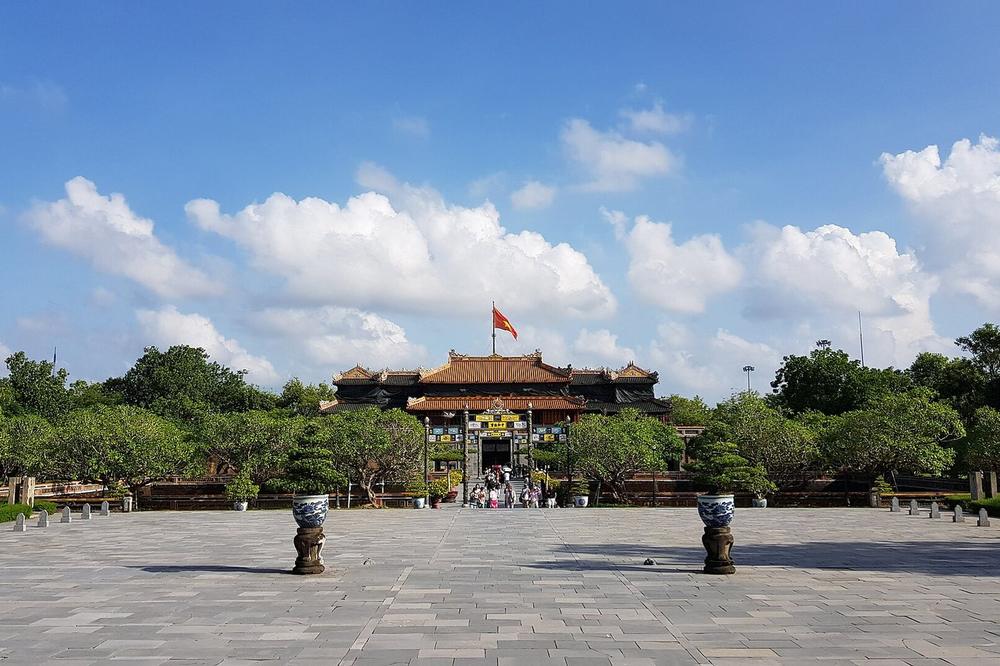
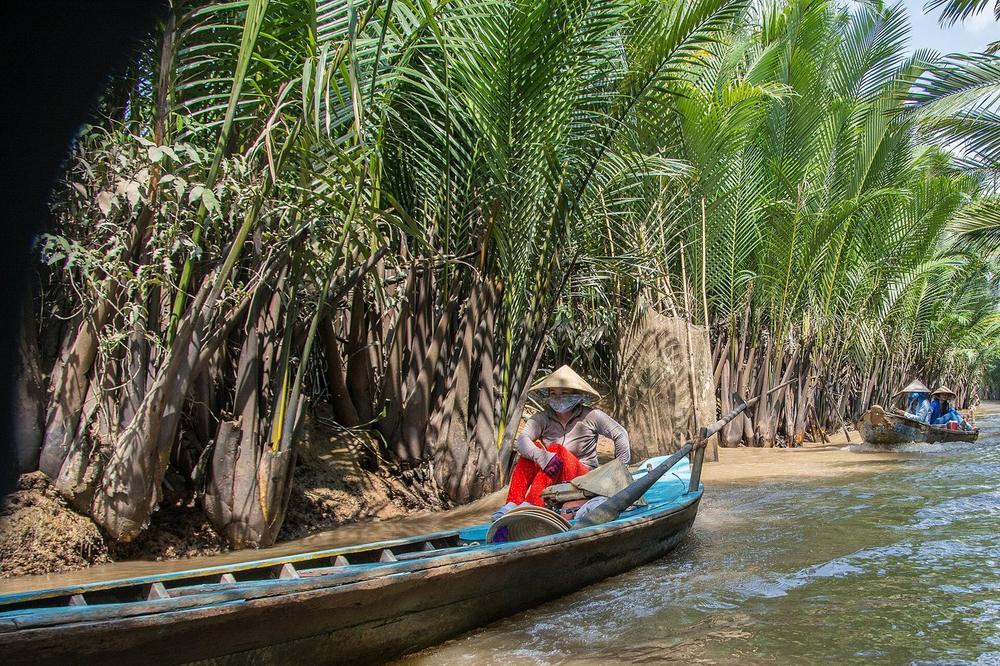
What surprises most first-time visitors is how little of the country is crowded at all. The pressure sits on perhaps six or seven named places. Between them are the delta provinces, the coast north of Hue, the karst country west of Ninh Binh and the whole north-eastern border region, where a foreign face is still a mild event. That is the argument for giving Vietnam more than a week: the reason to come is not the list, it is the ground between the items on it.
How many nights, and what breaks if you take fewer
Ten to fourteen nights. That is not a sales number and it comes out of the geography rather than the itinerary. The country has three regions, and moving between two of them costs an internal flight and about half a day even when it is done well.
At seven nights you get one region, done properly, plus your arrival and departure days. That is a real trip — Hanoi, the bay and Ninh Binh is a good week — but it is not Vietnam. At ten you can hold two regions with one flight, most usefully the north and the centre. At fourteen the south stops being a bolt-on: the delta gets a full day rather than a coach circuit, and there is room for the northern mountains, which need two nights before the five-hour road each way is worth paying for.
The mistake we are asked to fix most often is a nine-day plan holding Hanoi, Ha Long, Hue, Hoi An, Ho Chi Minh City and the delta. It fits on paper. In practice it is four travel days out of nine, and the traveller comes home able to describe airports. The same arithmetic, run for every country we sell, is under how many days.
When to go
Read this table by column, not by row. The question is not when Vietnam is good; it is when the part you want is good, and what the other two are doing at the same time.
| Months | North: Hanoi, the bays, Sapa | Centre: Hue, Da Nang, Hoi An | South: Ho Chi Minh City, the delta |
|---|---|---|---|
| October to December | The best window. Cool and dry, and January runs 15 to 20 degrees | The wet end of the year. October is the single wettest month on this coast | Drying out from November, and comfortable through to April |
| February to April | Cool, often grey, with drizzle rather than rain | The best window. Mild and dry before the heat | Dry and hot, 30 to 35 degrees, and rising towards April |
| May to September | Hot, humid and wet; green, and much cheaper | Rains from May, building towards the storm season | The wet season, but the rain falls in the afternoon and then stops |
| September to November | Fine from October onwards | Typhoon risk, worst in October: 200 to 400 mm can fall in a day | Rain easing through October and gone by late November |
October, and why we still sell it
Central Vietnam takes the brunt of the storms that make landfall on this coast. The season runs September to November, October is the peak of it, the flooding can reach into December, and 200 to 400 mm of rain in a single day is what a landfall actually looks like in Da Nang or Hoi An.
The same weeks are the finest of the year in the north. Hanoi, Ninh Binh and the bays are cool, dry and clear in October and November, which is why we will build an October journey without hesitation and build it northwards. Where the centre is fixed — a wedding, a tailor, a return visit — we book refundable rates on those nights, keep a buffer day in the schedule, and ask for named-storm cover on your insurance so that a re-plan is an inconvenience rather than a loss.
The case for the wet months
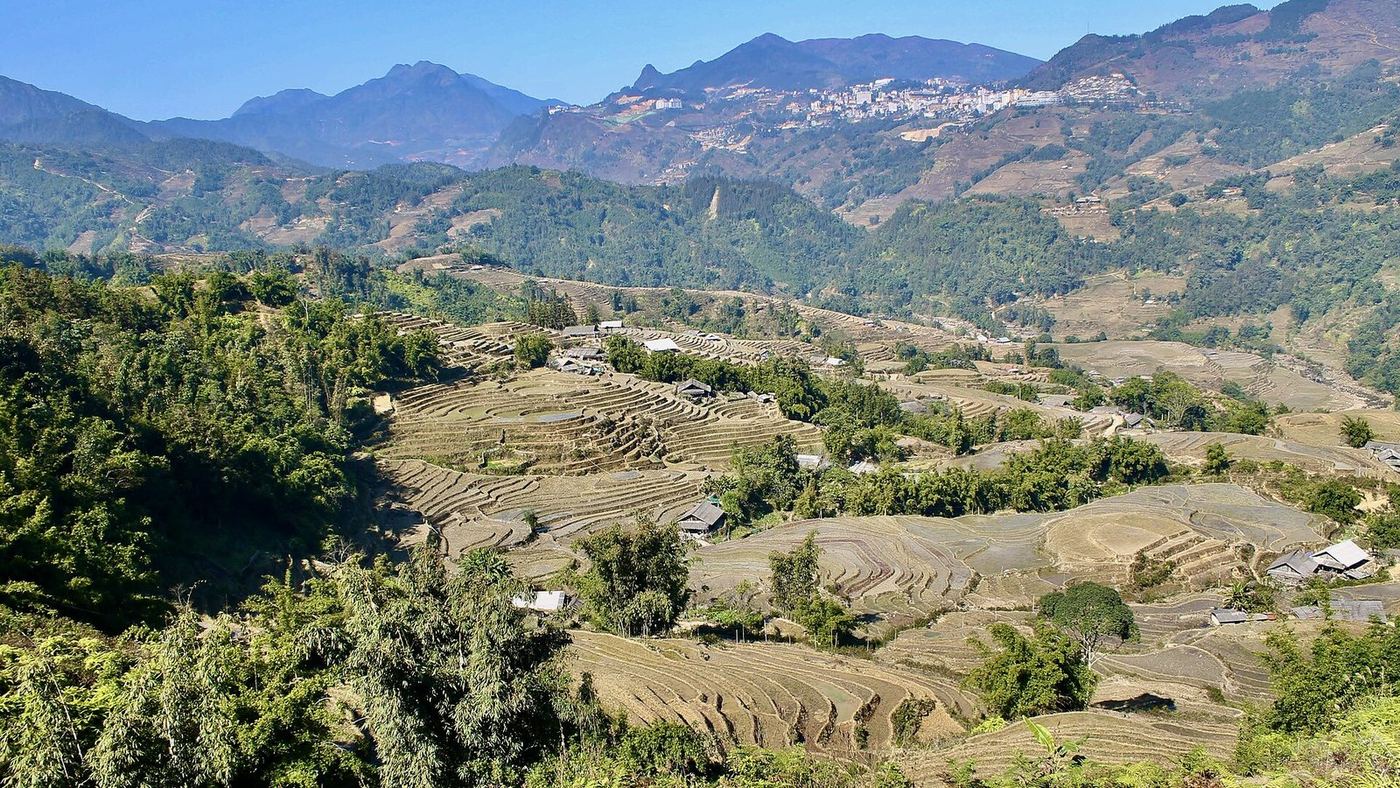
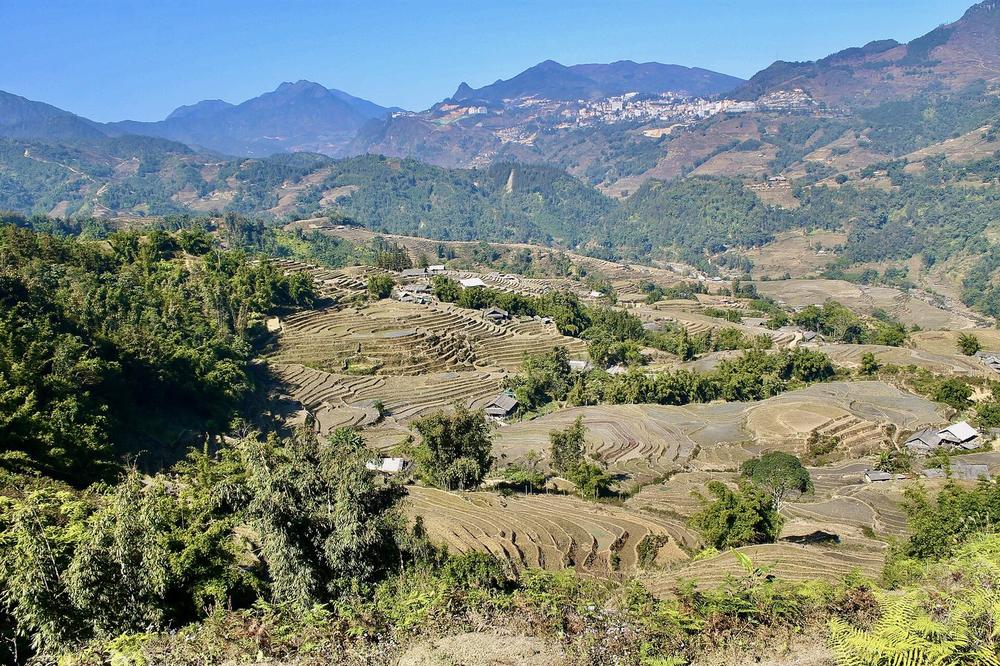
May to September in the north is hot and humid and it is also when the rice terraces are flooded and then green, the waterfalls run, rooms cost less and the famous places are walkable at midday. In the south the rain is an afternoon event you plan around rather than a day lost. The wet season here is not a compromise everywhere — it is a compromise on the central coast, and an advantage in the north-west. Month by month across the region, see when to go.
Getting there and getting around
Three airports carry almost every arrival: Hanoi in the north, Ho Chi Minh City in the south, and Da Nang in the middle, which is 45 minutes from Hoi An and about two hours from Hue. Fly into one end and out of the other: it saves a day and most fares do not charge for it. One caution for 2027 departures. Long Thanh, built to take pressure off Tan Son Nhat, is targeted at a commercial opening late in 2026, and nobody has yet published which routes move across and which stay. Check the airport code on your own ticket rather than assuming it.
Which airline, and why it matters
One carrier left the market in August 2026. Bamboo Airways ended its scheduled services, cutting a fleet of 44 aircraft to three, so a domestic plan now has two realistic names in it. The on-time figures are not close: about 77% of Vietnam Airlines arrivals are punctual, against 55% for VietJet, which is one flight in two landing a quarter of an hour late or worse, with Vietravel at about 68% between them. Put a connection behind that sector and the gap is an afternoon, which is why the fare is the wrong place to economise. Which carriers we book across the region, and which we leave alone, is set out under flying within Asia.
Roads and rail
Roads have improved faster than their reputation. Hanoi to Ha Long is 152 km on the Hai Phong expressway and takes a little over two hours of driving, or two and a half to three and a half door to door once a harbour transfer is counted. A high-speed line on that route broke ground on 12 April 2026 and is targeted at 2028, when it would cut the transfer to about 23 minutes; nobody travelling before then should plan around it.
The Reunification railway is worth using in segments and not end to end. Hue to Da Nang takes about three hours in daylight over the Hai Van coast and is the best three hours on the line. The overnight Hanoi to Da Nang sleeper saves a hotel night rather than a day: a four-berth soft sleeper runs roughly USD 65 to 85 and a hard seat from about USD 40. Riding the whole 1,726 km is something a small number of travellers want and almost nobody enjoys twice.
What it costs on the ground
Vietnam sits in our band D, roughly USD 190 to 300 per person per day for a party of four, land only, which covers the room, the car, the driver, a national guide, entrance fees and the named meals. That band is the useful number. Below it are the pieces we can source.
| What | Roughly, as at September 2026 |
|---|---|
| A good four-star night in Hanoi | USD 130 to 230 |
| A good four-star night in Ho Chi Minh City | USD 140 to 240 |
| A good four-star night in Da Nang or Hoi An | USD 90 to 180, and USD 80 to 170 |
| Five-star, where it exists | USD 260 to 600 in Hanoi, USD 280 to 650 in Ho Chi Minh City, USD 200 to 500 in Hoi An |
| Bay route tickets at Ha Long and Lan Ha | Set by the provincial authority and confirmed at the time of booking |
| Overnight train, four-berth soft sleeper | USD 65 to 85 |
| E-visa, paid to the government portal | USD 25 single entry, USD 50 multiple |
Each of those bands moves about 30% either side of its average as the year turns, and it is Christmas, the New Year and Tet that sit at the top of it.
Three numbers are missing from that table on purpose: the price of a meal, a daily rate for a car with a driver, and the bay route ticket. None could be verified for Vietnam against a source we would defend in front of a client, and an invented figure that looks right does more damage than a gap. The useful thing about the car is its shape anyway. One vehicle costs one price whether a couple or a family of six sits in it, which is why two travellers pay about 36% more each than a party of five for the same route. The full breakdown is on prices and country by country under cost by country.
In pictures

When to skip it
- You have six nights and want the whole country. Two of them will be spent getting between regions. Pick the north or the centre and come back for the rest.
- Your dates are fixed in October and the centre is the reason you are coming. The coast at Hoi An and Da Nang is at its wettest and the storm risk is real; the north in the same weeks is at its best, which makes this a routing decision rather than a cancellation.
- You want a beach holiday. The coast is long and the good beach weeks move around it by region; Phu Quoc and Con Dao both need a separate flight and three more days. Thailand answers that brief more simply.
- Traffic and noise take something out of you. Hanoi and Ho Chi Minh City are loud, crowded and constant, and no itinerary makes crossing a road there quiet.
- You are travelling with a child under about six and want short days. The distances here are long, and the delta and the bay are both full-day commitments.
Journeys that go here
Our eleven-day Vietnam journey is the one-country version: Hanoi to Ho Chi Minh City with two internal flights, the north, the centre and the delta, and no day given over entirely to moving. Eleven nights is where the three regions begin to read as separate places rather than one long drive.
If you have three weeks, the 22-day Grand Indochina holds seven nights here alongside Laos and Cambodia. The 28-day Asia Crossing puts Vietnam between Japan and Thailand, which is a different kind of trip: the contrast is the point of it.
Where Vietnam meets the rest of a route — which legs connect and which force a backtrack — is set out under multi-country routing. Hoi An, the town most often given a night too few, has its own page.
Questions travellers ask most
Do we need a visa, and does it depend on the passport?
Entirely. Five European nationalities are exempt for 45 days without applying for anything: the United Kingdom, France, Germany, Italy and Spain. Everyone else reading this page, United States and Australian passports included, files the e-visa first — USD 25 for a single entry, USD 50 for multiple, valid for as much as 90 days, on the government portal and nowhere else.
Three working days is the usual turnaround. File a fortnight or more ahead and a photograph the system rejects costs you an afternoon instead of a departure. No arrival card exists for Vietnam, unlike Thailand and Cambodia, so the visa is the whole of the paperwork. The current position for every country we sell is under visas and entry.
Is ten nights really the minimum for the whole country?
For all three regions, yes, and even then the south gets the thinnest share. Ten nights buys the north and the centre without hurry, or the centre and the south, with one internal flight in the middle.
Below ten the flights start eating the days they were meant to save. If you have a week, take one region and give it the whole time; it is a better trip than a compressed version of a longer one.
Which domestic airline should we be booked on?
Vietnam Airlines, on any sector with a connection or an onward international flight behind it. It runs at roughly 77% on-time arrivals against VietJet's 55%, and about 68% for Vietravel.
Bamboo Airways is not a choice at all any more. Scheduled services ended in August 2026, the fleet is down to three aircraft and only charter work remains. A quote still carrying a Bamboo sector was drafted before that and has not been reviewed since, which is worth knowing about the rest of the quote.
What happens to a booking if a typhoon is forecast?
Between September and November the central nights are held on refundable rates and the forecast is watched from roughly four days out. Once a storm is named and tracking towards that coast, the affected nights move inland and northwards, where the same week is dry, and the internal sector is rebooked around the new shape.
That is a rearrangement, not a cancellation, and it is the reason we ask for named-storm cover on your policy. Cover bought after a storm has a name excludes it, and that gap catches more travellers than the weather does.
Read next
Tell us about the journey you have in mind
Dates, party size and the places you care about are enough to start. You get a draft route and an indicative price, not a brochure.