A small country with one road down the middle of it
Everything a visitor comes for sits on a single north to south spine, which is why a week here holds more than a week almost anywhere else in West Asia. The complications are the ticket arithmetic and an elevated advisory that we are not going to talk around.
At a glance
Two governments, two positions, both current. Washington places Jordan at Level 3, Reconsider Travel, in an update dated 29 August 2026, giving as its reasons the regional conflict that opened on 28 February 2026 and the terrorism risk that came with it. Four places carry its Level 4, Do Not Travel, label: the border regions with Syria and Iraq, Rusayfah City, the camps housing Syrian refugees, and the Baqa'a neighbourhood in Ayn Basha. Zarqa City and Ma'an Governorate are flagged one step below that, for heightened risk. London moved the other way on 3 June 2026, lifting a blanket warning and replacing it with advice against all travel within 3 km of the Syrian border only, while keeping a standing note about strikes in the wider region and disruption to flights.
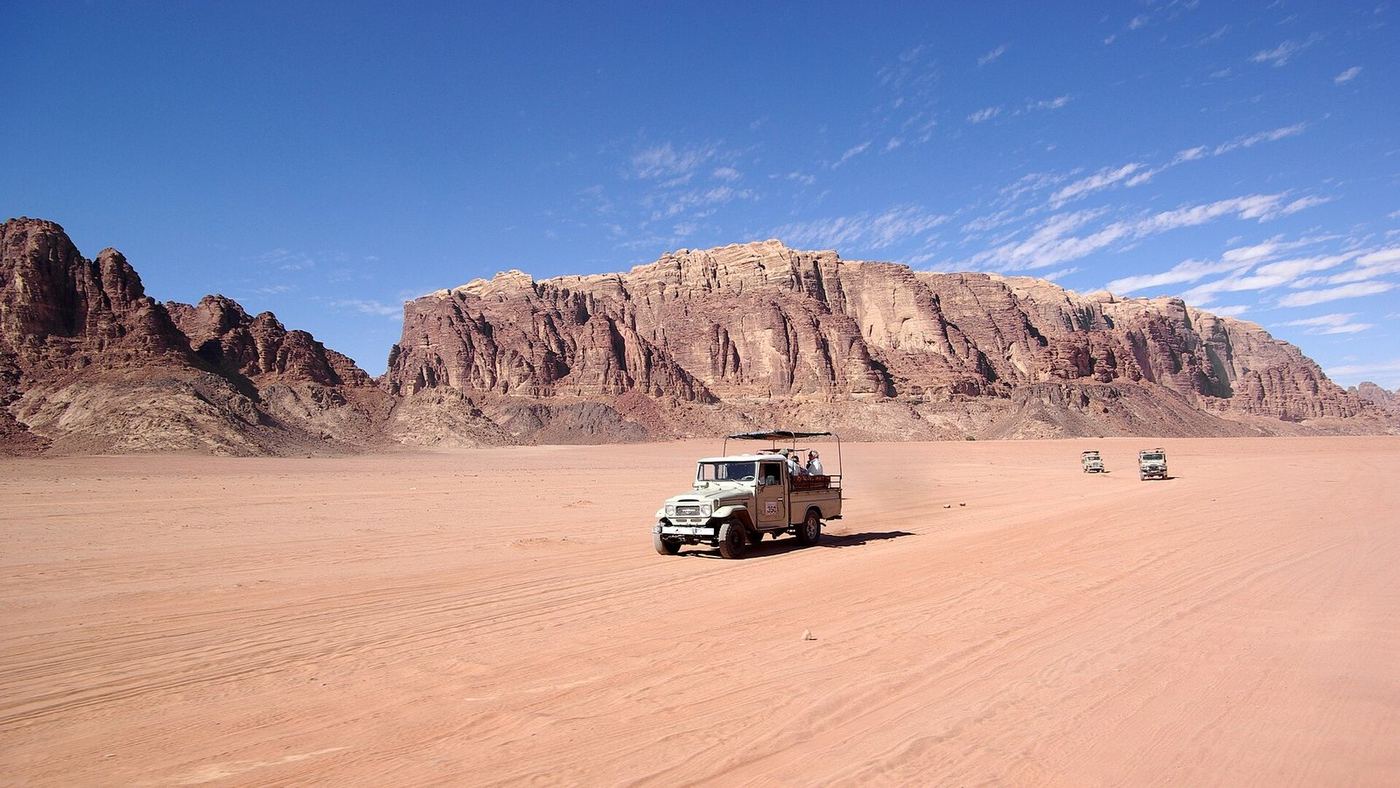
None of the places people come to Jordan for lies inside a Level 4 line: Aqaba, Wadi Rum, Petra, the Dead Sea shore, Madaba, Jerash and Amman are all outside them. Wadi Musa, the settlement outside the Petra entrance, does lie within Ma'an Governorate and so under the heightened-risk flag, which is a lesser category than a do-not-travel zone and is better read here than discovered later.
On our side: the two advisories and the airspace notices are read here every working day, departures carry flexible terms, and the position as it stands in the week you book goes to you in writing rather than in the version printed on this page. What we will not do is tell you the advisory is overstated, or tell you which risks are worth accepting. That judgement is yours and your insurer's, and our note on advisories and what they mean explains how we read these documents across the whole region.
| Region | West Asia |
| Nights we suggest | 7 to 9 |
| Best months | March to May, September to November |
| Airport | Amman (AMM), with Aqaba for a southern exit |
| Entry | Visa on arrival or e-visa; the Jordan Pass waives the fee on a stay of three nights or more |
| Jordan Pass | 70, 75 or 80 JOD by the number of Petra days |
| US advisory | Level 3, Reconsider Travel, as at September 2026 |
What this country actually is
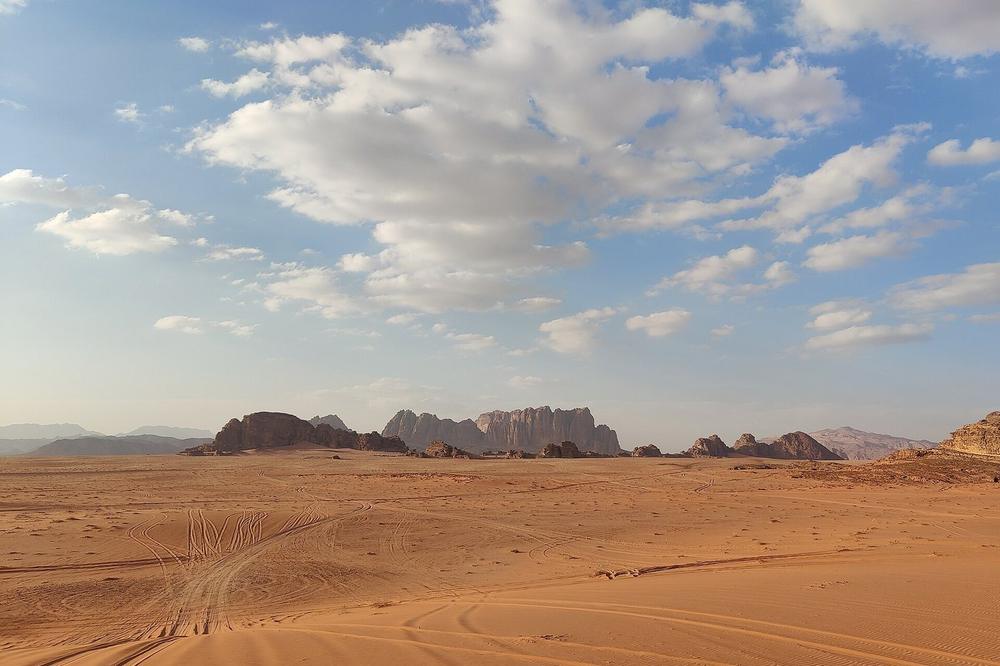
Jordan is an archaeology country with a desert and two coasts attached, and it is small enough that none of those things is far from the others. The whole visitor geography runs down one spine: Amman near the top, the Dead Sea to the west of it, Petra two-thirds of the way south, Wadi Rum below that and Aqaba on the Red Sea at the bottom. Drives are measured in hours rather than in days, which is what allows a week here to feel unhurried.
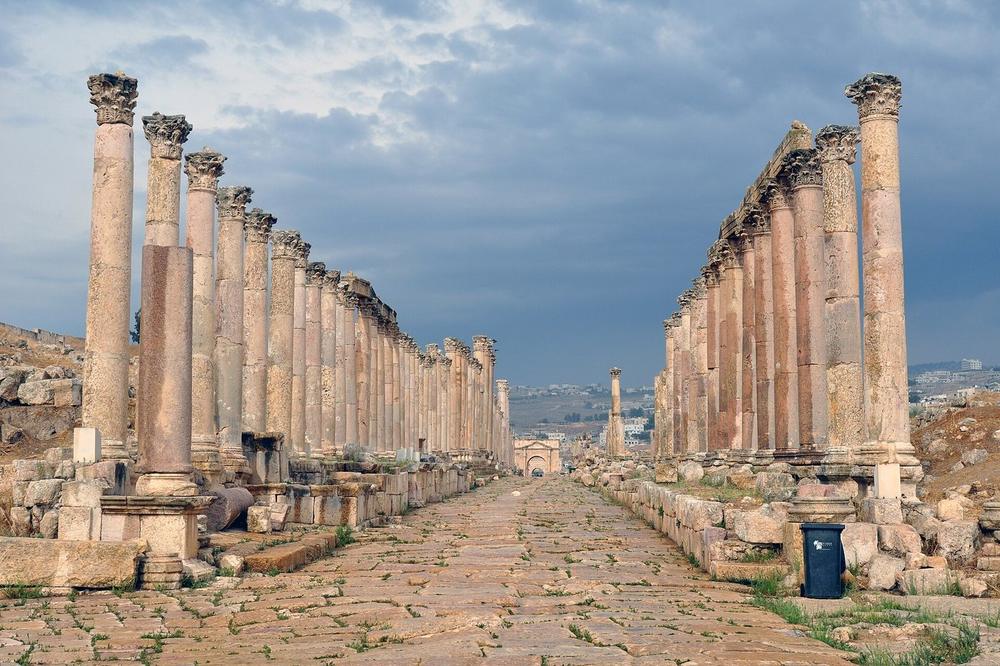
The layers are the point. Roman street plans at Jerash with cart ruts still in the paving, Nabataean rock-cut facades at Petra, Crusader castles on the spurs above the King's Highway, Umayyad palaces, a sixth-century mosaic map laid into a church floor at Madaba. Very little of it is behind glass and most of it is walked rather than viewed.
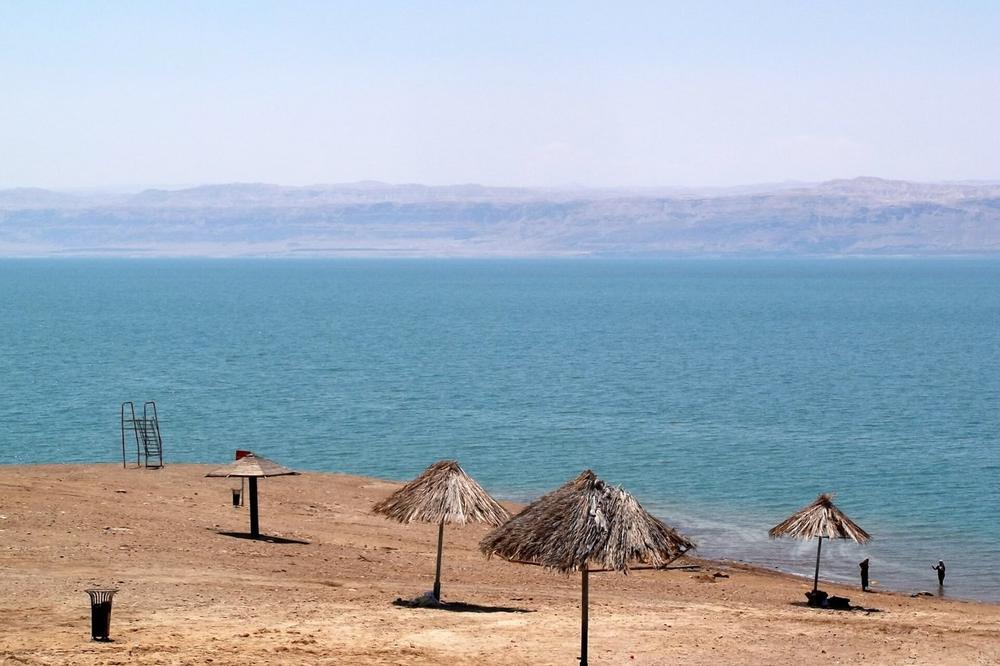
Amman is a working Arab capital built over hills, louder and more ordinary than visitors expect, with a Roman acropolis in the middle of it. It rewards a day and does not need three. The Dead Sea is chemistry rather than scenery: there is no public gate and no single entrance fee, access runs through the resort strip on the eastern shore, and the float itself is a twenty-minute novelty rather than an afternoon. Aqaba is a working port with duty-free shops attached and the only coral reef the country has lying offshore, and nobody should go for the town.
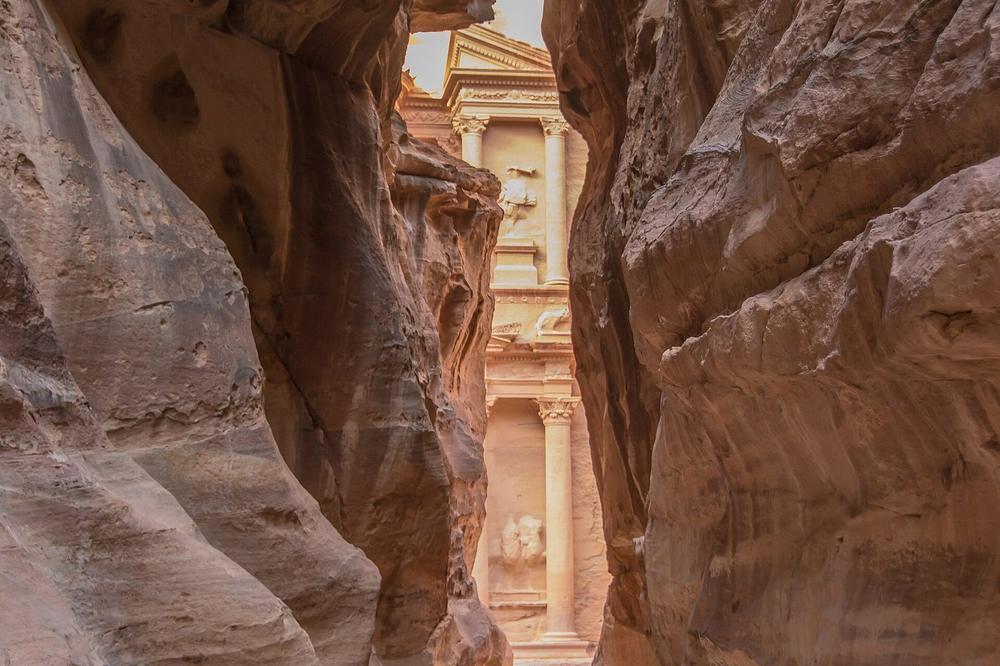
Petra is where expectations most often miss. It is not a facade at the end of a gorge but a spread-out city, and the parts furthest from the entrance — the rock-cut stair up to the Monastery, the High Place of Sacrifice, the walk down through Wadi Farasa — are the parts that most day visitors never reach. That single fact drives the ticket arithmetic further down this page and the nights recommended above it.
How many nights, and what breaks if you take fewer
Seven nights is enough for the country and nine is better. Above nine, operators tend to add nights rather than places, and Jordan starts repeating itself.
A seven-night shape looks like two nights in Amman, one at the Dead Sea, three at Petra and one in Wadi Rum. Nine adds Aqaba at the bottom and takes the old King's Highway south instead of the desert motorway, which costs a couple of hours and buys the Wadi Mujib canyon crossing and a Crusader castle.
The first thing to break below seven is the second Petra day, and it is the wrong economy. The accommodated entry rate is 50 JOD for one day and 55 for two, as at September 2026 — five dinars for a second day inside a site big enough to take two days of walking. A single day covers the approach through the Siq, the Treasury, the theatre and the tombs cut into the cliff above it. That is a full day and a small share of the site. The long stair and the high route belong to the second day; attempting them late on the first, with the legs already gone, is how people come home remembering the heat instead of the place.
The second thing to break is the Dead Sea night, which then becomes a resort day pass at somewhere between roughly 25 and 65 JOD depending on the property, or 10 to 15 JOD at a public beach. That is a workable compromise. The third thing to break is Jerash, and that one is a genuine loss.
One warning about very short stays. The Jordan Pass cancels the entry visa fee only where it is bought ahead of arrival and the stay runs to three nights or more, so a two-night stop pays the visa on its own account and the pass drops to being a bundle of site tickets. How long each country on this site actually holds is compared on how many days.
When to go
| Months | Conditions | What that means for a trip |
|---|---|---|
| March to May | Roughly 18 to 28 degrees | The spring window. Wadi Rum nights are cool rather than cold and the Petra walking is comfortable all day. |
| June to August | Too hot for the itinerary as written | Forty degrees is normal along the Dead Sea shore and the Wadi Rum daytime figure sits around 34. Petra becomes an endurance question. |
| September to November | The strongest window | October is the month the trade itself picks: warm, dry, low light on the sandstone and the summer crowds gone. |
| December to February | Cold, and occasionally white | Amman sits near 12 degrees through January, snow reaches both the capital and Petra in some winters, and the desert drops below zero after dark. |
The two seasons nobody sells both have an argument. High summer is genuinely unpleasant in the middle of the day and genuinely cheap, and it works only for travellers willing to invert the clock — into Petra at opening, out by eleven, back in at four. Winter is the better secret. A clear December morning at Petra with frost in the Siq and no queue at the Treasury is one of the experiences of the region, and the price of it is packing for a European winter and accepting that a desert camp heated to tolerable is not the same as warm.
The 2027 Ramadan is calculated to open on or about 8 February, with Eid al-Fitr follows in the first days of March. Nothing important closes: the sites run and visitor restaurants serve through the day. What changes is that eating in the street becomes conspicuous, a few opening times move, and Eid fills the roads with Jordanian families. Worth knowing, not a reason to move the trip.
Getting there and getting around
Queen Alia International at Amman (AMM) is the arrival point for almost everyone, with Aqaba usable as a southern exit on a one-way route. The regional caveat this year is airspace: Gulf and Levantine airspace has closed at short notice more than once since February 2026, and a night in hand before a long-haul departure is cheap insurance against a rebooked connection.
On the ground the country runs on a driver-guide rather than on public transport, and that is the normal arrangement rather than a luxury. Day rates run roughly 57 to 106 JOD, and about 92 to 113 JOD a day for the multi-day southern circuit through Petra, Wadi Rum and Aqaba, varying with vehicle, season and hours. Distances are short enough that no internal flight is needed anywhere.
Two border questions come up often. The Syrian frontier carries do-not-travel advice within 3 km from the British government and a wider Level 4 designation from the American one, and we go nowhere near it. The western crossings into Israel and the West Bank are a separate conversation about timing, insurance and what your policy will and will not respond to, and they are not something to add to an itinerary as a line item.
What it costs on the ground
Jordan sits in our third country tier at roughly USD 250 to 360 a person a day at a party of four, land only. The government-set fees below are all as at September 2026 and all in Jordanian dinars.
| Charge | JOD | Note |
|---|---|---|
| Jordan Pass | 70 / 75 / 80 | Wanderer, Explorer, Expert — one, two or three Petra days. Includes the tourist e-visa fee and 40-odd sites, valid three months from entry |
| Petra, accommodated rate | 50 / 55 / 60 | One, two or three days; children under 12 free |
| Petra, not staying overnight in Jordan | 90 | The day-tripper rate, which is what a visit from across a border costs |
| Wadi Rum protected area | 5 | Entry only; the 4x4 and the camp are separate |
| Jerash | 12 | Covered by the Jordan Pass |
| Amman Citadel / Roman Theatre | 3 / 2 | Both covered by the pass |
| Madaba park / Mount Nebo | 3 / 3 | Both covered by the pass |
| Karak / Ajloun / Umm Qais | 2 / 3 / 5 | The castle stops on the King's Highway and in the north |
| Wadi Mujib trails | 21 – 44 | By route; a wet canyon scramble, closed outside the warm months |
| Dead Sea access | 25 – 65 | Resort day passes; public beaches run about 10 to 15 |
| Driver and vehicle | 57 – 113 a day | By route, vehicle and hours |
The pass is worth doing the arithmetic on rather than assuming. For a route with two Petra days, Jerash, the Citadel, the Roman theatre, Mount Nebo and Karak, the separate tickets come to 77 JOD before the visa fee, against 75 for the Explorer tier — so the pass wins on tickets alone and wins again on the visa. Petra by Night is the exception that catches people: it needs its own ticket even for pass holders. Dead Sea day passes and Wadi Mujib are outside the pass as well.
We publish no hotel rates for Amman, Petra or the Dead Sea, because the honest range is too wide to mean anything and the quotes we give name the property instead. The one figure worth knowing is that Wadi Rum has a low ceiling: the cheapest camps inside the protected area sit at about USD 28 per person a night, and even the best of them stops well short of what five-star buys in a city. Costs across the region are compared on cost by country.
In pictures
When to skip it
- An elevated advisory is not something you want to weigh. Jordan is at US Level 3 as at September 2026 and the British position, though eased in June, still notes regional risk and flight disruption. That is a real decision, and making it now is better than making it at an airport.
- Ten kilometres on foot, twice in one week, is beyond you. Petra has no vehicle access past the gate, the ground is sand, gravel and rock-cut stair, and the good parts are the far parts.
- The trip is in July or August and cannot move. A shore at forty degrees and a desert at thirty-four turns a considered itinerary into a hunt for shade.
- You are in the country for two nights on the way to somewhere else. The Jordan Pass three-night rule will not trigger, the visa fee is payable separately, and a single Petra day at 50 JOD — or 90 if you are not staying in Jordan at all — is a poor return on a long journey.
- You want a beach holiday with some ruins attached. Aqaba is one night in a good Jordan itinerary. If the Red Sea is the point, Oman gives a coast a proper stretch of days.
Journeys that go here
The nine-day Jordan journey runs the spine north to south, Amman down to Aqaba, giving Petra two whole days and Wadi Rum a night in a tent. It is the shape this page argues for. The sixteen-day Jordan and Oman voyage pairs it with the country next door, and the pairing works because the two are opposites: Jordan is what people built, Oman is what the ground did.
For the ticket arithmetic in detail, what a second day inside the site actually buys and how the pass system works at the gate, see the Petra page. For how we read the advisories across every country we sell, and the destinations we decline to sell, see safety and advisories.
Ask us for the advisory in writing
Send your dates. The reply carries a draft route and the position of both governments as it reads that week, so the decision rests on today's facts rather than on the ones printed here.
Questions travellers ask most
Jordan is at Level 3. What does that mean for a trip in practice?
It means the American government, updating on 29 August 2026, asks its citizens to reconsider travel to Jordan, on the grounds of the conflict that opened on 28 February 2026 and the terrorism risk attached to it. The Level 4 label attaches to the border regions with Syria and Iraq, the refugee camps, Rusayfah City and Baqa'a in Ayn Basha; Zarqa City and Ma'an Governorate carry the lesser heightened-risk flag. The British government took a different step on 3 June 2026, dropping its blanket advice and now warning against travel only within 3 km of the Syrian border.
Geographically, the standard circuit is outside the Level 4 lines: Amman, Jerash, Madaba, the Dead Sea, Petra, Wadi Rum and Aqaba. Wadi Musa, the town at the Petra entrance, is inside Ma'an Governorate and so inside the heightened-risk flag, which is not the same designation as do-not-travel.
What we do: read both advisories and the airspace notices daily, quote flexible terms, and refuse to run anything we would not send our own people on. What we will not do is characterise the advisory as overblown or tell you what to accept. Check your insurance wording as well as the summary page, because some policies now respond differently where elevated official advice is in force.
We are only in Jordan two nights on a longer trip. Is the Jordan Pass still worth it?
As a visa waiver, no. It cancels the visa fee only where the pass is bought ahead of arrival and the stay reaches three nights, so a two-night visit pays that fee whichever tier is held.
As a ticket bundle it can still pay for itself, but the sums are tighter. Two nights realistically means one Petra day at 50 JOD and perhaps Jerash at 12 and the Citadel at 3, which is 65 against 70 for the cheapest pass tier — so it roughly breaks even and you carry the visa fee on top. Our advice on a stop that short is to buy the tickets individually and to consider whether Petra deserves better than a single day.
Can we do Petra as a day trip from Israel or from a cruise at Aqaba?
It is possible and it is expensive. Anyone not staying overnight in Jordan pays the non-accommodated Petra rate of 90 JOD rather than the 50 JOD accommodated rate, which is a deliberate piece of policy designed to keep visitors in the country for a night.
The bigger objection is what a day trip buys. After the border formalities and the drive, the hours inside the site cover the Siq, the Treasury and perhaps the Royal Tombs before the return leg starts. The Monastery stair and the high route are simply not reachable in that window. We do not build these day trips, and if the schedule genuinely allows only one day in the country we would rather say that Petra is not for this trip.
Is a winter visit a mistake?
No, as long as you pack for it. January in Amman runs around 12 degrees, snow reaches the capital and Petra in some years, and a clear desert night goes below zero. Camps are heated; they are not warm in the sense a European hotel is warm.
What you get in exchange is the site without a queue, clear low light on the sandstone, and the lowest rates of the year. For photographers and for anyone who has been put off Petra by descriptions of the crowds, December and January are the honest answer. The one thing winter genuinely closes is the Wadi Mujib canyon trail, which runs only in the warm months.
Read next
Tell us about the journey you have in mind
Dates, party size and the places you care about are enough to start. You get a draft route and an indicative price, not a brochure.