Four cities on one line across a desert
Tashkent, Samarkand, Bukhara and Khiva sit west of one another in that order, which is why nobody who plans this country properly ever doubles back. The difficulty is not the route. It is the two short seasons and a train that sells out.
At a glance
| Region | Central Asia |
| Nights we suggest | 8 to 11 |
| Best months | April and May, September and October |
| Airport | Tashkent (TAS), with Urgench for the western exit |
| Entry | 30 days visa-free for US, UK, Australian and most EU passports |
| Fast train | Tashkent to Samarkand in about 2 hours 30 minutes |
| US advisory | Level 1, exercise normal precautions |
Uzbekistan is the least complicated country on this site to enter and one of the cheapest to travel well in. It is also the one where a booking made two months late costs you a day on the road. Both of those facts are worth knowing before you pick a month.
What this country actually is
Landlocked, dry and arranged in a line. The cities grew where there was water, so they sit strung out along the old caravan corridor between the Amu Darya and the Syr Darya, and the ground between them is cotton, canal, steppe and sand. There are mountains in Uzbekistan, but they are not what the country is for, and anyone coming for landscape has picked the wrong neighbour: that is Kyrgyzstan and Tajikistan, one border east.
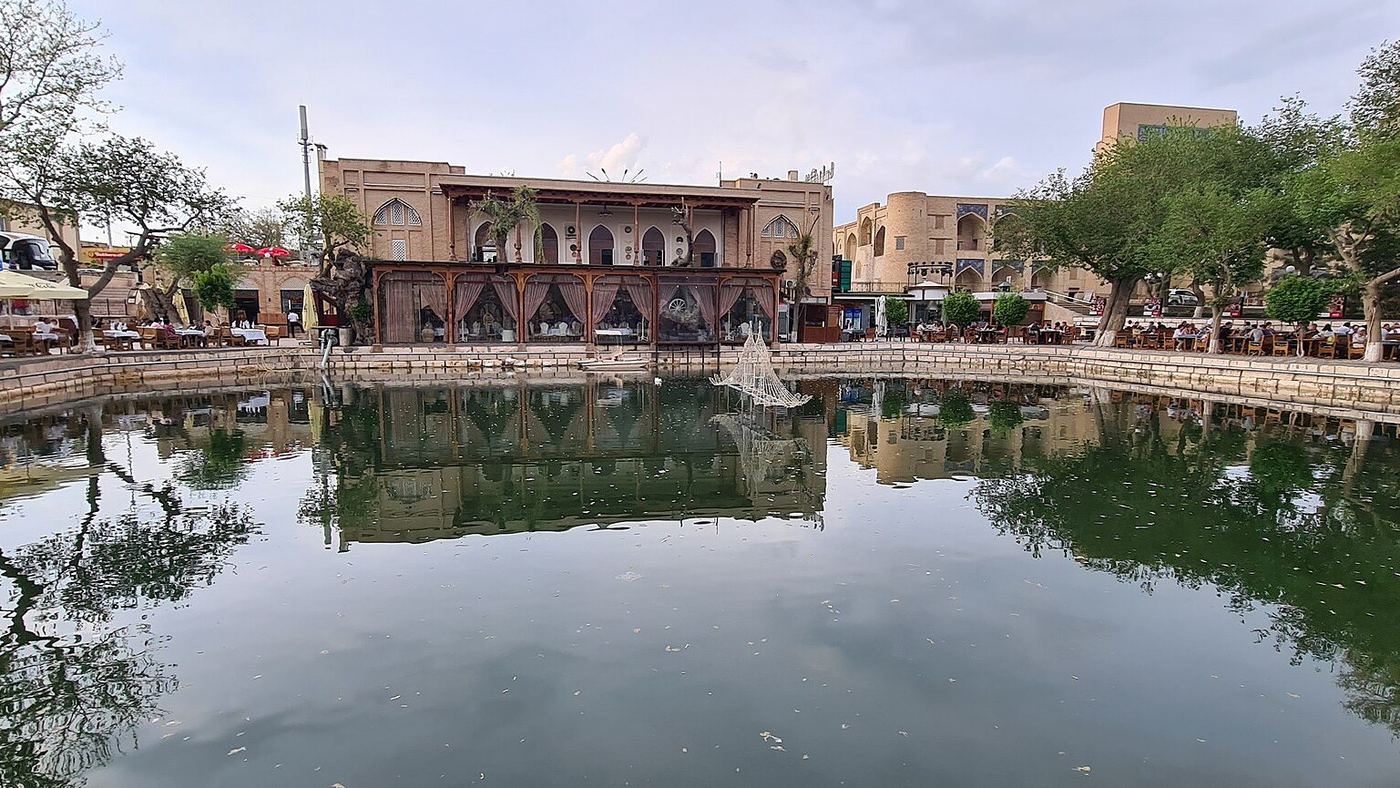
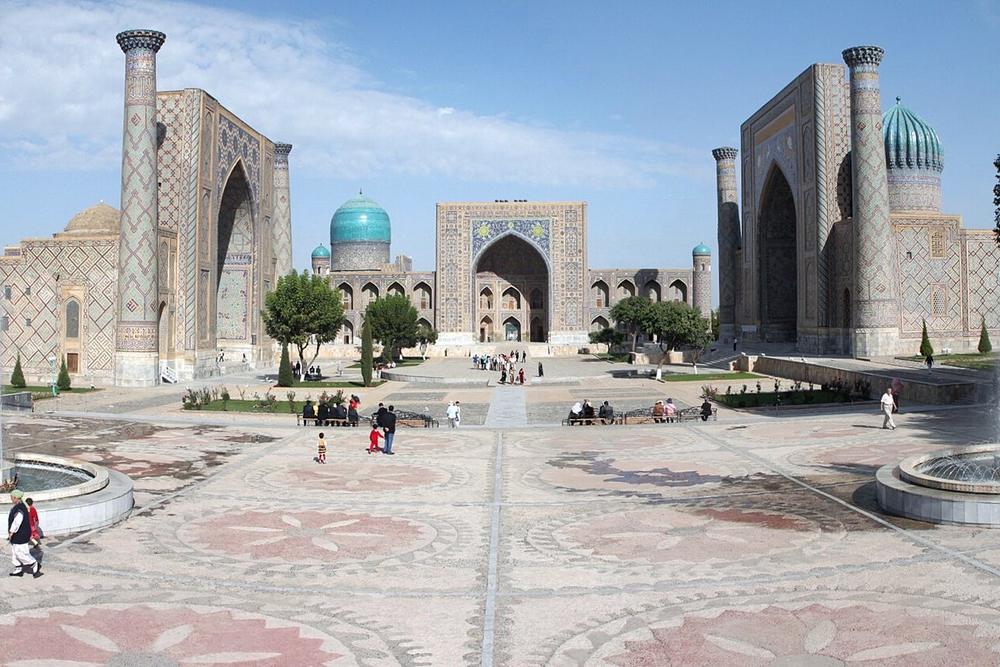
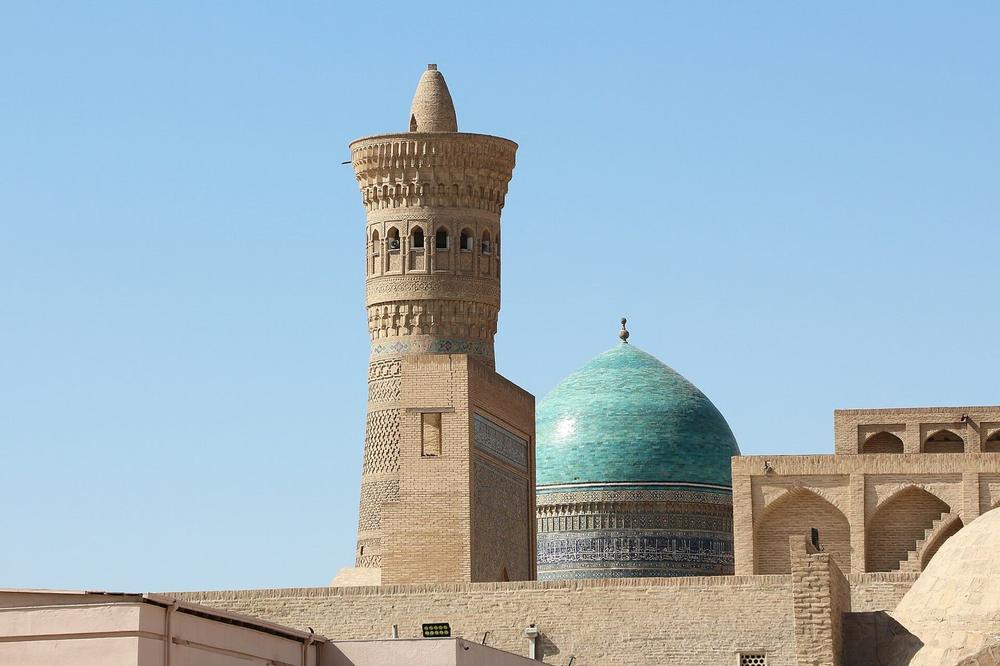
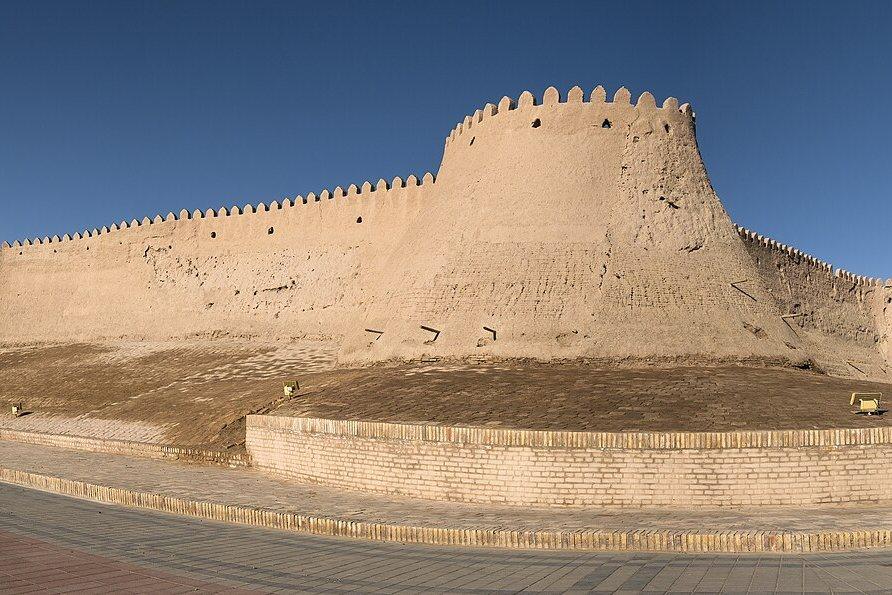
What is here is architecture, and it is a narrow, deep kind of architecture. Brick, glazed tile, domes, portals and courtyards, mostly Timurid and mostly fifteenth to seventeenth century, with older Samanid work in Bukhara underneath it. Four cities, each with a different character: Tashkent modern and Soviet-rebuilt, Samarkand monumental and set apart from the town around it, Bukhara medieval and still inhabited, Khiva compact and enclosed by a wall you can walk on.
The honest caveat is restoration. A great deal of what stands has been repaired, rebuilt or re-tiled, first under Soviet conservation programmes and again since independence, and in places the line between conservation and reconstruction has been drawn generously. This does not spoil anything — the scale, the craftsmanship and the setting are real — but a traveller who wants patina rather than colour should know it in advance. Khiva is where the point is felt most sharply and Bukhara is where it is felt least.
Two practical notes about ordinary life here. Hotels register foreign guests with the authorities and hand over a slip each time; keep them until you have left the country. And restaurant food is a short repertoire done well — plov, kebab, samsa, bread, tomato and cucumber, soup — repeated most days. Vegetarians manage outside the plov; vegans, coeliacs and anyone needing variety at dinner find Tashkent easy and the other three cities hard. That is set out country by country on food and dietary.
How many nights, and what breaks if you take fewer
Eight nights is the floor for the classic route and eleven is where it stops improving. The distribution matters more than the total, and it goes like this: two nights Tashkent, three Samarkand, two Bukhara, two Khiva, which is nine. Take one off and it comes out of Tashkent. Take two off and Khiva goes.
Losing Khiva is the decision that most changes the trip, because Khiva is not on the way to anything. Reaching it means either the long road across the Kyzylkum from Bukhara — the better part of a day, desert on both sides — or a flight into Urgench. Neither is difficult; both cost time that a seven-night itinerary does not have. Three cities in seven nights is a real trip and we would rather build that than four cities with a transfer day disguised as a sightseeing day.
Three nights at Samarkand is the other decision, and it is the one most itineraries get wrong in the opposite direction. Two nights covers the famous squares at a march. The third night is what pays for the observatory on the hill, the paper workshop, the pre-Mongol site on the edge of town and a second evening on the main square after the day groups have gone. Bukhara, by contrast, is walkable end to end and does not need a third night unless you want a slow one.
Eleven nights buys the extras rather than more cities: Shakhrisabz over the mountains south of Samarkand, the Nurata hills and a yurt night, or the Fergana valley east of Tashkent for silk and ceramics. Beyond that the country repeats itself, and the sensible next move is a border rather than another night.
When to go
Central Asia has two short seasons and two long ones nobody sells. The two short ones are the answer for most travellers, and they are the reason the Afrosiyob sells out.
| Months | Conditions | What that means for a trip |
|---|---|---|
| April and May | Warm days, cold nights, green steppe | The strongest window of the year. Mountain passes towards Shakhrisabz can still hold snow in early April. |
| June | Heat building | Workable at the edges of the day and increasingly uncomfortable in open courtyards by mid-afternoon. |
| July and August | About 40 degrees | Every major monument is unshaded brick and tile. The working answer is to move everything to the ends of the day, out before eight and again after five, and to call it a compromise rather than a fix. |
| September and October | The second window | Warm, dry, low light on the tile. October is the month photographers ask for. |
| November to March | Cold, short days, occasional snow | Prices fall, the squares empty and the light is very clear. Snow on a Samarkand dome is one of the sights of Asia and almost nobody is there to see it. |
The summer has one argument in its favour that has nothing to do with Uzbekistan. July and August are exactly when the high country next door is open and at its best, so a traveller who can only come in high summer is better served by a route that treats the Uzbek cities as the first half and the Kyrgyz mountains as the second, spending the hot middle of the day at altitude rather than in a courtyard. Winter is the genuinely underrated season, and the only real objection to it is that daylight is short and some of the walking is on ice.
Getting there and getting around
Tashkent (TAS) is the only realistic long-haul gateway, reached through Istanbul, Dubai, Frankfurt or Seoul depending on where you start. Most routes end at Urgench, the airport for Khiva, with a domestic hop back to Tashkent for the flight home; departures from Urgench are thin, so the last night of an itinerary is normally set by that flight rather than by preference.
The Afrosiyob is the piece of infrastructure that shapes every itinerary here. The service is Talgo-built, tops out at 250 km/h, and puts Samarkand about two and a half hours from the capital where the road takes most of a day. Seats open for sale exactly 60 days before departure and can be gone within hours of the window lifting, partly because operators take block allocations at the moment it opens. In April and October, assume that a booking made inside eight weeks will not get the train it wants.
Fares at 2026 prices run about 311,000 som in economy, about 455,000 in business and about 709,000 in the VIP saloon. The gap between them is small in absolute terms and the seat pitch is not, which is why business is the sensible default on a full train. Everything the train does not cover is road: Samarkand to Bukhara is a morning, Bukhara to Khiva is most of a day across the Kyzylkum, and the roads themselves are better than their reputation.
What it costs on the ground
Uzbekistan sits in our fourth country tier at roughly USD 190 to 300 a person a day at a party of four, land only. That is the lowest band on this site alongside Vietnam, Cambodia and Nepal, and it is the reason a country journey here is one of the least expensive fortnights in Asia at this standard of service. The cost that does not shrink is the car and the guide, which are paid by the party rather than the head; two travellers therefore pay a third or so more each than a party of five for an identical itinerary.
Entry costs nothing. Thirty days without a visa is the position for American, British, Australian and most EU passports: no form, no fee, and no arrival card that a third-party site can charge you for. Passports outside that list use the e-visa at USD 20 single entry, USD 35 double and USD 50 multiple, processed in about three working days. There is also a five-day visa-free transit arrangement covering a long list of countries, which matters only if you are stopping between two other places.
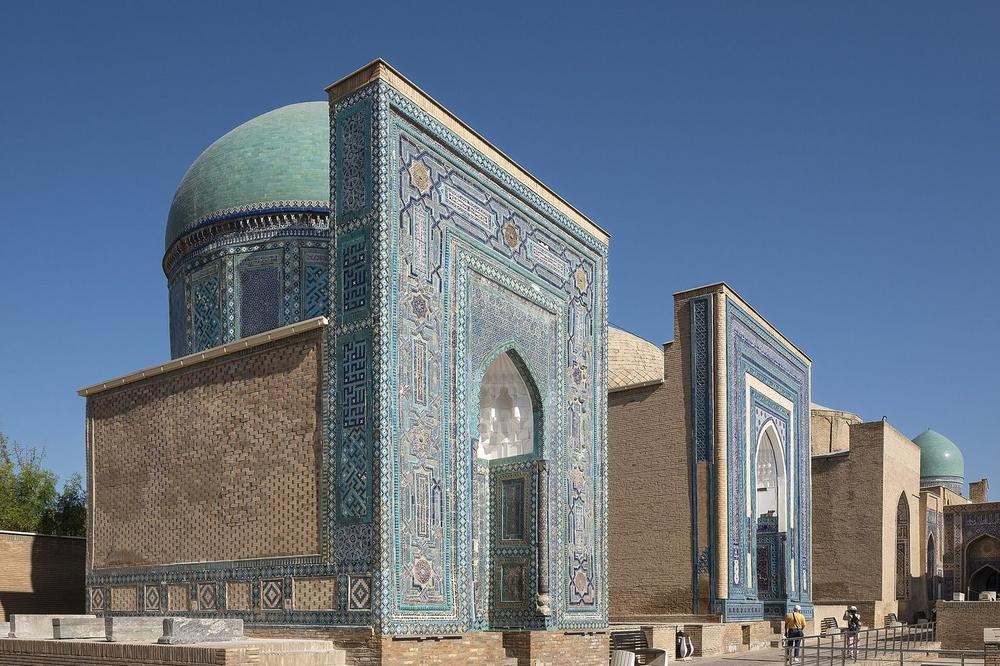
This page prints no entrance fees for Shah-i-Zinda, for the Registan or for Bukhara's monuments, and the omission is deliberate. No official Uzbek price sheet could be obtained in our September 2026 research pass; what circulates instead is a set of blog figures that contradict one another. A wrong fee is worse than a missing one, because a reader who catches it stops trusting every other number on the site. Ask, and you will get the figure our ground agent was charged that month. What a day costs elsewhere in Asia, before any margin, is on cost by country.
In pictures
When to skip it
- You are coming in July or August and cannot start early. Around 40 degrees, on open brick, with no shade at any of the four principal sites, is not a matter of stamina. It changes what you are able to look at.
- You want landscape, water or wildlife. This is a country of buildings on a plain. The mountains, lakes and horses are across the eastern border, and the sixteen-day Silk Road voyage exists precisely because so many people want both.
- Uneven ground is a problem. Lifts are rare, the old towns are laid in worn brick, the minaret stairs are dark spirals without a usable handrail and the observatory steps are cut into rock. Nothing here is adapted.
- Dinner has to be different every night. The restaurant repertoire is short and repeats, and outside Tashkent the options for vegans and for anyone avoiding wheat narrow sharply.
- You are booking a peak-month trip inside eight weeks. The train window will already have closed, and the Tashkent to Samarkand leg then becomes a long road transfer that arrives with the light gone.
Journeys that go here
The ten-day Uzbekistan journey is the country on its own, running west from Tashkent to Khiva with three nights at Samarkand and the Afrosiyob booked the day the window opens. It is the right shape for a first visit and it does not pretend the desert crossing is a sightseeing day.
The sixteen-day Silk Road voyage carries on over the border into the Kyrgyz ranges, which is the answer for anyone who reads the section above about landscape and feels the lack. For the case for a third night in one city, and what it buys hour by hour, see the Samarkand page; for how Uzbekistan sits against the other countries you might give the same fortnight to, how many days is the page that settles it.
Send us the month before you send us the wish list
The season and the train window decide more about an Uzbek itinerary than any preference does. Give us your dates and we will tell you in the first reply what is still bookable.
Questions travellers ask most
Is entry really visa-free for all four of our markets?
Thirty days, no visa, no fee and no arrival card, for American, British, Australian and most EU passports. The list is applied country by country rather than as a bloc, so it is worth a check against your own passport before you book flights, and it is the kind of thing we confirm in writing with a draft itinerary.
Passports outside the visa-free list use the e-visa: USD 20 for single entry, USD 35 double, USD 50 multiple, with processing of about three working days. A separate five-day transit arrangement covers a long list of nationalities and is relevant only if Uzbekistan is a stop rather than the destination.
Where are the entrance prices for Samarkand and Bukhara?
Missing, and missing on purpose. A search in September 2026 produced no published Uzbek tariff for the Registan, for Shah-i-Zinda or for the Bukhara sites — only second-hand figures that disagree with one another. The rule on this site is that an unverified number does not get printed, whatever it is attached to.
It makes no practical difference to what you pay us, because every entrance on our itineraries is included at the rate we are charged. If you want the current number before departure, say so and we will report what our ground agent was charged, with the caveat that a report is not a published tariff.
How much does the Afrosiyob booking window really matter?
Enough to decide the shape of the trip. Sales open 60 days before departure and the Tashkent to Samarkand seats can be gone the same day, in part because tour operators take blocks the moment the window lifts. There is no buying at the station on the morning.
If the seats have gone, the leg is a road transfer across the steppe: not dangerous, not uncomfortable, but most of a day rather than two and a half hours, arriving at Samarkand too late to use the light. An operator who lets you find that out after the deposit has been taken has done the job badly. Tell us your dates early and it is a non-issue.
Can we combine Uzbekistan with its neighbours in one trip?
Kyrgyzstan is the natural pairing and the only one that works as a straight continuation. It is also 30 days visa-free for the same passports, its US advisory sits at Level 1 with a note of caution within 30 km of the Tajik border, and its high routes are open in exactly the months when the Uzbek cities are too hot. Summer travellers should be looking at this combination first.
Jordan, Oman, Georgia and Armenia do not join on. The regional network runs through hubs, so linking Central Asia with the Caucasus or the Gulf in one trip means flying back out through Istanbul, Dubai or Doha rather than hopping forward. Which legs join up and which oblige a backtrack is worked through on multi-country routing.
Read next
Tell us about the journey you have in mind
Dates, party size and the places you care about are enough to start. You get a draft route and an indicative price, not a brochure.