Angkor: the pass, the hours, and what stands past the small circuit
The stones are not the planning problem. The pass structure, the hours you are standing in front of them, and the fifty kilometres between the runway and your room are the planning problem, and all three are solvable before you leave home.
At a glance
| Country | Cambodia, mainland Southeast Asia |
| Nights that work | 3 as a floor, 4 if the temples are the reason for the trip |
| Best months | November to February; December and January are the peak of it |
| Hardest month | April, which reaches 40 degrees on open sandstone |
| Airport | Siem Reap–Angkor International (SAI), 50 km out, 45 to 50 minutes |
| Pass | USD 37, 62 or 72 for 1, 3 or 7 days, as at September 2026 |
| Children | Under 12 admitted free, with a passport as proof of age |
| Entry | E-visa USD 36, plus a free e-arrival card for anyone flying in |
| Getting around | A car with a driver on temple days; the sites are a road network, not a walk |
What this place actually is, and what has been spoiled
Angkor is a city, not a building. Successive Khmer kings laid capitals over one another across roughly four centuries on the same plain north of the lake, each with its reservoirs, its causeways and its water engineering, and what survives is the part that was built in stone. Everybody lived in timber, including the kings, so the houses, the markets and the palaces are gone and the temples are what is left. Reading the place as a set of monuments rather than as the surviving masonry of a working city is the single thing that makes visitors tired of it by the second afternoon.
Siem Reap is the town that grew up to service the site: a river, a market, a grid of hotels, and a street of bars that is best treated as somebody else's evening. Nothing in it is old in the way the temples are old, and that is fine. It is where you sleep, eat and wait out the middle of the day, and it does all three well.
The parts that have been used up
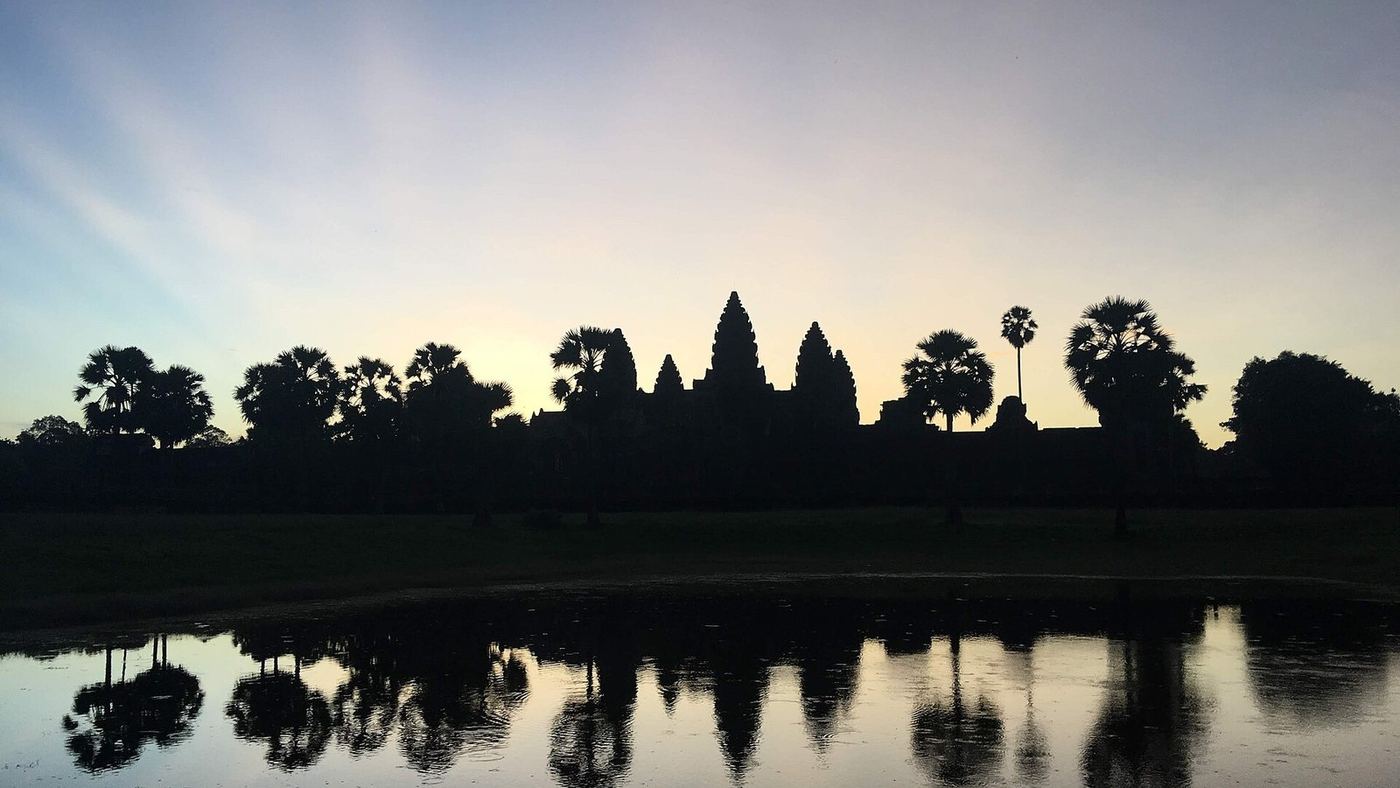
The pre-dawn gathering at the northern reflecting pool in front of Angkor Wat is the clearest case. Several hundred people stand in the dark for a silhouette they have already seen, photograph it, and go to breakfast. The picture is real and so is the crowd, and if you want it, we will get you there. What you should not do is organise the whole visit around it and then walk into the building at the hour it is fullest.
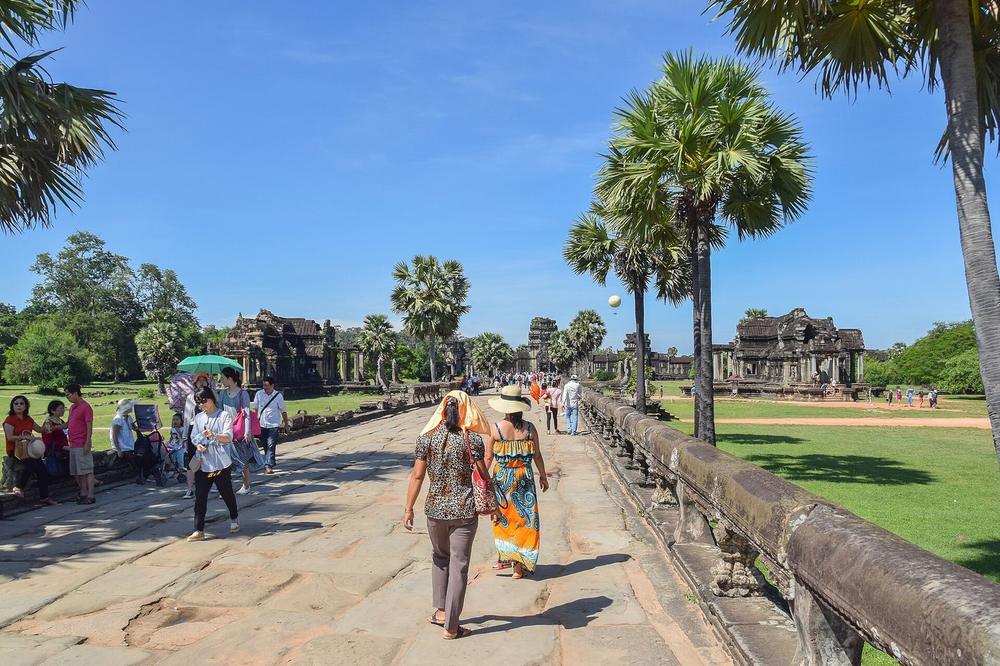
Two more honest lines before you commit. The western naga balustrade — the causeway everybody stands on for that photograph — went into restoration in June 2026 with the work due to close out the year, so part of it may still be hoarded off while you are there. And the busiest temples on the inner loop, between roughly nine in the morning and three in the afternoon, are a queue at every doorway and a wait at every staircase, in full sun, on stone that holds heat. That is not a reason to stay away. It is a reason to be somewhere else in those hours.
How many nights, and what breaks if you take fewer
Three nights is the least that works and four is the number we would take ourselves. The day you arrive is not a temple day: the airport sits about 50 km east of town along the Angkor highway, which is a 45 to 50 minute run, and by the time bags are down and the heat has gone out of the afternoon the day is spent. So three nights buys two full days at the site, and four nights buys three.
Two nights is where it stops working. One temple day is not enough to see the ninth-century capital and the twelfth-century one and understand that they are different places built two hundred years apart, and a single day forces every famous thing into the middle hours, which is exactly the window this page is telling you to avoid.
How a three-day pass is actually spent
This is the mechanism most people miss, and it changes the shape of a stay. The three-day pass costs USD 62 and its three days do not have to be consecutive: they may fall anywhere inside a ten-day window that starts when you first use it. The seven-day pass at USD 72 works the same way across thirty days.
- Day one the inner temples, starting at first light and finished by the time the sun is high.
- Day two the outer ring and the temples up in the hills, which are quieter all day because they take an hour to reach.
- Day three, not used. The lake, a workshop, the museum, a swimming pool, or nothing at all. The pass sits in your pocket and expires no faster.
- Day four the third temple day, once your legs and your eye have recovered, and this is reliably the day people remember.
The money argues the same way. One day on its own is USD 37; three days is USD 62, which puts the second and third at about USD 12 each. A traveller who buys the single-day pass to save money has paid USD 37 for the most crowded, most hurried and least comprehensible version of the site available. Where the rest of the country fits around this, and how many nights it wants, is on Cambodia and under how many days.
When to go
| Months | On the temple road | The trade |
|---|---|---|
| December and January | 24 to 30 degrees and dry; the most comfortable weeks in the year | Everybody else knows it, so rooms and guides are at their dearest |
| November, February and March | Dry, warming through, and materially quieter than the peak | March is already hot by mid-morning |
| April | Up to 40 degrees, with almost no shade between the car and the doorway | The lowest rates of the year, and days that must end by eleven |
| May to October | Showers in the afternoon rather than all-day rain, and cooler air with them | The Tonle Sap boat runs, the moats fill, and the site is at its emptiest |
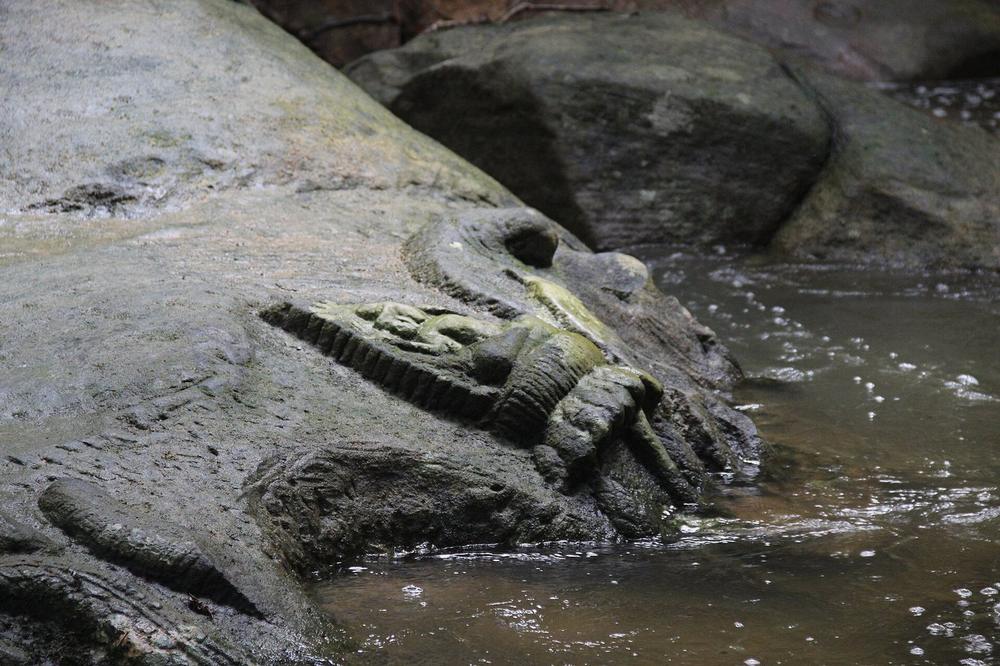
The wet half of the year is undersold, and it is worth saying why rather than simply calling it green. Rain here arrives as an event, usually late in the day, and it ends. What it leaves behind is water in the reservoirs, dark wet laterite instead of pale dusty stone, grass back on the causeways and a fraction of the visitors. Kbal Spean, the carved streambed up in the hills, is only worth the walk when there is water running over the carvings, which rules out most of the dry season altogether.
April deserves its own warning because it is the month people book when they are chasing a rate. Sandstone at forty degrees in full sun is not a detail of the trip; it is the trip. If April is fixed, the shape of the day is temples from opening until ten, nothing whatever until four, and dinner early. Which months suit which corner of Asia is worked through on when to go.
Getting there and getting around
Every commercial flight now uses Siem Reap–Angkor International, which opened in 2023 about 50 km from town; the old field a few minutes from the hotels shut permanently that same October and has not reopened. Sixteen carriers use the new field, and both Bangkok and Ho Chi Minh City connect with it daily, so reaching the province is easy enough. Getting from here to your room is a 45 to 50 minute drive, and the round trip is 100 km that has to be paid for in time at both ends of the stay. An itinerary offering you a temple on the evening you land was written before 2023 and never revised.
Arriving overland from Thailand is not an option and has not been for over a year. Every official crossing has stayed shut since the clashes of 2025, and as at late August 2026 the Thai position was that any reopening would be gradual and undated. Bangkok to the temples is a flight. Vietnam and Laos connect normally.
On the ground
The temples are spread across a road network rather than gathered into a walk. Between two sites you are in a vehicle for anything from five minutes to an hour, and the choice of vehicle matters more than it sounds: an open tuk-tuk is the pleasant answer in December and a mistake in April, when the cabin of an air-conditioned car is the only thing that will get you through a third temple. Our temple days use a vehicle, a licensed guide and a driver who stays with it, so that a hat, a bottle of water or a change of shirt is never more than a few minutes away.
Leaving for the capital, the drive measures anywhere from 319 to 403 km according to which way round you go. Reckon four to six hours in a car and nearer six on a bus, level the whole way and always done between dawn and dusk. The Tonle Sap boat is the alternative at roughly seven hours and about USD 49, and it needs high water, so it broadly runs July to March and does not sail in April, May and June.
What it costs on the ground
Our fourth price band covers Cambodia: think USD 190 to 300 a head for every day on the ground, reckoned at four travellers and before any flight. Siem Reap is where the fixed charges bite hardest, because the pass is bought per person and cares nothing for the size of your party.
| What | Amount, as at September 2026 |
|---|---|
| Angkor pass, 1 day | USD 37 |
| Angkor pass, 3 days used across a 10-day window | USD 62 |
| Angkor pass, 7 days used across a 30-day window | USD 72 |
| A child under 12 at any of the above | Free, on production of a passport |
| Tourist e-visa, evisa.gov.kh | USD 36, non-refundable |
| E-arrival card, compulsory for air arrivals | Free |
| Applying for the visa through the arrival-card portal | Adds USD 6 |
| Boat to Phnom Penh, when the water is high | About USD 49 |
Read the top three lines as a cost per temple day and the decision makes itself. Three days on the USD 62 pass works out near USD 21 a day; a single day works out at USD 37. Nobody over the age of twelve pays less than anybody else, the price is identical at every counter, and buying early buys nothing.
No hotel or restaurant figure appears above, and that is deliberate: we could not source a current published rate for this town that we would be willing to put in front of you, and an invented one is worse than a gap. Any quote we send names the property and the nightly rate it carries. The same comparison drawn across every country here sits on cost by country.
In pictures
When to skip it
- You have one night between two flights. The airport is 50 km away at both ends of that night, which leaves a single hurried temple morning bought on the most expensive pass per day that is sold.
- Your one possible window is April, and you do badly in heat. Nothing in an itinerary arranges its way around forty degrees and open stone; all it can do is finish earlier.
- You cannot manage steep, uneven and often handrail-free stairs. Much of the site is walkable on the flat, and a good deal of the best of it is up a staircase built for barefoot priests. We will say in advance which temples work and which do not, rather than let you find out at the bottom of one.
- You want the famous photograph and nothing else. A silhouette at dawn and a flight out at noon is a picture, not a visit, and the restoration work on the western causeway may be in your frame until the end of 2026.
- You planned to arrive by road from Bangkok. That crossing has been closed since 2025; if it is still on a quote you are comparing, ask what else in the document is a year out of date.
Journeys that come here
Our nine-day Cambodia journey holds four nights here so that the three-day pass gets three real mornings, and then leaves for the rice country and the capital rather than adding a fourth temple day. It is the shortest route on this site that treats Angkor as a place rather than a stop.
The 22-day Grand Indochina puts three nights here at the very end, after Vietnam and Luang Prabang, on the argument that this site flattens whatever follows it. The 28-day Asia Crossing gives it four nights and three temple mornings on its way from Japan to Bangkok.
Three temple days, or two and a rest day?
Tell us your month and how early you are willing to get up, and we will tell you which temples belong in which hours before any itinerary is drawn.
Questions travellers ask most
How do the three days on a USD 62 pass actually get used?
They do not have to run back to back. The three days may be taken on any three dates inside a ten-day window that opens when the pass is first scanned, so a rest day, a lake day or a flight down to the coast in the middle costs you nothing in pass value.
The shape we build most often is temples, temples, a day off, temples. The third temple morning after a break is worth more than the third in a row, because by then you can tell a ninth-century wall from a twelfth-century one and the site stops being a series of ruins.
What time should we be at the temples, and where do we go at midday?
In at opening and out again by mid-morning. From roughly nine until three the inner loop carries every coach group in the province, and the heat on open stone is doing as much damage to the visit as the crowd is.
The middle of the day belongs to a swimming pool, the museum, a long lunch or a workshop in town, and the second half of the afternoon belongs back at the site, when the day trips have gone and the light is worth something. The temples an hour out in the hills are the exception: they hold far fewer people at any hour, which is what makes them the right use of a second or third day.
Is the restoration work at Angkor Wat going to spoil it?
Not the building. What began in June 2026 is work on the western naga balustrade, which is the causeway approach and not the building, and the schedule ran to the close of 2026. Nothing has been reported about the temple shutting to visitors.
What it can spoil is one photograph. If the frame you have in mind is the classic one taken from the western approach, expect fencing in part of it and plan a second angle. We will tell you the current state of the work when your dates are fixed rather than let you discover it on the causeway.
Are three nights enough, or should we take four?
Three nights works when Angkor is one leg of a longer route. It gives two full temple days, which covers the inner loop and one trip out to the hill temples, and it accepts that the day you land does nothing but land.
Four is what we would take ourselves if the temples are why the trip exists. The extra night pays for the rest day in the middle, which is the difference between three temple days and two temple days plus an exhausted third. Should the week have to give up a night somewhere, let the capital surrender it rather than this town.
Read next
Tell us about the journey you have in mind
Dates, party size and the places you care about are enough to start. You get a draft route and an indicative price, not a brochure.