Luang Prabang: two rivers, low roofs, and a dawn that is not a show
A former royal capital on a peninsula between the Mekong and the Nam Khan, small enough to walk end to end and quiet enough that the walking is the point. One morning ritual here asks more of a visitor than anything else in this region.
At a glance
| Country | Laos, mainland Southeast Asia |
| Nights that work | 3 as a floor, 4 when this town is the reason for the trip |
| Best months | November to February, with October and March workable |
| Hardest window | May to September, when roads north of town can close |
| Airport | Luang Prabang (LPQ), reached from Bangkok, Hanoi and Ho Chi Minh City |
| By rail | About 2 hours from Vientiane; the station is outside town at both ends |
| Entry | E-visa USD 50, up to 30 days, four to five working days to issue |
| The climb | Phou Si is 328 steps, and best taken well before sunset |
| Known for | The peninsula, the alms round, the temples and the falls |
What this place actually is, and what has been spoiled
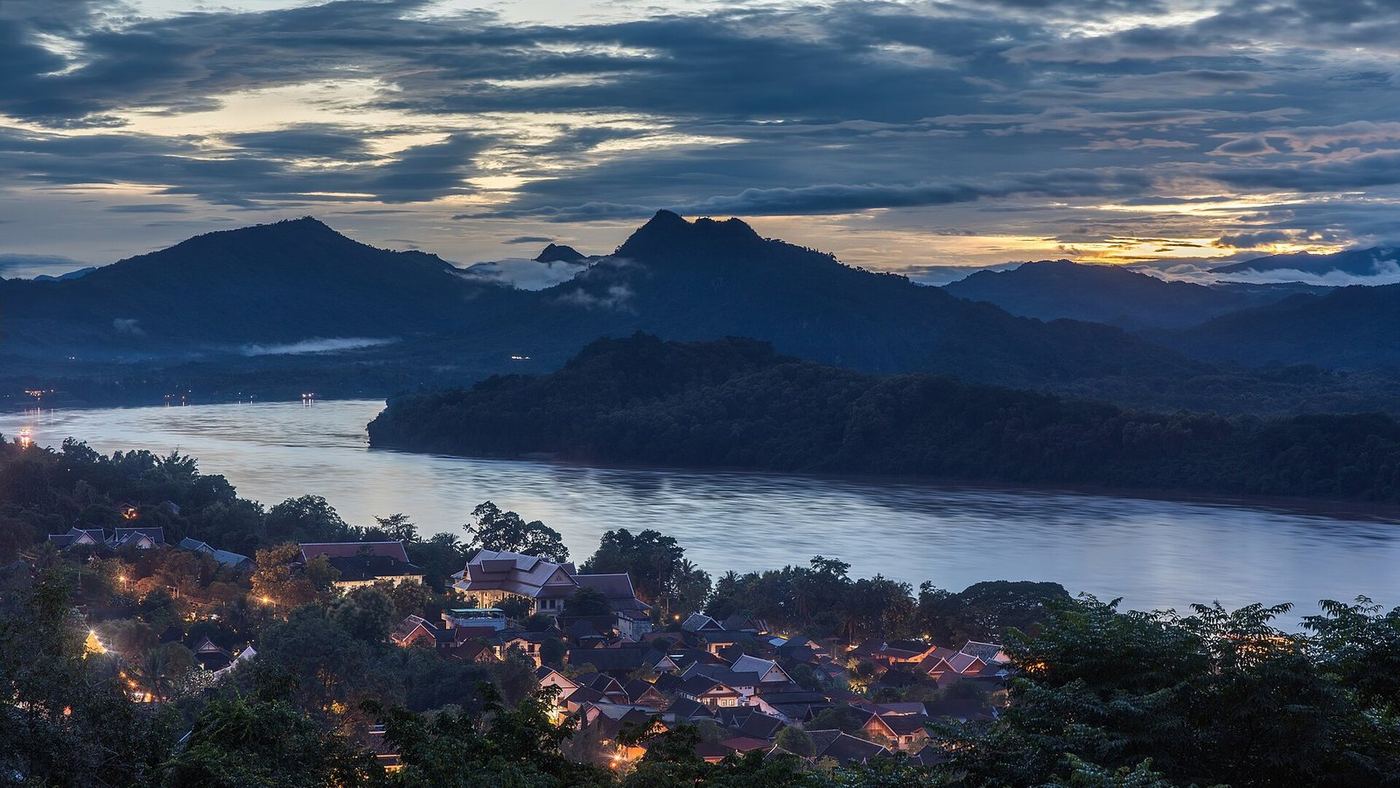
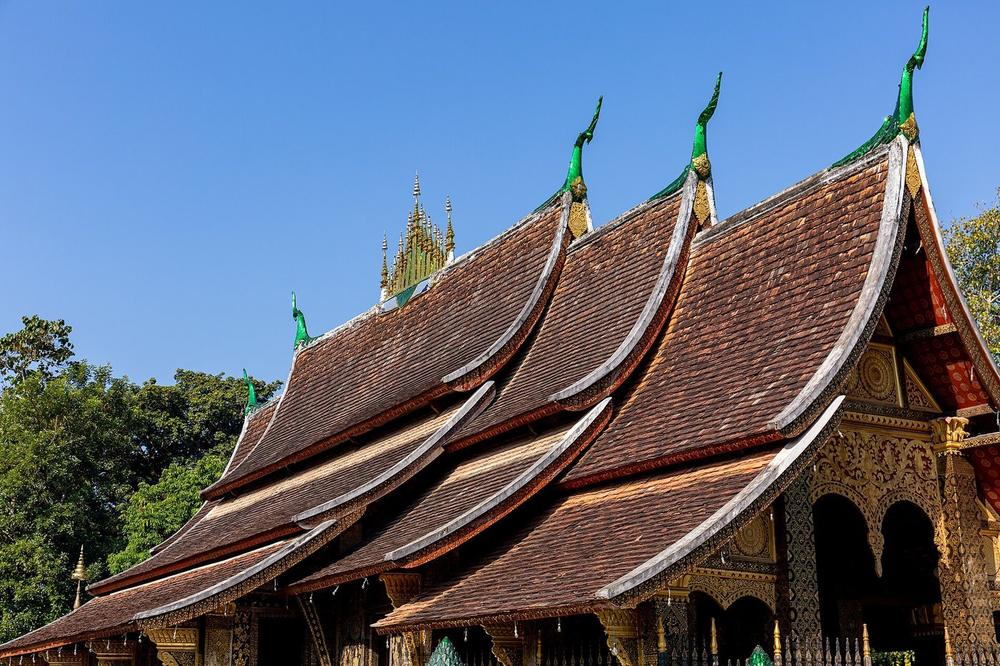
The old town occupies a finger of land where the Nam Khan runs into the Mekong, with a wooded hill in the middle of it. On that finger stand a few dozen working monasteries, a modest royal palace, two centuries of shophouses and a good deal of timber, all of it low, because a protected centre does not permit anything else. You can cross the whole of it on foot in under an hour. The town is not a sight; it is a place with a particular rhythm, and the rhythm is the product.
That is also why it is fragile. A small centre with a fixed stock of old buildings has taken on more arrivals every year, and much of the peninsula now trades as guesthouses, cafes and shops rather than housing families. The night market has drifted a long way towards goods that were not made anywhere near here. Sunset on the hill has become a scrum, which is a shame, because the same view an hour and a half earlier is empty and just as good.
None of that has taken the town away. It has narrowed the hours in which you meet it. Before eight in the morning and after nine at night the peninsula belongs to the people who live on it, and those are the hours worth planning around.
The alms round, and how a visitor behaves
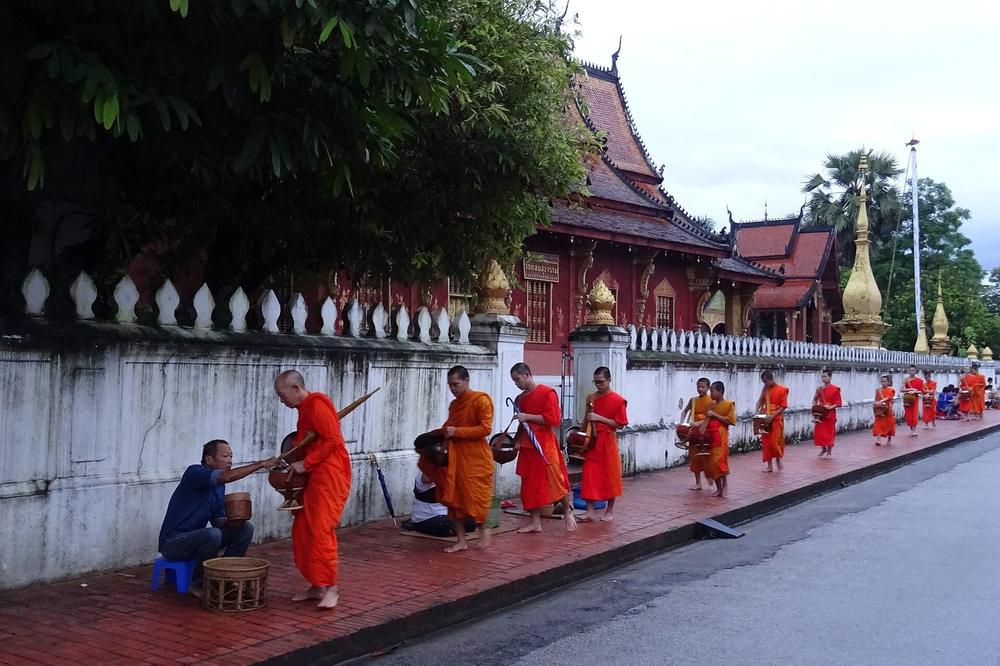
Tak bat happens at first light. Monks and novices from the town monasteries walk a fixed route in silence and receive the food they will eat that day; households along the route rise before dawn to cook the rice they offer. It is a religious obligation running in both directions, it happens every morning whether anybody is watching or not, and it is not a performance, a parade or a photo opportunity. This is the plainest thing we say on this website, and we would rather lose a booking than soften it.
What visitors have done to it in places is not a secret: camera flashes at close range, people stepping into the line for a better angle, coaches arriving at the kerb, and vendors selling sticky rice of a quality nobody would offer a monk, sometimes collected up and sold again afterwards. Local authorities and the monasteries themselves have asked repeatedly for this to stop.
- The default is to watch, from across the street, or not to come at all. Nobody is owed a place in this. Sleeping through it costs you nothing that matters.
- If you watch: stand well back on the opposite pavement, stay quiet, keep still, and do not let a camera come between a monk and the person offering. No flash, at any distance.
- If you offer: arrange it through your guide or your hotel the day before, buy nothing at the kerbside, kneel or sit low enough that your head never rises above theirs, cover shoulders and knees, pass the food across without speaking, and keep your eyes down.
- Never: block the route, follow the line down the street, hire a vehicle to keep pace with it, or photograph a face at close range.
The reasoning behind rules of this kind, and the things we refuse to book anywhere in Asia, sits under responsible travel.
How many nights, and what breaks if you take fewer
Three nights is the floor, four is right when this town is the reason you came to Laos, and the case for the fourth is not a longer list of sights. There is no longer list. Two days covers the palace, the monasteries, the hill and the falls without hurrying anything.
What two nights removes is every hour outside those sights: the market at half past five while it is still trading to households, the middle of an afternoon with nothing scheduled, the walk back along the Mekong after dinner when the town has gone quiet. Those hours are what people describe when they get home, and they are the first thing a compressed itinerary spends.
There is also a mechanical reason. The alms round is a dawn event and the falls want a morning; put both into a two-night stay and you have committed every early hour you have, with an arrival and a departure attached to either end. That two-night slot dropped between Hanoi and Angkor, which half the market sells, delivers two transfers, one temple and an evening at a market stall. The wider arithmetic of how long each country needs is under how many days, and the country itself is on Laos.
When to go
| Months | In town | The trade |
|---|---|---|
| November to February | Dry and cool, with genuinely cold mornings on the river in December and January | The obvious window, so rooms in the converted houses go early |
| October and March | Shoulder months at either end of the dry season, both of them workable | October still has the rivers full; March is warming fast |
| April | The hot end of the dry season across the whole of mainland Southeast Asia | Any walking day, and the 328 steps in particular, costs more than it should |
| May to September | The monsoon: heavy bursts rather than all-day rain, and the falls at volume | Rural roads north of town can become impassable, so the river villages cannot be promised |
The monsoon is a real option here and the upside is not just a lower rate. The limestone pools run at full flow, the hills behind them stay wet and green, and the town holds a fraction of the visitors it does in January. On a stay confined to this town and the capital, which a sealed road and a railway both serve, the rain costs you an hour or two a day and very little besides.
Where it stops being a fair trade is any plan that depends on the north. Above Luang Prabang the surfacing gives out, the Nam Ou comes down fast and the colour of tea, and the climbs to the viewpoints turn to mud. We will redraw a June-to-September journey around the places that hold up rather than sell you a river leg we cannot deliver.
Getting there and getting around
Nothing flies here from Europe or North America. Flights come in from Bangkok, Hanoi, Ho Chi Minh City and the other regional hubs, and the run from the terminal into town is short — one of the few in this part of Asia that still is. Most journeys we build come in by air and leave by rail, or the reverse.
The train, and the half day it really takes
The fast service up from Vientiane needs about two hours. Driving the same ground costs five to six and a half. Fares by class come to roughly 330,000, 522,000 and 975,000 kip, which is to say around USD 16, USD 25 and USD 47, and the older slower trains undercut all three while taking rather longer over it.
Then the qualification, which matters here more than any fare does. Neither station stands in its own town. Count the drive out to one, the drive in from the other and the queue through security, and the morning has gone: half a day from door to door, not two hours. Money is not the obstacle either — seats are. They release on a narrow window, a Lao public holiday empties them, and we book through an agent rather than send anybody to a counter. If none are left you are in a car for the day, and that is a sentence to read now rather than hear in Vientiane.
Around town, and the two half-days out
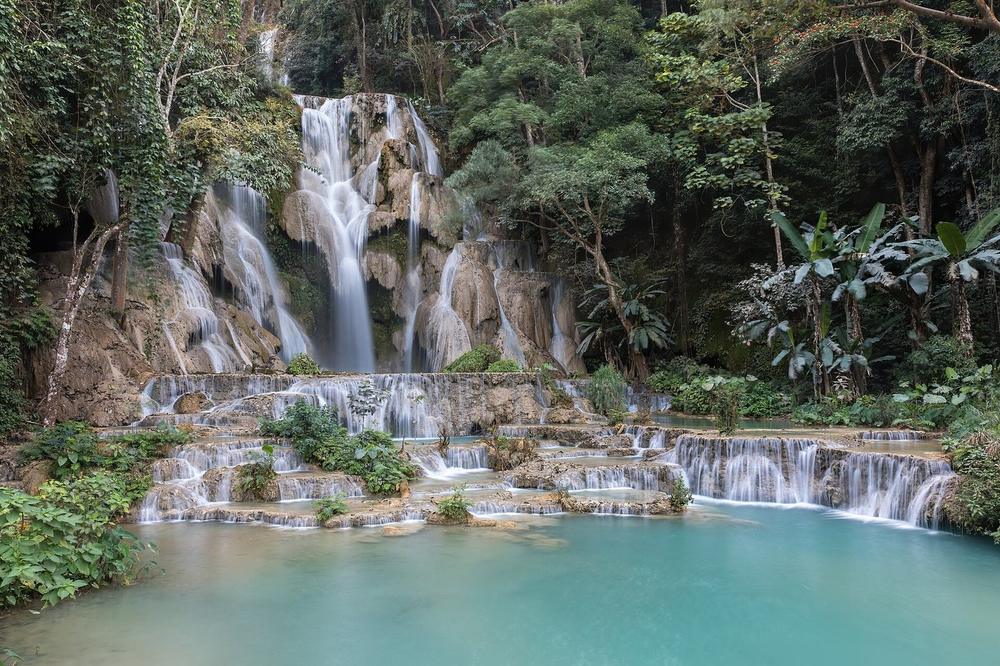
In the centre you walk, and there is nowhere you cannot reach on foot. Bicycles work on the flat river roads and are wasted on the hill. Two excursions account for most of what people take a vehicle for: the limestone pools at Kuang Si, about an hour to the south, which want the first hour after opening rather than the middle of the day; and the caves upriver on the Mekong, reached by a slow boat that takes longer going up than coming back. Phou Si, in the middle of town, is 328 steps, and we climb it in the late afternoon rather than at sunset, when the summit fills and the view does not improve.
What it costs on the ground
Laos falls in our fourth price band: USD 190 to 300 a head for every day on the ground at four travellers, flights excluded. This town behaves oddly inside it. Entrances cost little, distances are short, and there are so few genuinely good rooms that each is priced by what the house next door is charging rather than by the season, which is why your choice of month moves the bill less here than nearly anywhere else we sell.
| What | Amount, as at September 2026 |
|---|---|
| E-visa for US, UK, EU and Australian passports | USD 50, up to 30 days, four to five working days |
| Train from Vientiane, second class | About 330,000 kip, roughly USD 16 |
| The same in first class | About 522,000 kip, roughly USD 25 |
| The same in business class | About 975,000 kip, roughly USD 47 |
A refused or abandoned application keeps its fee, so the sensible course is one careful filing, made early. The reduced USD 35 rate that circulates online applies to Chinese and Vietnamese citizens and not to any passport this site is written for.
You will not find an entrance figure for the falls or a room rate above. Neither could be sourced to a current published figure in our September 2026 research, and a number that looks about right is worse than an empty line, because a reader who checks one number checks all of them. Day rates for every country on this site are lined up beside each other on cost by country.
In pictures
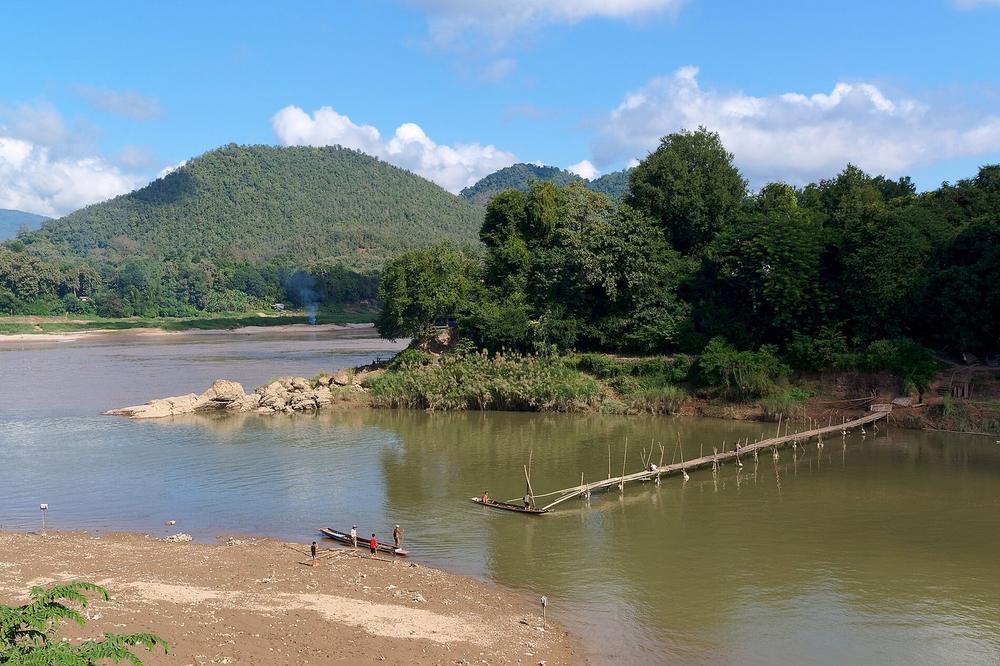
When to skip it
- You are not prepared to be up before dawn or to sit through a religious observance on somebody else's terms. Skipping the alms round entirely is a perfectly good decision; treating it as a show is not, and we will not build a morning around the second.
- You want a large modern hotel with a big room. The protected centre limits what can be built, so the best beds here are converted timber houses with stairs, small rooms and no lift. That is a real constraint, not a charm offensive.
- Your dates sit somewhere in May to September and the river above town is the point of the trip. Those roads can shut. The holiday is still worth having; it simply becomes another holiday, and we will tell you so before any money moves.
- You want a monument on the scale of Angkor. There is nothing of that size here and there never was. If a single great building is the point of the holiday, spend the nights in Cambodia instead.
- You have two nights and a list. This town gives up almost nothing to a schedule, and a stay that is fully booked from the first morning will read as pleasant and slightly thin.
Journeys that come here
Our nine-day Laos journey holds four nights here, the figure this page has spent its length arguing for, then two more upriver where the tarmac ends, before the fast train south. It is built on the assumption that a country whose whole proposition is unhurriedness cannot be hurried.
The 22-day Grand Indochina holds three nights here in the middle of the route, between the Vietnamese coast at Hoi An and Angkor. Compress a route across three countries and this is the leg that disappears first — and the one travellers mention in the letter they send a year later.
Three nights here, or four?
Tell us how long you have in Laos altogether and whether the river north matters to you, and we will say where the nights should sit.
Questions travellers ask most
Should we go to the alms round at all?
Only if you are willing to be a guest at it. It is a monastic discipline held every morning at first light, not an event laid on for visitors, and the least harmful thing a traveller can do is watch quietly from the far pavement or stay in bed. Neither choice needs an apology.
If you want to offer food, ask us or your hotel the day before and it will be arranged properly: prepared rice rather than anything bought at the kerb, a position kneeling below the monks, covered shoulders and knees, no talking and no camera in anybody's face. We brief this the night before on every journey that comes through here.
When is the best time to climb Phou Si?
Late afternoon, and not at sunset. The climb is 328 steps up the hill in the middle of town, and the summit is small. In the hour before the sun goes it is shoulder to shoulder, and the two rivers look no better from a crowd than from an empty terrace ninety minutes earlier.
The other good option is early, before the heat, when the light comes off the Mekong rather than into it. If the steps are not realistic, the same rivers can be seen from the water, which is a better use of an hour than a climb taken reluctantly.
How much of a morning do the falls take?
About an hour on the road each way, and the useful part is the first hour after they open. Arrive with the doors and the pools are quiet; arrive mid-morning and you are queueing along a boardwalk for a photograph of the same water. The pools are colder than they look in pictures and most people swim anyway.
The rescue enclosure at the entrance is worth twenty minutes. There is no handling, no feeding and no photograph with an animal, which is exactly why we stop there and why we refuse the attractions that offer all three.
Is the wet season a bad time to come here?
Not for this town. Rain from May to September comes in short violent bursts and then stops, the waterfalls run at their fullest, the hills hold their colour and the peninsula is close to empty. Rates are lower and the good rooms are actually available.
What we refuse to promise in those months is the road north. Access to the river villages above town can fail without notice, so a wet-season journey gets redrawn around the places that hold up rather than sold with a leg we may not be able to run.
Read next
Tell us about the journey you have in mind
Dates, party size and the places you care about are enough to start. You get a draft route and an indicative price, not a brochure.