Hoi An: two good hours a day in the old town, and how to use them
A port that lost its river, then lost its money, and so never got round to knocking itself down. It is the most preserved town in Vietnam and the most visited, and both of those facts are managed by deciding what hour you are standing in it.
At a glance
| Country | Vietnam, central coast |
| Nights that work | 3 as a floor, 4 if a tailor or the beach is involved |
| Best months | February to April, mild and dry before the heat |
| Worst month | October, the wettest of the year on this coast |
| Airport | Da Nang (DAD), about 45 minutes by road |
| Old town | Closed to traffic from 09:00, and again after 18:00 |
| Tailoring | Two days for anything you will still wear next year |
| Beach | An Bang, four kilometres out and flat all the way |
| Entry | E-visa USD 25 single or USD 50 multiple; five EU nationalities are exempt for 45 days |
What this place actually is, and what has been spoiled
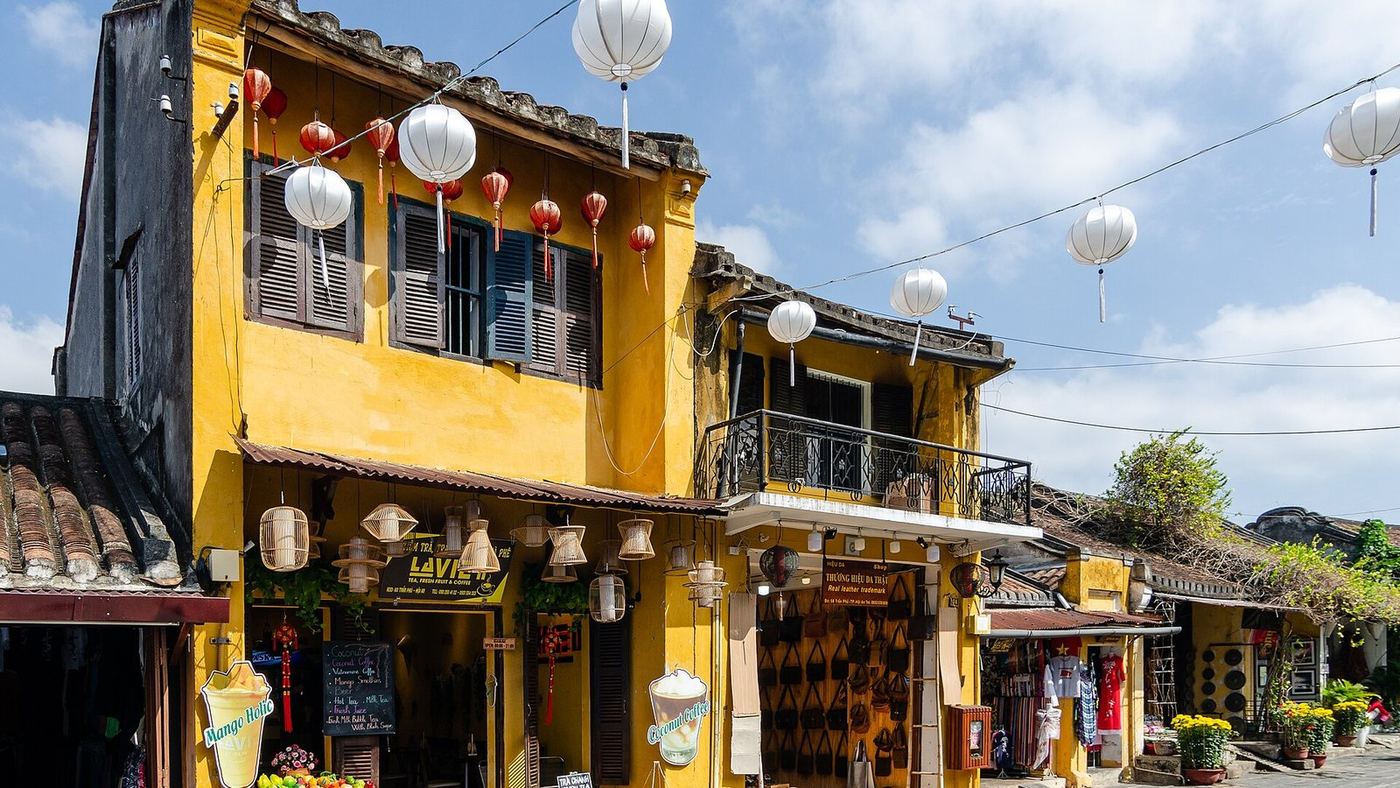
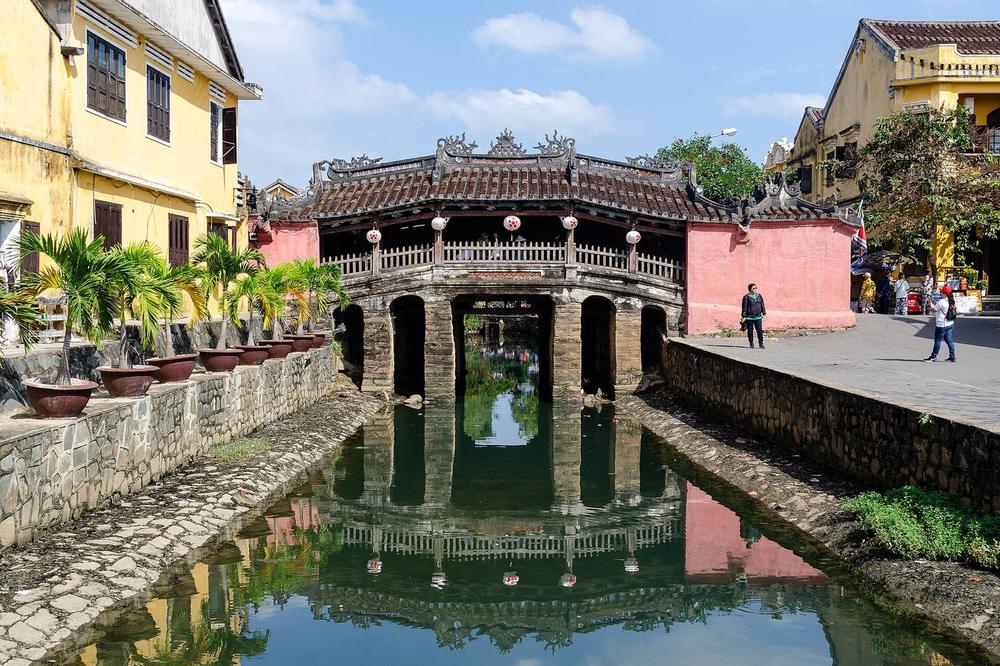
For a few centuries this was a working port where Japanese, Chinese, Dutch and Portuguese traders waited out the monsoon and did business with each other. Then the river silted up, the ships went to Da Nang, and the town spent the next hundred and fifty years too poor to demolish anything. The covered bridge, the assembly halls built by particular Chinese communities, the long narrow merchant houses with a shop at the front and a boat door at the back — all of it survives because nobody could afford to replace it.
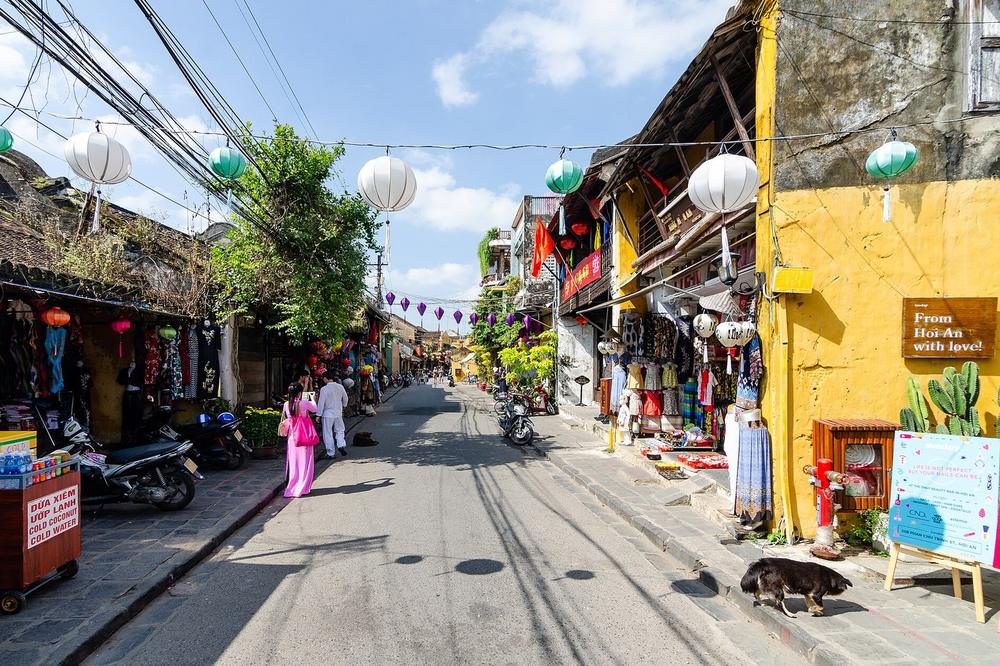
That is the good half. The other half is that a preserved centre of a few streets now receives one of the heaviest visitor loads in the country, and between the middle of the morning and the early evening the lanes are a slow shopping crowd with lanterns overhead and a great many shops selling the same objects. Along the river after dark the boats with paper lanterns go out in numbers that have nothing to do with any old custom. Nobody should pretend otherwise.
The town still works, and it works at the edges of the day. From first light until the shops open the old streets belong to people carrying vegetables and children going to school. After the evening traffic ban starts, the lanes empty out again once the day trips have gone back to their coaches. Two windows, most days.
The traffic-free hours
The centre closes to motorbikes and cars from 09:00, and again after 18:00. Those bans are what make walking here tolerable, and they are also the hours the town is fullest, which sounds contradictory until you have stood in it. The way to use them is to be inside the old town before either ban begins rather than arriving with everybody else: on the streets at seven with a coffee, or in place at six in the evening while the light goes. The hours in between are for the beach, the bicycle or a fitting.
How many nights, and what breaks if you take fewer
Three nights is the floor. It gives two full days, which is one for the old town and the countryside around it and one for the beach or the boat, and it accepts that arrival and departure days on this coast get eaten by the drive to Da Nang.
The fourth night is bought by two things, and only two. One is a tailor: anything worth wearing needs 48 hours between the measuring and the last fitting, and a garment made faster than that is a garment that will hang in a wardrobe unworn. The other is the beach, which is four kilometres away and does not repay a rushed hour.
Two nights is the common mistake, and it is a specific one rather than a general shortage. Two nights gives you two evenings and one morning in the old town, which is three of the good windows, and it removes the day out to the river villages, the cycling and the option of a suit. It is not that you will not see the place. It is that you will see it entirely at the hours everybody else does. What each part of Vietnam needs is set out on Vietnam and under how many days.
When to go
| Months | On this coast | The trade |
|---|---|---|
| February to April | The window: mild, dry, and warm enough to be out all day | It is also the window everybody else has found |
| May to August | Hot and largely dry, with the sea at its calmest and warmest | The middle of the day belongs indoors or in the water |
| September to November | The storm season on this coast, with October its wettest month | Low rates, an empty old town, and a real chance of losing days |
| December and January | Cooler, greyer, and flooding still possible into December | Quiet streets and good light; not beach weather |
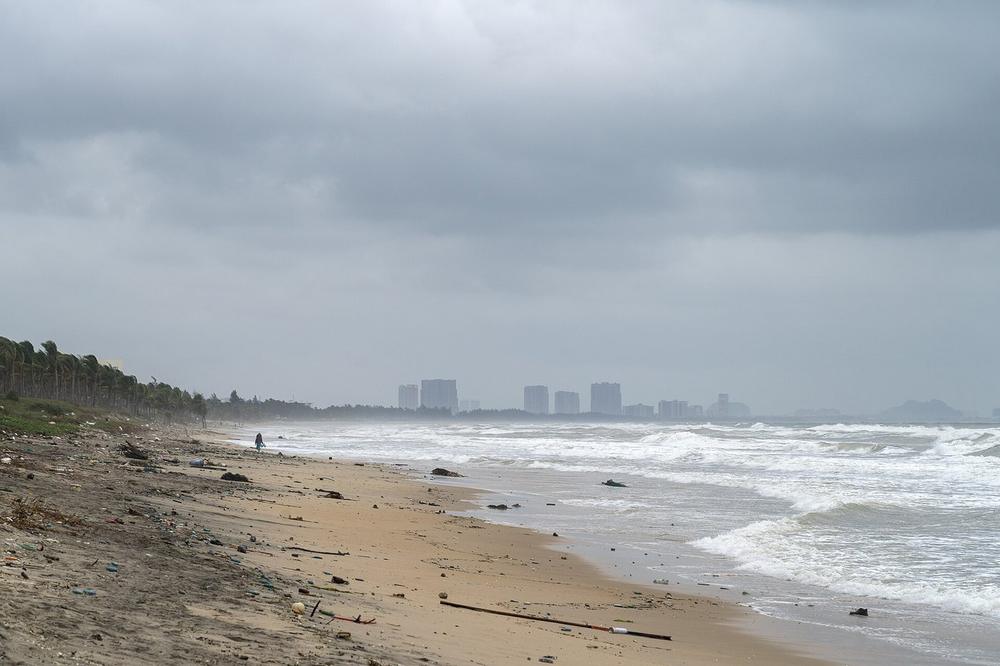
The bad season here is not a slow drizzle, and it is worth being exact. Storms that reach Vietnam mostly come ashore along this stretch. September to November is the season and October the worst of it, a landfall here puts 200 to 400 mm down inside twenty-four hours, and water can still be standing in the streets in December. When the Thu Bon rises, the streets at the river end of the old town go under, shopkeepers move stock to the first floor, and people get about the lanes in boats.
What the flood season does to a booking
It does not make us refuse the dates. It changes how the nights are bought. Through those months every central night goes on a rate that can be cancelled, the schedule carries a spare day in place of a same-day connection, we start reading forecasts four days ahead, and your policy has to include named-storm cover. Arranged that way, a change of plan costs you an afternoon rather than a holiday.
The rest of the answer is geography. Those same October weeks are the best of the whole year up north, so a storm down here is generally a question of where you sleep rather than whether you travel: the nights shift to Hanoi, Ninh Binh or the limestone bays, all of them dry, and we rebook the domestic sector. If the centre is fixed for you — a fitting, a wedding, a return visit — say so early, because it changes what we book and how. The month-by-month picture across Asia is under when to go.
Getting there and getting around
There is no airport here. Everything arrives through Da Nang, about 45 minutes up the coast, which takes domestic flights from Hanoi and Ho Chi Minh City as well as regional services. Hue is roughly two hours north by road over the Hai Van pass, and the same stretch by rail takes roughly three hours in the light, with the sea under the window for most of it. Coming from the north, that train segment is the one piece of the Vietnamese railway worth planning a day around.
One caution about the flight. Bamboo Airways ended scheduled flying in August 2026 and shrank from 44 aircraft to three, which leaves two carriers worth planning around. Vietnam Airlines arrives on time in roughly 77 cases out of a hundred. VietJet manages about 55, meaning every second departure is a quarter of an hour or more behind. On a tight connection that difference decides the day, and it is why we pay for the better ticket rather than the cheaper one.
Around town
The old town is walked, and everything outside it is flat enough to cycle. The ride out past the herb beds and the paddy takes a morning at a gentle pace and is the single best thing most visitors do here. An Bang beach is four kilometres away, which is fifteen minutes on a bicycle or five in a car, and it empties out towards the end of the afternoon.
On swimming: the sea works from roughly February through to August, calm and warm through the middle of that stretch. From September the same weather system that floods the town puts swell and rip on the beach, and the sand itself moves from year to year on this coast. If a beach is a major reason for the trip, the months matter more than the hotel does.
What it costs on the ground
Vietnam is a fourth-band country for us: about USD 190 to 300 for each traveller for each day on the ground, four in the party, flights excluded. This town is one of the few places in the country where hotel rates can be quoted with a straight face, because the market is large and stable enough to have published bands.
| What | Roughly, as at September 2026 |
|---|---|
| A good four-star night here | USD 80 to 170 |
| Five-star, where it exists here | USD 200 to 500 |
| A good four-star night in Da Nang, for comparison | USD 90 to 180 |
| E-visa paid to the government portal | USD 25 single entry, USD 50 multiple |
| Unilateral exemption, five EU nationalities | No visa for 45 days |
Every one of those bands moves about 30 per cent either way as the year turns, and Tet, Christmas and the New Year sit at the top of it. American and Australian passports need the e-visa. British, French, German, Italian and Spanish ones enter for 45 days having applied for nothing at all. Entry rules for the whole of this site are maintained on visas and entry.
Two numbers you will not find here: the old town ticket and the price of a suit. Neither could be sourced to a current published figure, and tailoring in particular is quoted by cloth rather than by garment, so any single number would mislead more than it helped. Ask for both in writing before you commit to either.
In pictures
When to skip it
- October is fixed and the middle of the country is what you came for. It is the wettest month on this coast and the top of the storm season, while the north in those very weeks is at its finest — which makes this a question about routing, not about cancelling.
- You dislike shopping streets. Between mid-morning and the early evening the old town is one, and no amount of good guiding changes what is in the windows. If that is a deal-breaker, two nights at the edges of the day will serve you better than four.
- You want a proper beach holiday. An Bang is a good town beach on a coast with a short swimming season, not an island. Phu Quoc and Con Dao each cost another flight and about three further days; we would sooner build those days in than talk up what this coast already has.
- Two nights is all you have and a suit is on the list. The 48 hours a real tailor needs will not fit, and what you will be sold instead is something rushed that gets worn twice.
- Mobility is limited and rough surfaces are a problem. The old lanes are pedestrianised for much of the day but they are uneven, the merchant houses have high thresholds and steep internal stairs, and the flat cycling country is only flat if you are on a bicycle.
Journeys that come here
Our eleven-day Vietnam journey gives this town two nights on its way down the country, which is the honest number for a route that also holds the north, Hue and the delta — and the reason we say plainly on that page that a suit does not fit into it.
Where it gets the time this page argues for, it gets it on the longer routes. The 22-day Grand Indochina holds three nights here before crossing to Luang Prabang, and the 28-day Asia Crossing holds four, which is enough for the old town, the temple ruins inland, the beach and a tailor without any of them being hurried.
Two nights, three, or four?
Tell us your month and whether a tailor or the beach is part of the plan, and we will tell you what the extra night actually buys.
Questions travellers ask most
When is the old town actually worth walking?
Before nine in the morning and after six in the evening. The centre closes to traffic from 09:00 and again after 18:00, and those bans are what make it walkable, but they also mark the hours when everybody else is in it.
The trick is to be there before each ban rather than with it. First light in those lanes is the finest hour this town has, and hardly anybody spends it. The middle of the day is for the beach, a bicycle through the rice, or a fitting.
Is the tailoring here any good, and how long does it take?
It is genuinely good if you give it time. Two days — 48 hours between the first measuring and the final fitting — is the minimum for a garment you will still be wearing next year. Anything promised overnight is cut fast, finished fast and shows it.
Order on the first evening, fit on the second, collect on the third. We do not take a commission and we do not name shops on this website, because a tailor recommendation that pays the recommender is worth nothing. Ask for the cloth composition and the price in writing before anybody starts cutting.
What happens if a storm hits while we are there?
The storm season on this coast runs from September into November with October at its centre, and when a system comes ashore 200 to 400 mm can fall inside a day. The river rises, the low streets go under, and the road up to Da Nang can shut for a while.
Our answer to it: cancellable rates on the central nights, a spare day instead of a same-day connection, forecasts read from four days ahead, and a standing plan to shift you up to Hanoi or Ninh Binh, which stay dry through the identical weeks. For these dates, named-storm cover on the policy is a condition rather than a suggestion.
Can we swim here, and when?
Roughly February to August, and the middle of that stretch is the best of it: warm water, small surf, and a beach four kilometres from the old town that thins out after four in the afternoon.
From September the swell and the rip arrive with the storm season and the sand itself shifts from one year to the next, so a swim becomes a matter of what the day is doing rather than something to plan around. If the sea is a main reason for the trip, choose the months first and the hotel second.
Read next
Tell us about the journey you have in mind
Dates, party size and the places you care about are enough to start. You get a draft route and an indicative price, not a brochure.