Indonesia is one country and several separate trips
Java holds the buildings. Bali holds the ritual and the traffic. Flores holds the dragons and the water. They share a flag, a currency and an entry fee, and very little else, including the weather.
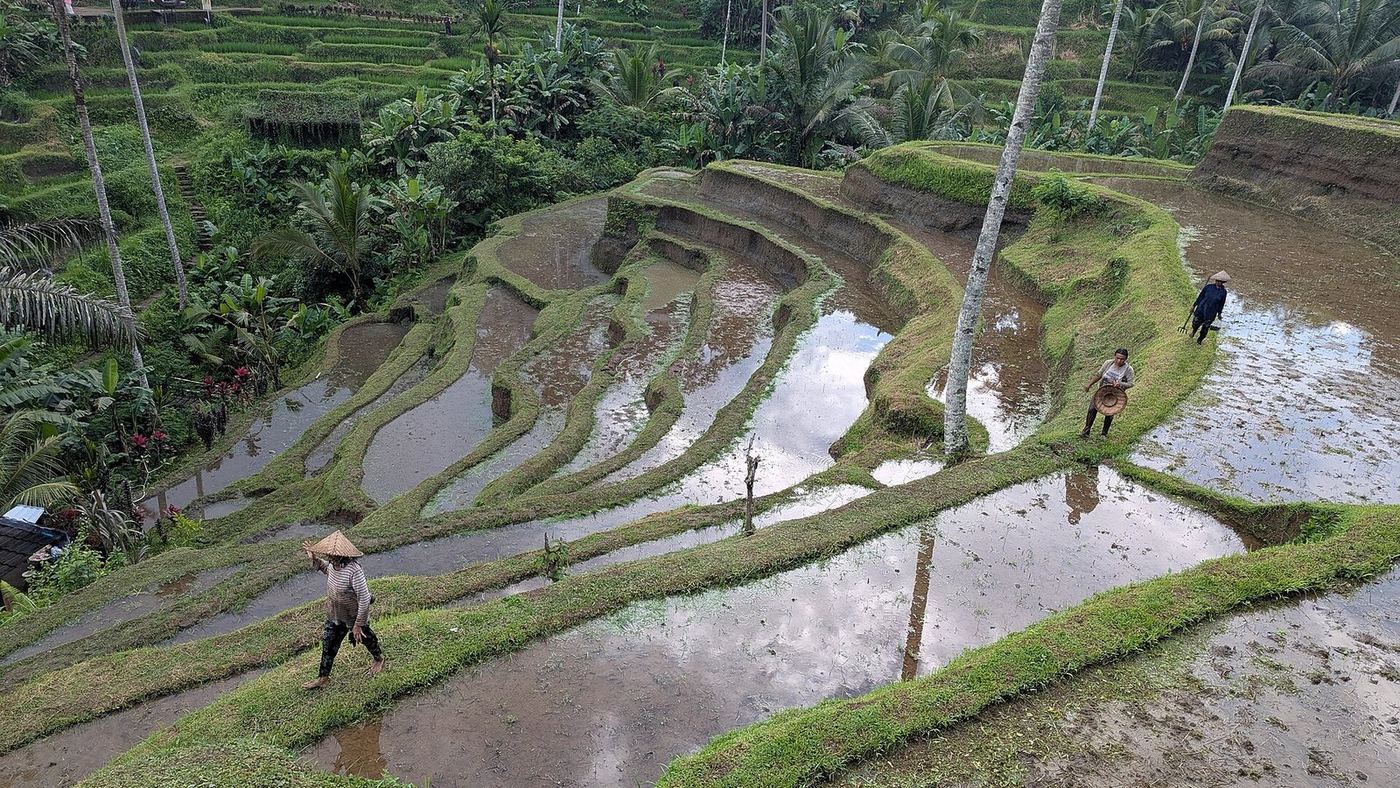
At a glance
| Region | Island Southeast Asia |
| Nights we suggest | 10 to 16 |
| Best months | April to October, driest June to September |
| Long-haul airports | Jakarta (CGK) and Denpasar (DPS) |
| Entry | Paid e-VOA, IDR 500,000, 30 days, one extension |
| Bali levy | IDR 150,000 per person, cashless only |
| Where we will not go | Highland and Central Papua |
Nobody visits Indonesia. They visit two or three of its islands, and the choice of which two decides the length of the trip, the month, the internal flights and most of the budget. This page is about making that choice before the itinerary is drawn rather than after.
What this country actually is
Indonesia is governed as one state and travelled as several. The islands sit on different rainfall cycles, so the wet season in one place is the dry season in another, and the language, the food and the dominant religion change as you move east. Applying a single set of dates to the whole country is the commonest planning error made about it, and it is made by operators as often as by travellers.
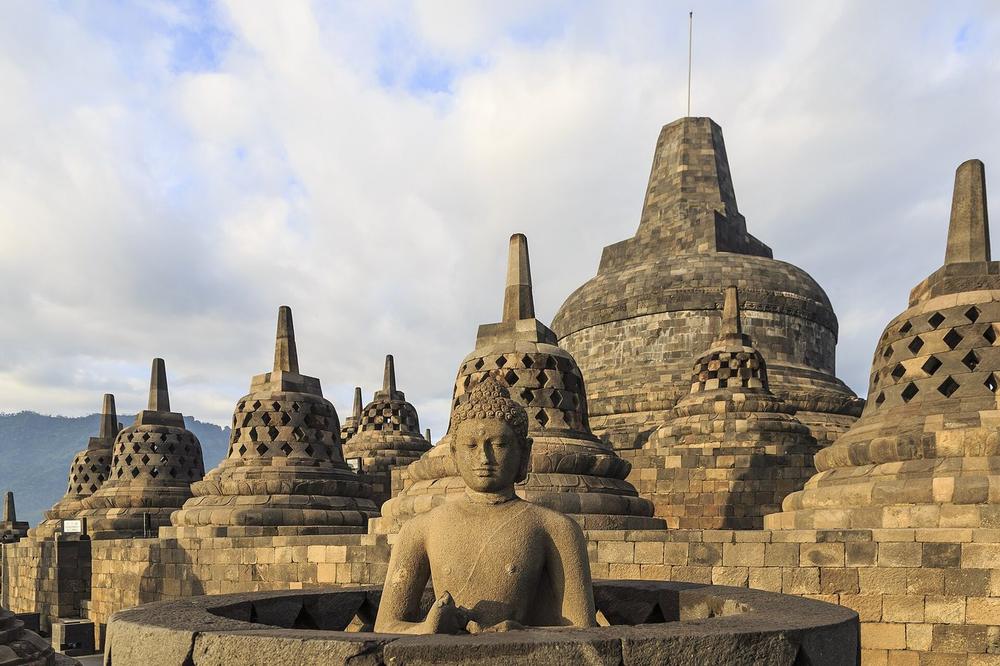
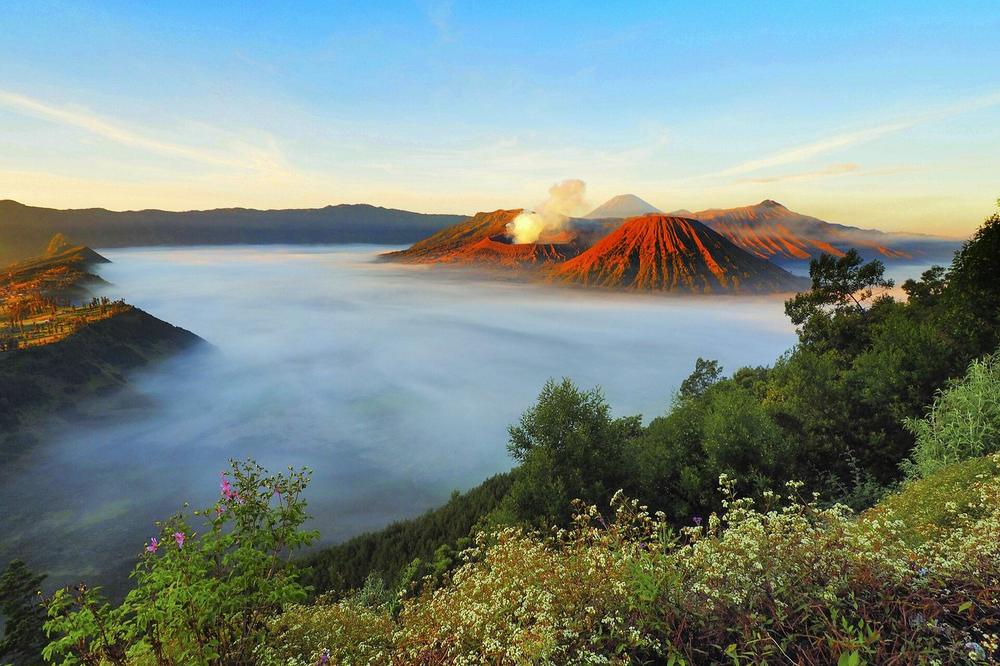
Java is where the buildings are. Borobudur and Prambanan stand on the same plain outside Yogyakarta, close enough to see both in a day and better spread across two, and the Tengger caldera lies east of them behind a long drive and a very early start. Java is also the most heavily populated island on earth, which the road times reflect: a distance that reads as an hour on a map is rarely an hour in a car.
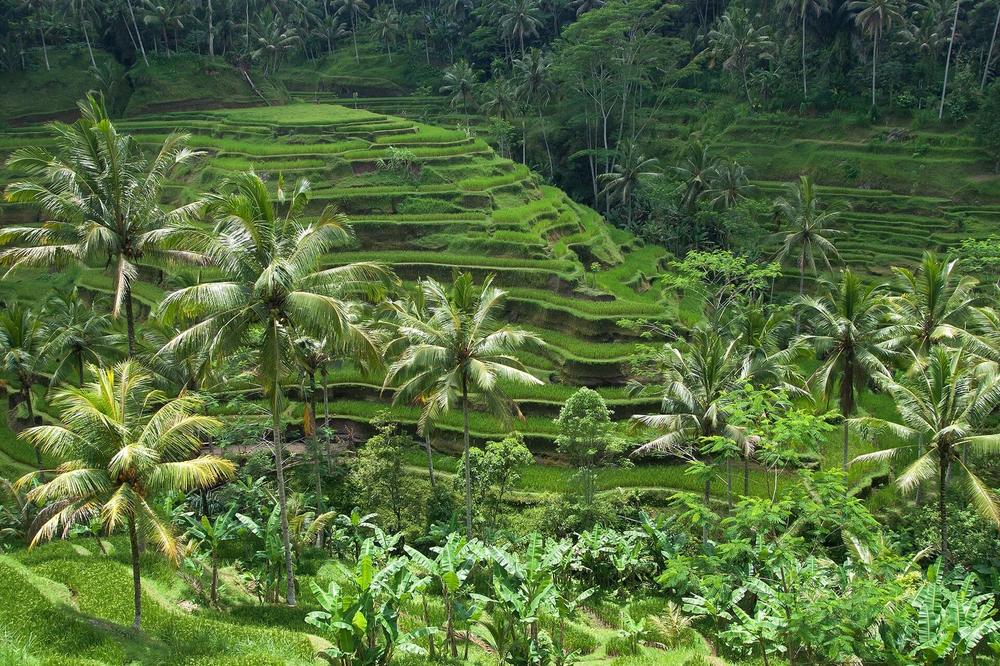
Bali is a Hindu island in a Muslim country, and that single fact explains most of what makes it different — the daily offerings on the pavement, the temple anniversaries that close roads without notice, the carving on buildings that are otherwise ordinary. The southern strip from the airport up through Kuta, Seminyak and Canggu has been built out hard and the traffic there is now the main subject of complaint among people who live on the island. The east coast, the north and the interior above Ubud are a different island with the same name.
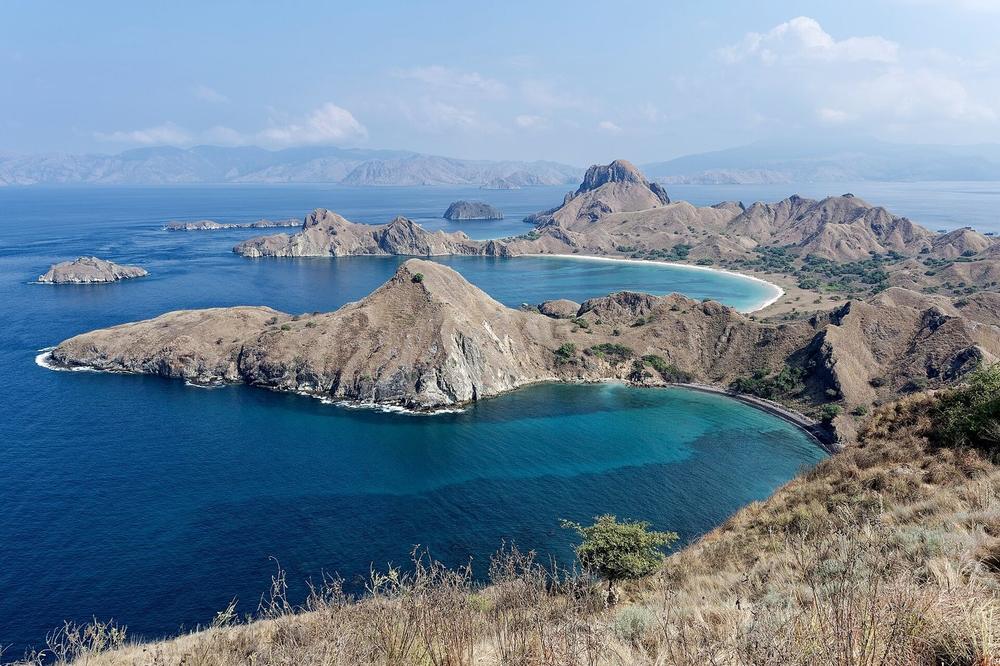
Flores is the third piece most itineraries reach, and it is reached through the town of Labuan Bajo, which exists to put people on boats. The dragons are on Rinca and Komodo; the ridge everybody photographs is on Padar, and since April 2026 that ridge has run on a daily cap of 1,000 visitors split across three timed entry sessions rather than on tickets bought at the jetty. Beyond those three islands the country keeps going for a very long way: Sulawesi for diving in the north and highland funerals in Toraja, Sumatra for jungle and lakes, and the reefs off the Bird's Head in the far east.
Indonesia has more than seventy officially active volcanoes, and the risk they present to a visitor is almost entirely aviation risk rather than ground risk. Mount Lewotobi Laki-Laki, out towards the far east of Flores, holds a high alert level and a 7 km exclusion zone round its crater. Separately, and much closer to the routes most people fly, Anak Krakatau in the Sunda Strait kept both Jakarta airports shut until 08:59 on 7 September 2026 and cost 108 Bali-linked flights their slots over the 6th and the 7th. Denpasar itself kept operating. The lesson is not to avoid the country; it is to stop booking same-day international connections out of it.
The advisories written about the Papuan highlands do not describe Raja Ampat. Armed clashes, kidnapping risk and attacks on aircraft are the reasons given for the Highland and Central Papua provinces, which carry do-not-travel or reconsider-travel advice and which we will not send anyone into. The dive islands off the Bird's Head lie in West Papua province, are reached by an entirely different route, and carry no such warning. One word on the map, two unrelated places. Central Sulawesi, around Palu and Poso, carries its own caution and is the reason a Sulawesi week is normally built in the north or the south rather than across the middle.
How many nights, and what breaks if you take fewer
Ten nights is the working minimum for two islands and sixteen is comfortable for three. Below ten, something has to give, and it is worth deciding in advance what that will be rather than discovering it on day six.
At eight or nine nights the honest shape is Bali alone, in two bases rather than three. The reason is the road. The run across from Ubud to Amed measures 87 km and takes between two and a half and two and three-quarter hours behind the wheel, more once the morning traffic has built after ten, and more again if the room is in one of the villages strung out past Amed itself. Two of those moves is most of a day gone. An itinerary that promises Ubud, the south, the east coast and the west in a week is quietly spending the holiday on that road, and no operator can drive it faster than anyone else.
Ten to twelve nights buys Java and Bali properly: three nights on the Yogyakarta plain, one on the caldera rim, and the rest split between two places in Bali. Fourteen to sixteen adds Flores, which is not an extension but a third leg with its own flights and its own weather, and which needs four nights at Labuan Bajo to make the boat days work without racing.
What breaks first when nights are cut is always the same thing: the buffer. Ash, a late domestic flight or a temple ceremony blocking a road will each cost half a day at some point on a two-week Indonesian route. Journeys that end with a same-day international connection have nowhere to absorb that. The arithmetic behind trip length across the region is set out on how many days.
When to go
The table below describes Bali and Java, which is what most people mean. Eastern Indonesia and the Sulawesi peninsulas run on their own cycles, and a multi-island route in a crossover month needs checking island by island rather than as a country.
| Months | Bali and Java | What that means for a trip |
|---|---|---|
| April to June | Dry season opens | Temples are walkable and the Tengger rim is clear more mornings than not. April is the first month we would build a Bromo sunrise around. |
| June to September | Driest and least humid | The best conditions of the year and the busiest roads. July to September is also when Bali driver rates rise. |
| October and November | Crossover | Bali and Java are turning wet while parts of eastern Indonesia are still settled. This is the window that most needs checking island by island. |
| December to March | Wet, heaviest December to February | Rain usually arrives as an afternoon event rather than an all-day one. The terraces are green, the sites are quiet and rates fall; the Bromo dawn becomes a lottery and the boat days off Flores get lumpy. |
The wet months are not a write-off and we would rather say so than sell an artificial peak season. A December visit built around Ubud, the water temples and the eastern coast, with the volcano dawn treated as a bonus rather than the centrepiece, is a good trip at a lower price with far fewer people in it. What the wet season does not suit is a route whose whole point is a view at 05:00. The wider month-by-month picture for Asia sits on when to go.
Getting there and getting around
Two airports take long-haul traffic for the routes on this site: Jakarta (CGK) and Denpasar (DPS). Yogyakarta is normally reached on a short hop from Jakarta or through Singapore, and Labuan Bajo is a direct flight from Denpasar of about an hour and a quarter, flown by several domestic carriers. Nothing on a Java, Bali and Flores route requires a long backtrack; it is a straight line east.
On the ground the unit is a car with a driver, at roughly USD 35 to 100 for a working day of ten hours or so, with fuel and parking normally inside that figure and the rate dearer through the July to September peak. Self-drive is legal and we do not arrange it. The reason is not the driving, it is the parking, the ceremonies and the ability to have somebody make a phone call in Indonesian when a road closes.
Build the buffer into the air legs, not the road legs. September 2026 is a plain illustration: 108 flights connected with Bali were cancelled or moved over two days because of ash from a volcano a long way from Bali. A night in hand before a long-haul departure is worth more in this country than an extra sight. Which domestic carriers we will and will not put a client on is covered on flying within Asia.
What it costs on the ground
Indonesia sits in our third country tier: roughly USD 250 to 360 a person a day at a party of four, land only, which covers hotels, a car and driver, guiding and entries. Against the rest of Asia that is mid-table — cheaper than Japan or Oman by a wide margin, dearer than Uzbekistan.
The government-set charges are the ones worth knowing before you book, because several of them are paid by you rather than through us:
| Charge | Amount | Note |
|---|---|---|
| e-VOA on entry | IDR 500,000 | 30 days; extendable once for the same amount, to 60 days in total |
| Bali tourist levy | IDR 150,000 | Per person, once per visit, cashless only — card, transfer, virtual account or QRIS |
| Komodo National Park | IDR 700,000 | Per person for a set calendar date, plus IDR 25,000 harbour fee |
| Komodo ranger fee | IDR 120,000 – 150,000 | Per group, usually bundled into the boat day |
| Mount Bromo | IDR 220,000 / 320,000 | Weekday and weekend rates; includes the compulsory accident insurance, excludes the jeep |
| Raja Ampat marine park | IDR 700,000 | Valid twelve months from purchase |
One number is missing from that table on purpose. The current foreign ticket price for Borobudur, and the separate rule for access to the upper terraces, could not be confirmed against the park authority in our September 2026 research pass. Figures are circulating and they disagree with each other. Leaving the line empty here and confirming it in writing before you fly is better than repeating a figure whose own source had no way of testing it. Hotel rates are deliberately absent for the same reason: Bali's market moves too fast for a published average to mean anything, and any quote we give names the property. What a day costs country by country, before margin, is on cost by country.
In pictures
When to skip it
- You have one week and want two islands. Seven nights is a Bali trip. Adding Java or Flores to it produces two travel days and one good one, and the memory people come home with is of airports.
- The trip is built around a dawn view between December and February. Bromo, Batur and the Padar ridge all depend on a clear sky at first light, and the wet months do not reliably supply one. Come in the wet season for the terraces and the temples, not for the summits.
- A cancelled flight would break the trip. Ash closes airports here at a few hours' notice several times a year, and a route with no spare night before a long-haul departure has nowhere to put that.
- You want remote and you also want a hospital nearby. Eastern Indonesia is a long way from serious medicine; the evacuation from parts of Papua runs to Darwin. If a medical condition needs to be within an hour of a good hospital, the trip stays on Java and southern Bali.
- You want a beach holiday and nothing else. Southern Bali will sell you one, and it will come with the traffic, the crowds and the development that everything else on this page is arranged to avoid. Thailand or the Philippines does that trip better, and the first time in Asia page says where we would send you instead.
Journeys that go here
Two of our journeys run in Indonesia and they answer different questions. The ten-day Bali and Java journey takes the Yogyakarta plain, the Tengger caldera and two bases in Bali, and it is the right length if this is a first visit and the monuments matter as much as the island. The seventeen-day archipelago voyage adds Flores, the Komodo boat days and the Padar timed session, which needs the extra week rather than a squeeze.
For the part of Bali most people spend the longest in, and the transfer times that decide how many bases the island can hold, see the Ubud and Bali page. If you are weighing Indonesia against its neighbours for the same fortnight, how many days and when to go are the two pages that settle it fastest.
Tell us the month and we will tell you the island
Send your dates and how long you have. If the month does not suit the islands you had in mind, our first reply will say so and suggest the swap, before any itinerary is drawn.
Questions travellers ask most
Do we need a visa, and what is the Bali levy?
American, British, EU and Australian passports are not on Indonesia's visa-free list. Entry is by paid e-VOA. The charge is IDR 500,000, the stay it grants is 30 days, and the application can be made ahead of the flight on the government immigration site or completed at the airport. One renewal is allowed, at the same charge, taking the total to 60 days. Conversion into any longer permit is not possible.
Bali adds a levy of its own on top: IDR 150,000 a head, charged once and covering the whole stay on the island rather than any single attraction. No part of the system takes cash — cards, bank transfers, virtual accounts, UnionPay and QRIS, through the provincial platform or at a desk on arrival. Neither charge should ever be bought through a third-party site that adds a service fee.
What changed at Padar, and does it affect when we can travel?
Komodo National Park now limits the South Padar visitor area to 1,000 people a day, divided into three timed entry sessions and booked through a digital system rather than paid at the boat. The scheme was trialled from late 2025 and has been enforced since April 2026.
For a traveller it changes the booking order rather than the trip. The session is tied to a date and to names, so the Flores leg is fixed before the rest of the itinerary is arranged around it. In the July to September peak, late enquiries get the session that is left rather than the one at first light.
Are the volcanoes a reason to postpone?
Not on their own, and the honest framing is that this is an aviation problem rather than a ground one. Mount Lewotobi Laki-Laki, on Flores, holds a high alert level with a 7 km exclusion zone; Semeru in East Java and several mountains in Sulawesi and Sumatra carry exclusion zones of 3 to 7 km. No itinerary we run enters any of them.
What does reach a traveller is the disruption. On 6 and 7 September 2026, ash from Anak Krakatau held the Jakarta airports closed until 08:59 on the 7th and took 108 Bali-linked flights off the board, while Denpasar stayed open throughout. That pattern recurs. The answer is a spare night before any flight that matters and a check of the official monitoring service in the week before departure, not a change of country.
Is Papua off the list, and is Raja Ampat the same place?
Highland Papua and Central Papua carry do-not-travel or reconsider-travel advice from Western governments for armed group activity, kidnapping risk and attacks on aircraft, with very limited medical care. We do not sell them.
Raja Ampat is not in those provinces and is not covered by that advice. It sits off the Bird's Head in West Papua province, is reached through a separate air route, and works as a normal, if expensive, diving destination with an IDR 700,000 marine park permit valid for twelve months. The confusion comes entirely from the word Papua appearing in both names, and it is worth clearing up before somebody cancels the wrong trip.
Read next
Tell us about the journey you have in mind
Dates, party size and the places you care about are enough to start. You get a draft route and an indicative price, not a brochure.