Three nights on the river, because two is a lottery
Sabah is a wildlife trip and wildlife trips are won or lost on how many dawns and dusks you spend on the water. This one buys three nights on the Kinabatangan rather than the single night most nine-day itineraries allow.
At a glance
- Duration
- 9 days, 8 nights
- Party
- Private, 2 to 8
- Starts
- Kota Kinabalu
- Ends
- Sandakan
- Difficulty
- Easy to moderate, hot throughout
- From
- USD 3,400
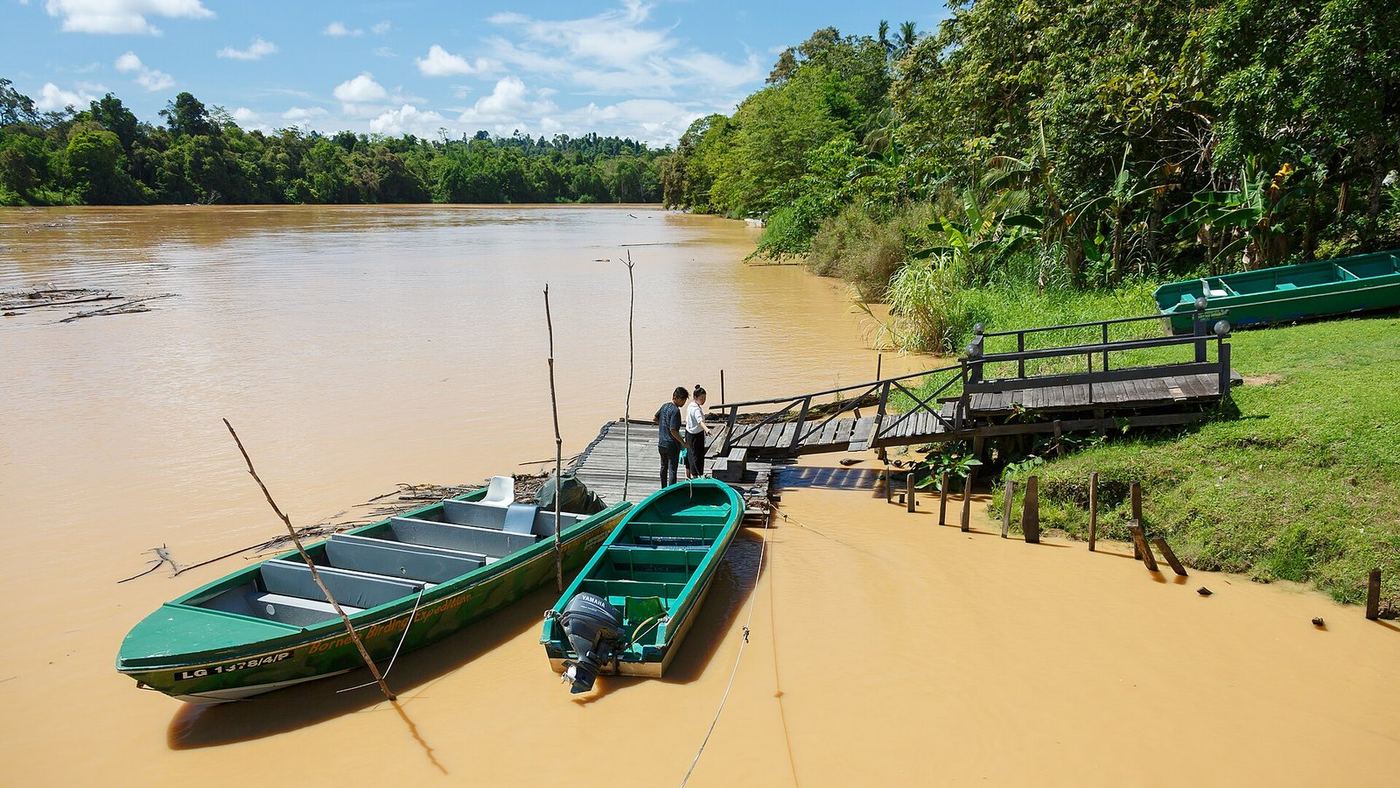
The number that decides whether a Borneo trip works is not the day count. It is the number of times you are on the Kinabatangan at first light or last light, because that is when animals come to the water and the rest of the day they are in a canopy you cannot see into.
Operators describe two nights on the river as the practical minimum and three nights as the arrangement that gives four or five cruises and materially better odds. A single day trip from Sandakan buys one cruise and is not worth taking. This journey books three nights, which puts six sessions on the water in front of you: the evening you arrive, dawn and dusk on each of the two full days, and the dawn before you leave.
Everything else on the route is arranged around that. Kinabalu Park at the start while you are fresh, Sepilok and the sun bear centre on the way through, and the Gomantong caves and Sandakan at the end, when three nights of five-thirty starts have caught up with you.
Day by day
No operator can promise you an animal, and the ones who imply it are describing a zoo. What we can do is buy you the number of chances that make a sighting likely, put you with river guides who work the same stretch of water every day, and be straight about the odds beforehand.
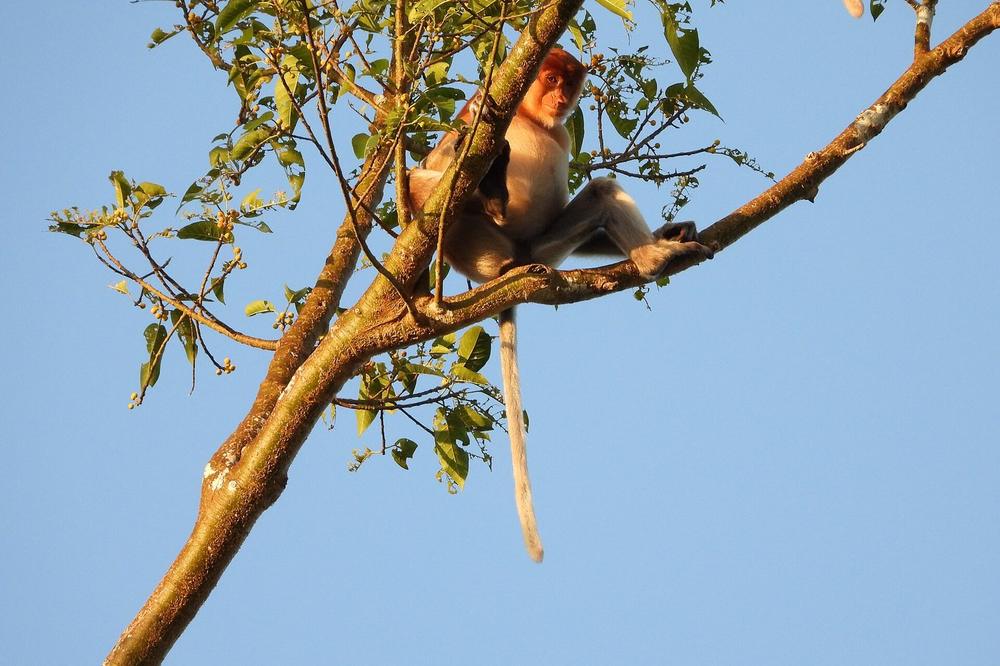
Proboscis monkeys and macaques are on the Kinabatangan in numbers and most parties see them on the first cruise. Hornbills are common and loud. Wild orangutans are a real prospect across six cruises and not a certainty on any one of them. Bornean pygmy elephants move in herds along the river and can be anywhere along a very long river, so they are luck rather than planning. Clouded leopard and sun bear in the wild are close to nobody’s experience, and any brochure implying otherwise is selling a photograph taken somewhere else.
We book no captive-wildlife photo attraction, no elephant riding and no orangutan handling anywhere in Asia. The centres on this route — the Sepilok rehabilitation centre and the sun bear centre next to it — are rehabilitation operations with viewing arrangements built around the animals rather than the visitors, and the animals there are free to be absent. Our position on the rest of it is set out on responsible travel.
Arrive Kota Kinabalu
Kota Kinabalu is the entry point for Sabah and it takes about an evening to see. Malaysia is visa-free for American, British, EU and Australian passports, but everybody has to file the digital arrival card, the MDAC, before flying; the immigration department’s own portal is the only place to do it, and the sites that appear above it in a search and charge a handling fee are not connected to the government.
Nothing is scheduled beyond dinner. The waterfront market sells fish that were in the water that morning and grills them in front of you, and the sun goes into the South China Sea directly ahead, which is the one piece of scheduled scenery in Kota Kinabalu.
Kinabalu Park
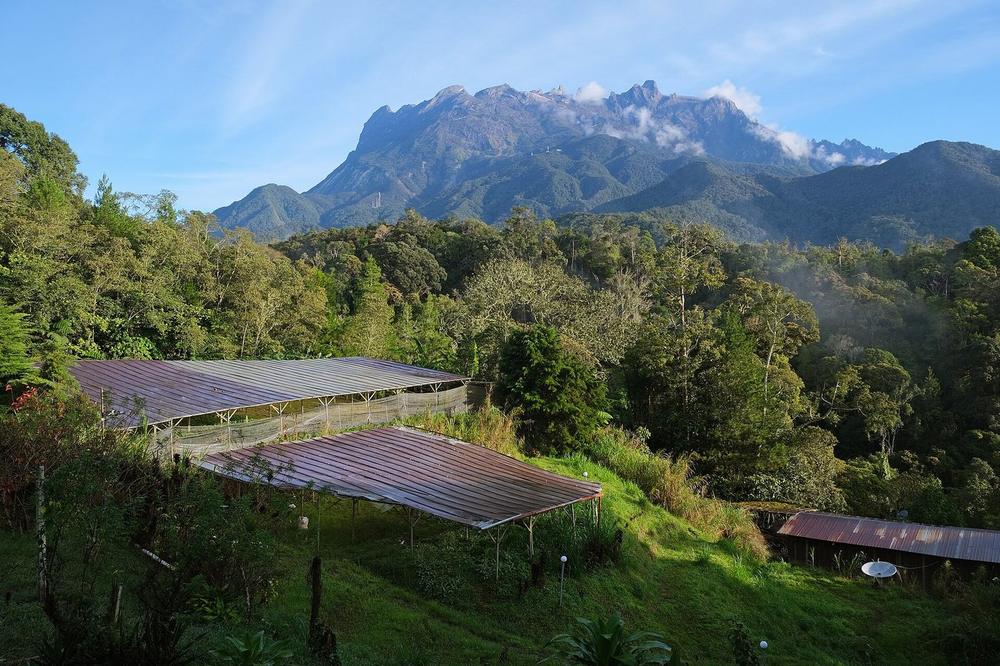
Up into the mountain park, which sits at altitude and is the first cool air of the trip. Park entry for non-Malaysian adults is RM 50, RM 25 for children under 17, with the botanical garden a further RM 5 and RM 3 — all of it in your price. The mountain garden is worth the extra ticket: it holds pitcher plants and slipper orchids collected from the slopes above, labelled, at eye level, which is the only way most people will ever identify them.
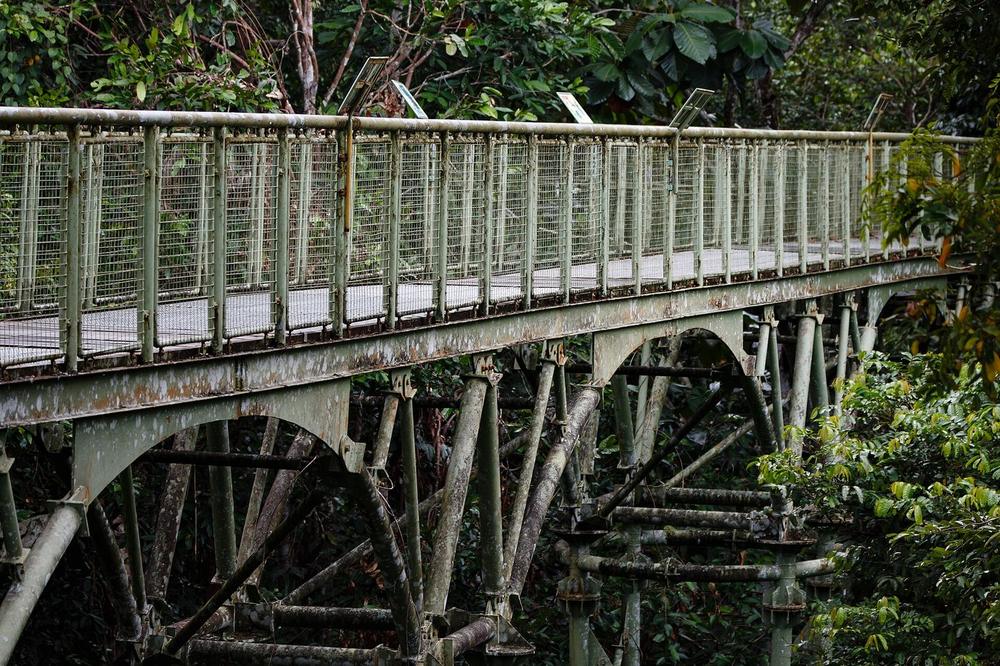
The walk we take is one of the lower trails through montane forest rather than anything on the summit route. Climbing Mount Kinabalu is a separate undertaking: it needs a permit at RM 400 for an adult and RM 200 for a child under 17, on top of park entry, and it needs two days and a bed on the mountain that is booked months out. It does not fit inside this journey and we will not pretend it does. Afternoon at Poring for the canopy walkway strung between dipterocarps.
Across Sabah to Sepilok
A short domestic flight east to Sandakan, then half an hour out to Sepilok, which is a patch of primary lowland forest with three institutions in it and a road running past them. The afternoon is the Rainforest Discovery Centre, whose canopy towers put you level with the fig crowns at the hour when hornbills come in to roost.
Stay for the night walk if the group is willing. What the torch picks up is not the poster wildlife — it is flying squirrels launching off the towers, a slow loris if the week is kind, tree frogs, and the sheer volume of insect life that a rainforest actually consists of.
Sepilok, then on to the river
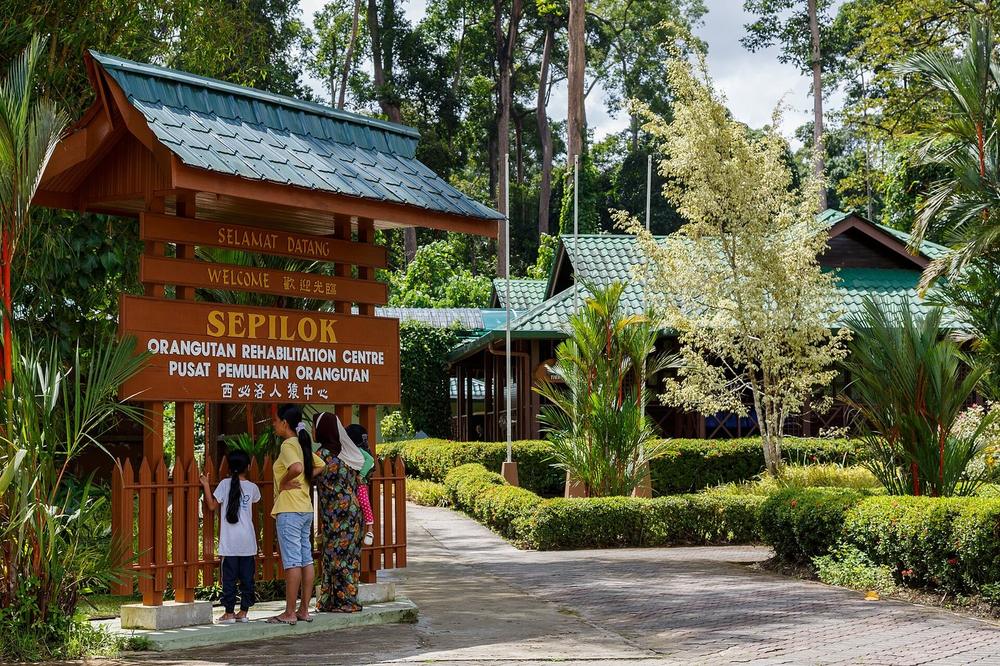
The rehabilitation centre feeds twice a day at the platform, and orphaned and confiscated orangutans come in for it or do not, depending on what the forest is fruiting. The nursery viewing area is where the young ones learn to climb and it is the part most people remember. Next door, the sun bear centre holds the smallest bear in the world and the least known, and its staff will tell you exactly how each animal arrived, which is not a comfortable list.
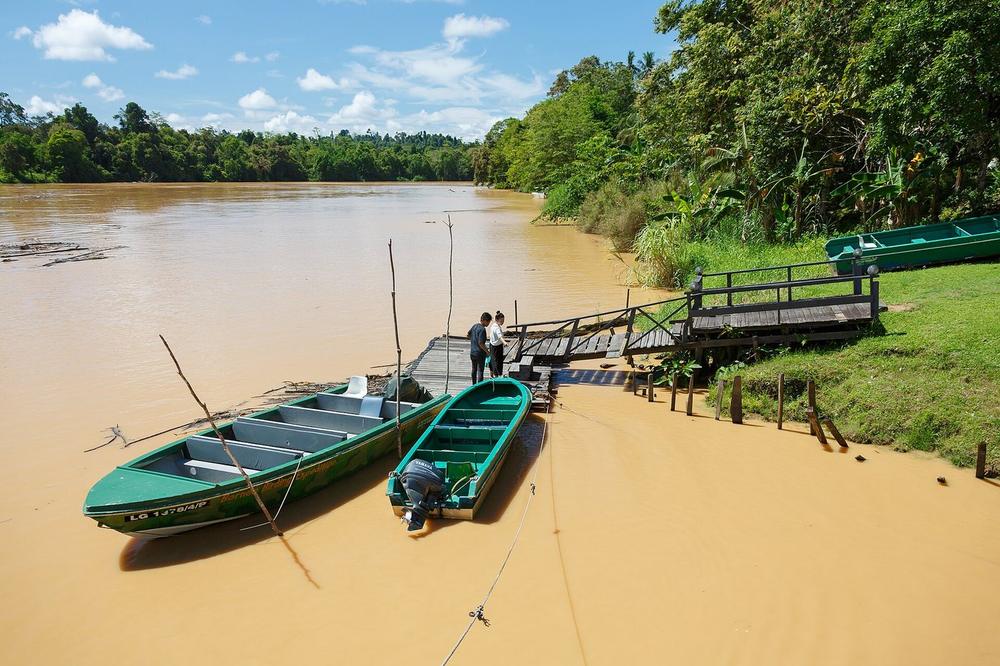
After lunch, east and then south to the Kinabatangan: road as far as the jetty, then a boat downriver to the lodge. You are on the water within an hour of arriving, because the first evening cruise is one of the six and we are not spending it on a welcome drink.
The Kinabatangan
Out at 05:45 with coffee in a flask. The dawn cruise is the strongest of the day: mist off the water, hornbills crossing, macaques and proboscis monkeys coming down to drink, and the possibility of an orangutan nest with something still in it. Back for breakfast, then the middle of the day is yours, because nothing moves in it and neither should you.
A second cruise at four, up one of the tributaries where the channel narrows and the canopy closes overhead. After dinner, a guided walk behind the lodge in rubber boots, which is where the frogs, the civets and the stick insects live.
A word about the landscape: the Kinabatangan is a corridor of forest along a river, and behind that strip is oil palm in every direction. The wildlife density that makes this the best river in Southeast Asia for a boat is partly a consequence of that squeeze. We would rather you knew that on the first morning than worked it out from the air on the way home.
The oxbow lakes, and a second full day
The dawn cruise goes further, into an oxbow lake cut off from the main river by a change of course a century or two ago. Still water, standing dead trees, and a different bird list from the main channel: darters, egrets, and Storm’s stork if you are lucky.
The point of the second full day is arithmetic. Animals are not distributed evenly across mornings, and the difference between one dawn and three is the difference between a story about how you nearly saw something and a story about what you saw. This day is why the journey is nine days and not seven.
Gomantong, and out to Sandakan
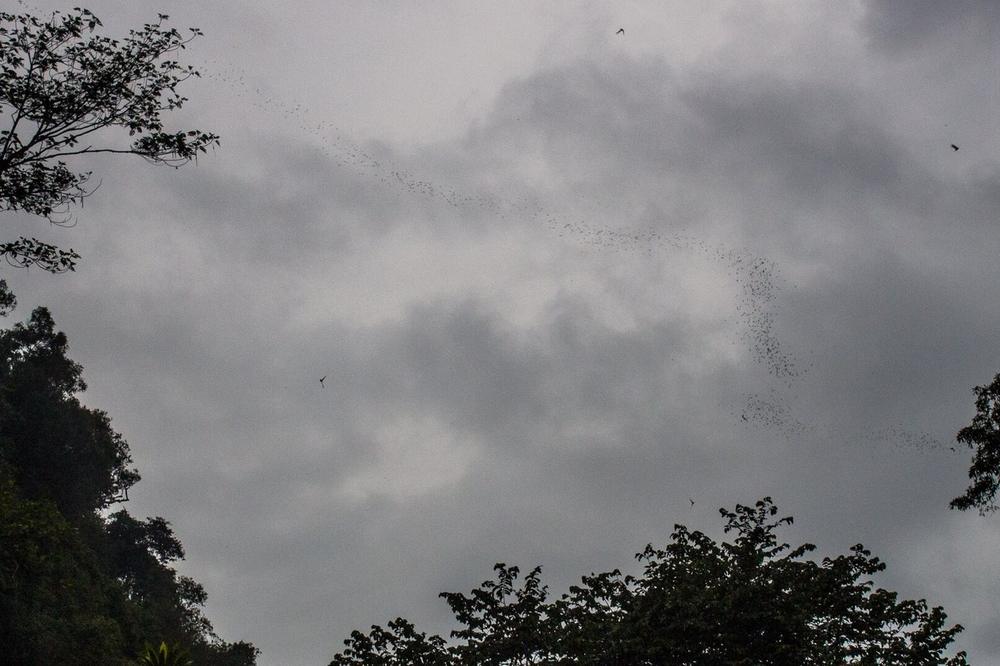
One last dawn cruise, then the boat back to the jetty and a stop at the Gomantong caves on the road north. This is where the swiftlet nests are harvested for soup, on rattan ladders that go up into the dark, and the harvest is licensed and seasonal and older than the state. The cave floor is a moving carpet of cockroaches feeding on guano and the ammonia is genuinely strong. Some people last four minutes. The boardwalk is short and nobody thinks less of you for waiting outside; the bat exodus at dusk is the part worth staying for, along with the bat hawks that arrive to meet it.
Sandakan by the afternoon. After three nights of river lodges, a hotel with reliable air conditioning and a laundry is not an anticlimax.
Sandakan
Sandakan was the capital of British North Borneo and was flattened in 1945, so what is left is fragments. The Memorial Park stands on the site of the prisoner-of-war camp from which the death marches to Ranau set out, and it is a quiet garden with a very hard story attached; the guide who takes you through it does not hurry. Agnes Keith’s house on the hill is the colonial side of the same period, restored and worth an hour.
The afternoon is loose. Puu Jih Shih on the ridge for the harbour view, the central market for the fish and the tamu produce, or a boat out to a river mouth for the last of the birds. If turtles matter to you, ask about Selingan: it is an overnight on an island rather than a day trip, the beds are few, and it would cost you this night in Sandakan rather than sitting alongside it.
Depart Sandakan
The airport is close to the town and the transfer is short, which is the reason the journey ends here rather than driving back across Sabah to Kota Kinabalu. Most people connect through Kuala Lumpur or Kota Kinabalu the same day; we ask you not to book the earliest flight out.
What it costs
| Party size | Comfortable | Considered |
|---|---|---|
| 2 travellers | USD 4,600 | USD 6,250 |
| 3 – 4 | USD 3,850 | USD 5,250 |
| 5 – 8 | USD 3,400 | USD 4,600 |
Sabah is not the cheapest country journey we sell and the reason is the river. Three nights at a Kinabatangan lodge with a dedicated boat and guide costs more per night than a good hotel in Kota Kinabalu, and the boat is chartered for your party rather than filled with whoever else is staying. Two travellers carry that boat, that guide and that vehicle between them, which is why the two-traveller column stands 36 per cent above the five-to-eight one.
Comfortable is a seafront hotel in Kota Kinabalu, a forest lodge at Sepilok and a good river lodge with fans, nets and hot water. Considered buys the better rooms in town and the best of the river lodges, and it is honest to say that the gap is narrower here than anywhere else in Asia: on the Kinabatangan there is a ceiling, and what you are buying above it is a better bathroom rather than a better trip.
If you want Danum Valley, say so at the enquiry stage. It is the finest primary forest in Sabah, it needs three nights of its own to be worth the journey in, and it costs roughly what the rest of this itinerary costs. Adding it makes a twelve-day trip, not a nine-day one. The full breakdown of ground costs is on the prices page.
What is and is not included
What the price includes
- Eight nights as listed, each property named in your quote
- A private vehicle and driver throughout, and all river boat transfers
- A naturalist guide from the Sepilok afternoon to the Gomantong morning, and a city guide in Kota Kinabalu and Sandakan
- Six river cruises on the Kinabatangan and two guided night walks
- The Kota Kinabalu to Sandakan flight
- Kinabalu Park entry at RM 50 an adult and RM 25 a child, the botanical garden at RM 5 and RM 3, and entry to Poring, Sepilok, the sun bear centre, the Rainforest Discovery Centre and the Gomantong caves
- All meals at the river lodge, and meals as listed elsewhere
- Rubber boots, torches and drinking water where the itinerary needs them
What it does not include
- International flights into Kota Kinabalu and out of Sandakan
- The Mount Kinabalu summit climb, which is a permit at RM 400 an adult and two extra days
- Travel insurance, which we require and do not sell
- Any diving, including Sipadan, whose permits are rationed and priced separately
- Meals not listed above, and all drinks
- Tips for guides, drivers and boatmen, customary and never built into our prices
The journey in pictures
Who this journey is wrong for
- Anyone who needs to be told they will see an orangutan in the wild. Six cruises make it likely and nothing makes it certain, and if a guaranteed sighting is the condition of the booking we are the wrong operator.
- Travellers who want the animals of an African plain. Borneo is a closed canopy over a brown river; you see what comes down to the water and you look hard for it. Nobody sits in a vehicle while a herd walks past.
- Anyone who cannot spend three nights in a fan-cooled room with a mosquito net, intermittent power and no signal. The river lodges are the best on that stretch of water and they are still lodges, and no amount of budget changes that.
- People booking November to March. Sabah is rainforest year-round with no clean dry season, but that window is the wettest and the river can rise enough to disrupt the cruises the whole journey is built around. March to October is the better half of the year.
- Anybody whose real ambition is the summit of Mount Kinabalu. That is a permit, a bed on the mountain and two additional days, and it belongs to a different itinerary rather than being squeezed into this one.
How this compares
| Journey | Days | Where | From |
|---|---|---|---|
| Borneo and Sabah | 9 | Malaysia | USD 3,400 |
| Philippines and Palawan | 10 | Philippines | USD 3,200 |
| Bali and Java | 10 | Indonesia | USD 2,900 |
These three island journeys are often shortlisted against one another and they are not the same trip. Sabah is forest and animals and early mornings. Palawan is water, boats and a beach at the end of each day. Bali and Java is buildings and ritual with a volcano in the middle. Deciding between them by price is the one method that will not work.
Which months suit which of them is on when to go, and it matters more here than most places, because Sabah has no dry season to fall back on.
Tell us your month
Send the dates, the number of travellers, and whether Danum Valley or a dive week is in the back of your mind. A first draft comes back within two working days.
Questions travellers ask most
Why three nights on the Kinabatangan and not one?
Because one night is one cruise and a half, and the animals do not know you are coming. The commonly recommended arrangement is three days and two nights, which yields four or five cruises; a day trip out of Sandakan buys a single cruise and is not worth the drive.
Three nights gives six sessions on the water: the evening you arrive, dawn and dusk on both full days, and the dawn you leave on. That is the difference between a probability and a coin toss, and it is the single most important decision in a Sabah itinerary.
What will we actually see?
Reliably: proboscis monkeys, long-tailed and pig-tailed macaques, hornbills, kingfishers, monitor lizards, and orangutans at the Sepilok platform when they choose to come in. Likely across six cruises: wild orangutan, silvered langur, crocodile, and a night-walk list of frogs, civets and insects.
Luck: Bornean pygmy elephants, which travel in herds along a very long river. Effectively not on this trip: clouded leopard, wild sun bear, wild tarsier. We do not sell wildlife guarantees and we do not stage sightings, and if that costs us the booking against an operator who does promise, so be it.
When is the best time to go to Sabah?
March to October. Borneo does not have the clean dry season that Bali or Thailand has — it is rainforest and it rains all year — but the northeast monsoon makes roughly November to March the wettest stretch, with the heaviest rain and the risk of river levels disrupting the Kinabatangan cruises.
The drier half of the year is also the better window for the forest trails at Kinabalu Park and for anyone thinking about Danum Valley or the summit climb. A wet-season departure is cheaper and greener and we will run it; you should simply know what you are buying.
Do we need a visa for Malaysia?
No visa for American, British, EU and Australian passports on a short tourist stay. What everybody does need is the Malaysia Digital Arrival Card, the MDAC, filed online before travel through the immigration department’s own portal.
Confirm the current submission window and the fee position on that official portal rather than anywhere else. Arrival-card systems across the region attract lookalike sites that charge a processing fee for a government form, and Sabah also runs its own internal immigration control — you clear it again on arrival from peninsular Malaysia, which surprises people who assume a domestic flight means no queue.
Read next
Tell us about the journey you have in mind
Dates, party size and the places you care about are enough to start. You get a draft route and an indicative price, not a brochure.