Three old capitals in one bowl of hills
Kathmandu, Patan and Bhaktapur were three rival kingdoms within about half an hour of one another, and each kept its own palace square. What the 2015 earthquake did to them, and how far the rebuilding has got, differs square by square.
At a glance
| Country | Nepal, the Himalaya |
| Nights that work | 2 to 4 |
| Best months | October and November; March and April as a second window |
| Worst months | The monsoon, May to August |
| Airport | Tribhuvan (KTM), inside the city rather than outside it |
| Entry | Visa on arrival, USD 30, 50 or 125 by duration, cash |
| The three cities | Kathmandu, Patan and Bhaktapur, about half an hour apart |
| Winter caveat | Cold air sits in the valley; mornings are often hazy at street level |
| Trekking rule | A licensed guide is compulsory on the trekking routes, though not for valley walking |
What this place actually is
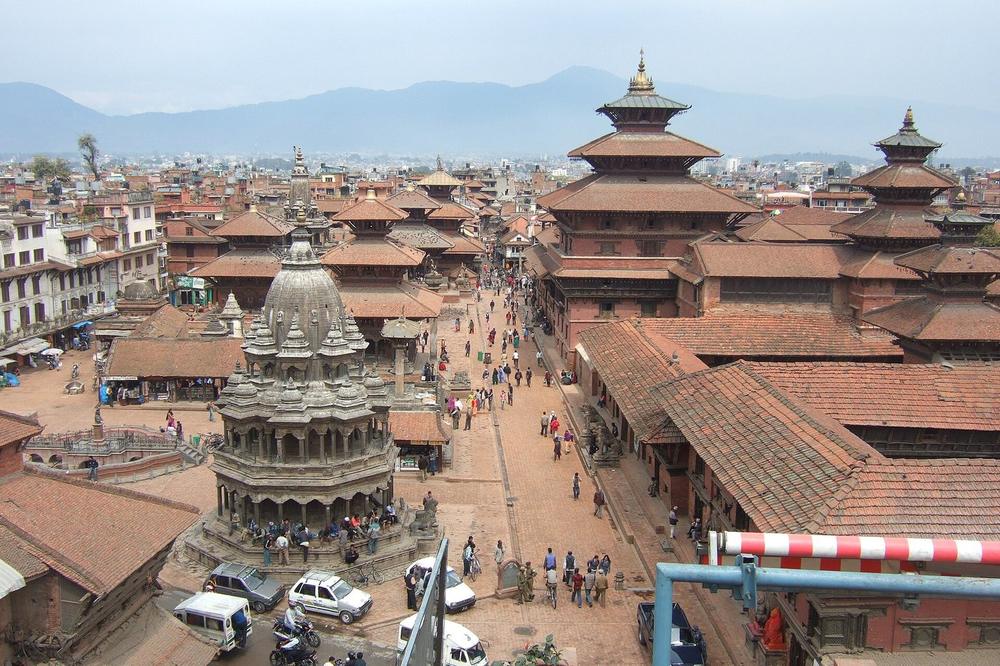
The valley is a bowl of old lake bed ringed by hills, and for several centuries it held three separate Newar kingdoms that competed with one another mainly by building. That competition is why a space the size of a large city district contains three royal palace squares rather than one, each with its own temples, its own courtyards and its own guild traditions in wood, brick and cast metal. Kathmandu, Patan and Bhaktapur are administratively three cities and, at street level, three different places.
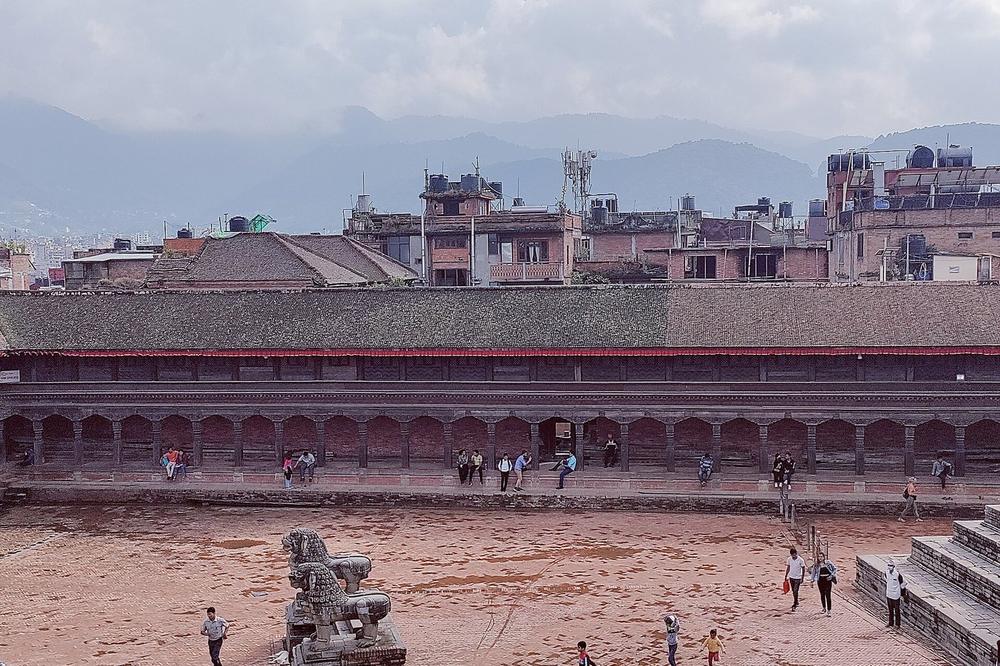
Kathmandu itself is the loudest and the least intact. Its durbar square sits inside a working city and the lanes around it are commerce first. Patan, across the river, has the densest concentration of fine buildings and the metalworking is still done in the lanes behind the square rather than for display. Bhaktapur is the one people are surprised by: a whole town of brick and carved timber rather than a monument with a town attached, and the only one of the three where you can walk for an hour without leaving the period.
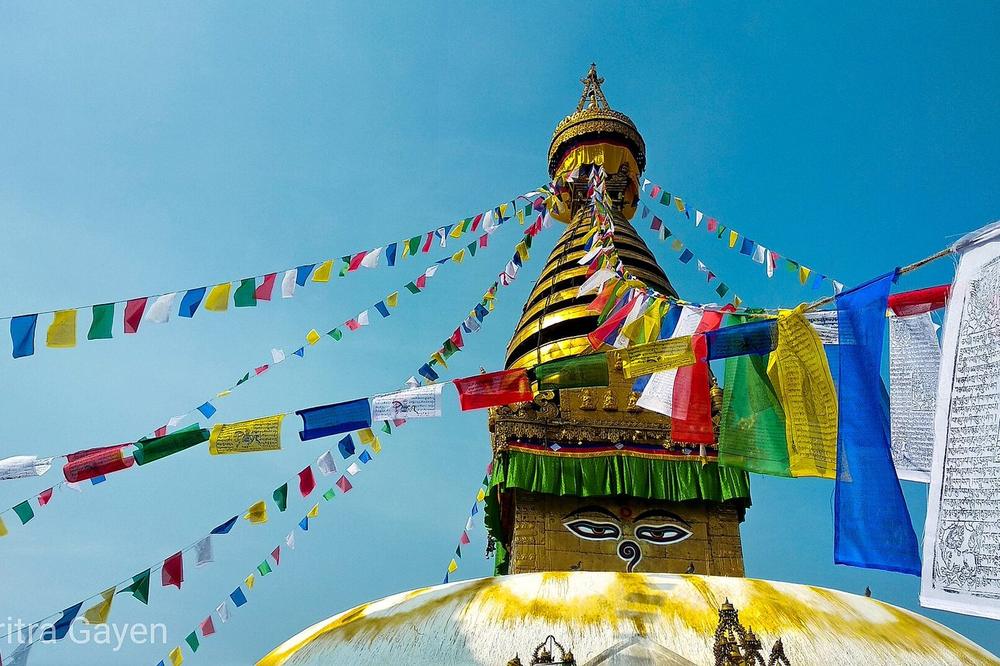
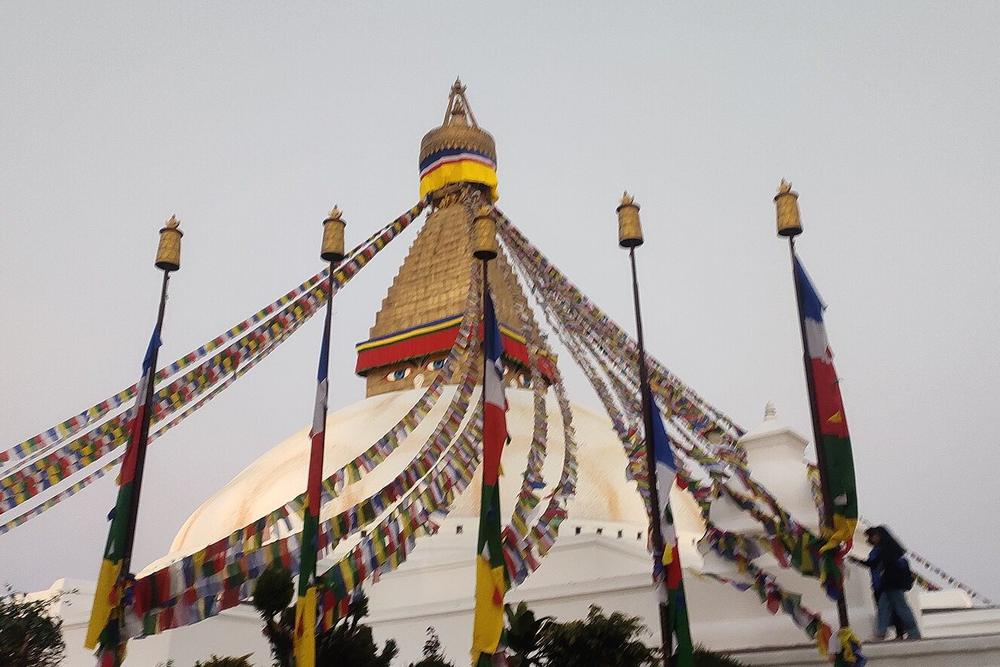
Then there are the two great Buddhist sites that are not palace squares at all. Swayambhunath stands on a hill west of the city at the top of a long stairway, and Boudhanath, out towards the airport, is a white dome the size of a small hill with a circuit around it that fills with walkers at the end of the working day. Neither belongs to any of the three kingdoms and both are more used than visited.
The restoration, said plainly
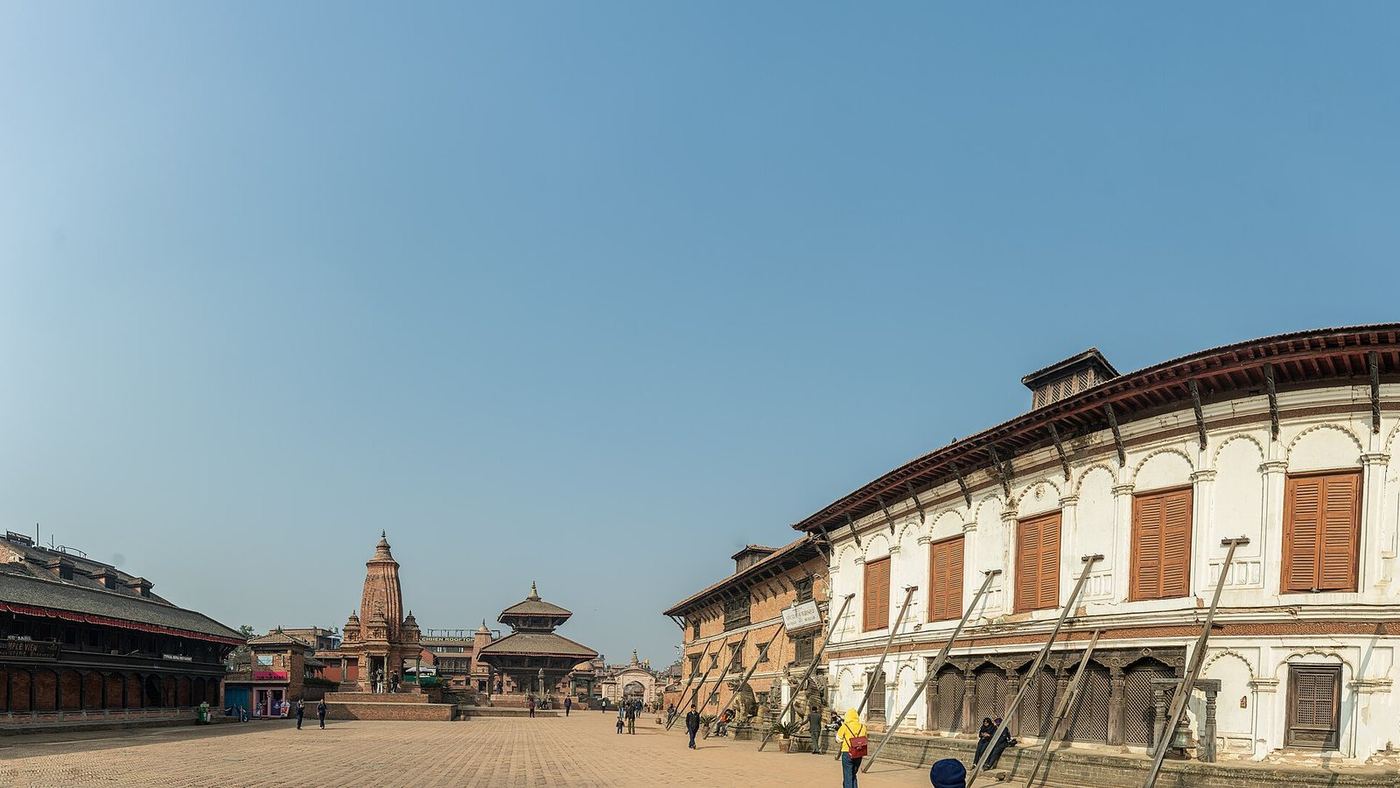
The earthquake of April 2015 brought down temples and palace wings across all three squares, and the rebuilding has been running ever since. It is uneven. Some buildings are finished, done with old techniques and salvaged timber, and read as though nothing happened. Others are scaffolding, numbered beams under tarpaulin and a fenced footprint where a tiered temple used to be. A photograph taken from the right angle will show you a complete square; the square itself will show you a programme still in progress. Neither version is dishonest on its own. Only the first one being shown to you is.
This matters practically because it changes what a guide is for. In a finished square you are looking at architecture. In a half-finished one you are being shown what stood where, how it was joined, which pieces came out of the rubble and went back in, and why the reconstruction of a five-tiered temple takes a decade. That is a better hour than most people expect, but only with somebody who knows the site rather than the caption.
How many nights, and what breaks if you take fewer
Two nights is the practical floor, three is right and four is worth having if the valley is the reason you came rather than the door to the mountains.
The arithmetic is straightforward, because the valley is three days' work and nothing can be sensibly compressed. Bhaktapur wants most of a day on its own. Patan wants a late afternoon, when the light is in the square and the workshops are still going. Kathmandu's old city, Swayambhunath early and Boudhanath at dusk make a third day that starts before eight and ends after dark.
At two nights something goes, and the choice is worth making deliberately rather than discovering. Our order for cutting is: Kathmandu's own durbar square first, because it is the most damaged and the most crowded; then Swayambhunath, because the stairway is the point and a car to the side entrance is not the same visit. What should not go is Bhaktapur, and it is the one that usually does, reduced to a two-hour stop between an airport and a hotel.
The fourth night is for the rim rather than the floor. The hills around the valley hold villages and ridge viewpoints an hour or so out, the air up there is cleaner in winter, and on a clear morning the Himalaya is visible from them in a way it never is from the city. That is a road day with a walk in it, not a trek, and it needs no permit and no licensed guide. Where the valley sits in a Nepal itinerary as a whole is on the Nepal country page, and the same sum for every country we sell is on how many days.
When to go
| Months | The valley specifically | The trade |
|---|---|---|
| October and November | Mild days and the least haze of the year | Everything is open, the squares are busy and hotel beds go early. This is the season and it is priced like it. |
| December and January | Cold, often bright above, hazy at street level | Quiet squares and low rates. Mornings can be grey in the city while the hills an hour out are in sun. |
| February to April | The second window; rhododendron on the rim | Fewer visitors than autumn and a softer horizon, with haze building as the spring goes on. |
| May to August | The monsoon: heat, cloud, mud and road closures | Green, empty and cheap. The brickwork looks its best wet; the mountain views and the domestic flight schedule do not survive it. |
The winter air deserves a straight paragraph rather than a footnote. The valley is a bowl, cold air settles in it overnight and does not move until the sun has been up for some hours, and what is in that air is traffic, dust and construction. It is nothing like the scale of the problem in Delhi, and it is a morning condition rather than a permanent one, but a January visitor who books the city and nothing else may spend the trip looking at grey. We do not print an air quality figure here because no reliable current measurement for Kathmandu was obtained in our September 2026 research pass, and inventing one to sound rigorous would be worse than saying this.
The response is structural rather than medical for most people: sightsee early, put a night on the valley rim where the air is above the inversion, and if a member of the party has asthma or a cardiac condition, say so at enquiry, because it changes which months we would recommend at all. Month by month across the continent sits on when to go.
Getting there and getting around
Tribhuvan International (KTM) is inside the city, which sounds convenient and is mostly a matter of traffic: the distance from the terminal to a hotel in the old centre is a couple of kilometres and an unpredictable number of minutes. The visa is bought on arrival and priced by the length of stay — USD 30 for fifteen days, USD 50 for thirty and USD 125 for ninety with multiple entry, with USD 20 to convert a single entry afterwards. Bring the money as US dollars: cards are taken, and the length of the line at the machines is why nobody depends on them.
Inside the valley everything is a car and a driver, and the times are governed by traffic rather than by distance. The three cities sit about half an hour from one another when the roads are behaving, which is not the middle of the afternoon. The practical consequence is that a day here is built around one city rather than two, with the second visit taking whatever hour remains. Walking is how the squares themselves are seen; they are closed to vehicles or effectively so, and the surfaces are brick, stone and steps.
West to Pokhara there is a choice, and it is worth understanding before it is made for you. The road is about 200 km of Prithvi Highway. Reckon on six to eight hours when everything behaves, nine when the monsoon has been at the surface, and a gorge stretch in the middle that cannot be rushed. The domestic flight is short and at the mercy of cloud. What works is holding the flight with the vehicle already in position, so a cancellation costs a morning rather than a night.
A licensed guide has been compulsory on Nepal's trekking routes since the first of September 2023, and the rule still covers Annapurna, Everest, Langtang, Manaslu, Gokyo, Upper Mustang, Kanchenjunga and Dolpo in 2026. It is now enforced with equipment: a QR code scanned at the checkpoint against the manifest of whichever agency registered you, penalties reported as high as NPR 50,000 — about USD 375 — and the cost of any evacuation charged back to the walker. Seven trekkers to a guide is the legal ratio, and helicopter rescue cover above 4,000 m is required by law rather than urged.
None of that applies to the valley. Walking between the three cities, up to Swayambhunath, around the Boudhanath circuit or out to a ridge village on the rim needs no permit, no TIMS card and no licensed guide. The line is drawn at the national park or conservation area gate, and the test is easy to apply: where a permit is checked, the guide rule applies too. The permits themselves are cheap by regional standards — USD 25 for Annapurna and for Langtang, USD 28 for Sagarmatha, with TIMS at NPR 1,000 through an agency — and the March 2026 amendment that circulated widely changed only the restricted border districts, not the guide obligation.
What it costs on the ground
Nepal sits in the lowest of our four country bands: about USD 190 to 300 a head for each day on the ground at a party of four, land only, with the hotel, the car and driver, the guiding and the entries in it. The valley is where that money goes furthest, because the hotels are good, the distances are short and the guiding is the best value in the Himalaya.
This page prints no entrance figures for the three durbar squares. The fees exist, they are set separately by each municipality, they have been revised more than once since the earthquake, and our September 2026 pass produced no current official schedule for all three. Rather than publish a number that may be a year out of date on a page a reader will check, we leave it out and quote the current charge in writing with an itinerary. On our journeys the entries are inside the price in any case.
Two costs are worth knowing because you pay them yourself. The visa on arrival is USD 30, USD 50 or USD 125 according to duration and wants cash in dollars. And a guide for a valley day is engaged by the party rather than the head, which is why two travellers each pay a good deal more than one of five people sharing the same day. Ground costs compared across the region, before margin, are on cost by country.
In pictures
When to skip it
- The only weeks you have fall between May and August. The monsoon removes the mountain views, the road reliability and the domestic flights, and the valley on its own does not carry a trip in the rain.
- You expected the Himalaya from your hotel window. You cannot see the high peaks from the city floor on most days. That view belongs to the rim, to Pokhara or to a ridge, and building a trip on the assumption is how people leave disappointed by a place that was never offering it.
- Scaffolding will spoil it for you. The rebuilding after 2015 is a decade old and still running, and at least one major structure in at least one of the three squares is going to be under wraps whenever you come.
- Nobody in the party can manage steps and uneven brick. Swayambhunath is a long stairway, the squares are worn stone, and the temple plinths are steep. The valley can be seen from a car, but not well.
- The trip is really about trekking and the valley is a formality. Say so, and we will give it two nights and put the time into the walking — where the licensed guide rule, the permits and the acclimatisation are the things that actually need planning.
Journeys that come here
Nepal in ten days opens with three nights in the valley, taking Bhaktapur as a full day rather than a stop, before running west to Pokhara and down to Chitwan. It is the journey this page is written alongside, and the valley nights in it are not padding: they are what stops Nepal reading as one long mountain view.
India, Nepal and Bhutan in twenty-one days finishes here, which is the right way round: after Paro and the Bhutanese valleys, the Newar cities read as the older and stranger of the two traditions rather than as a repeat. For the country as a whole — the seasons, the permits and the trekking rules in full — go to the Nepal page next.
Tell us whether the valley is the point
Send your dates and say whether you are here for the cities, for the walking or for both. That single answer changes how many nights the valley should get and which month we would put you in.
Questions travellers ask most
How much of the earthquake damage is still visible?
Enough that you will see it, and less than you would have seen five years ago. The 2015 earthquake brought down temples and palace wings in all three squares, and the rebuilding programme has been running ever since with old techniques and a lot of salvaged timber. Some buildings are finished and read as though nothing happened. Others are still a fenced footprint or a frame under tarpaulin.
Our position is to say so rather than to photograph around it. A square in reconstruction is a genuinely interesting hour with a guide who can explain how a tiered temple is jointed and why it takes a decade. It is a poor hour with somebody reading a caption.
Is two nights enough for the valley?
Two nights gives one full day and two part days, which covers Bhaktapur properly and one of the other two cities. It works when the trip continues to Pokhara and Chitwan and the valley is the opening rather than the subject.
Three is the number we build. It gives Bhaktapur a day, Patan a late afternoon when the workshops are still working, and Kathmandu a morning that starts at Swayambhunath before eight and finishes on the Boudhanath circuit after dark. The fourth night, if it exists, belongs on the valley rim rather than in the city.
How bad is the air in winter, and should we change our dates?
It is a morning problem in the cold months rather than a year-round one. The valley is a bowl, cold air sits in it overnight, and traffic and construction dust sit in that air until the sun clears it. It is not on the scale of Delhi in the same season, and December and January are otherwise fine months here: bright above the haze, quiet in the squares and cheaper.
We are not going to give you a number, because we could not verify a current one for Kathmandu and a made-up figure would be worse than none. What we would do is sightsee early, put a night on the rim, and ask at the enquiry stage whether asthma or a heart condition is in the party — that answer changes the recommendation rather than merely the schedule.
Do we need a licensed guide to walk in the valley?
No. The rule that has applied since 1 September 2023 covers the trekking regions — Everest, Annapurna, Langtang, Manaslu, Upper Mustang, Gokyo, Kanchenjunga and Dolpo — and since this year checkpoints there scan a QR code against the registering agency's manifest, with fines reported up to NPR 50,000 and evacuation charged to the walker.
Valley walking is outside all of that. Between the three cities, up the Swayambhunath stairway, around Boudhanath or out to a rim village needs no permit and no guide by law. We would still put a guide with you, for the reason that half of what is interesting in these squares is invisible without one.
Read next
Tell us about the journey you have in mind
Dates, party size and the places you care about are enough to start. You get a draft route and an indicative price, not a brochure.