Three cities, one night on a ridge, and the lowland forest
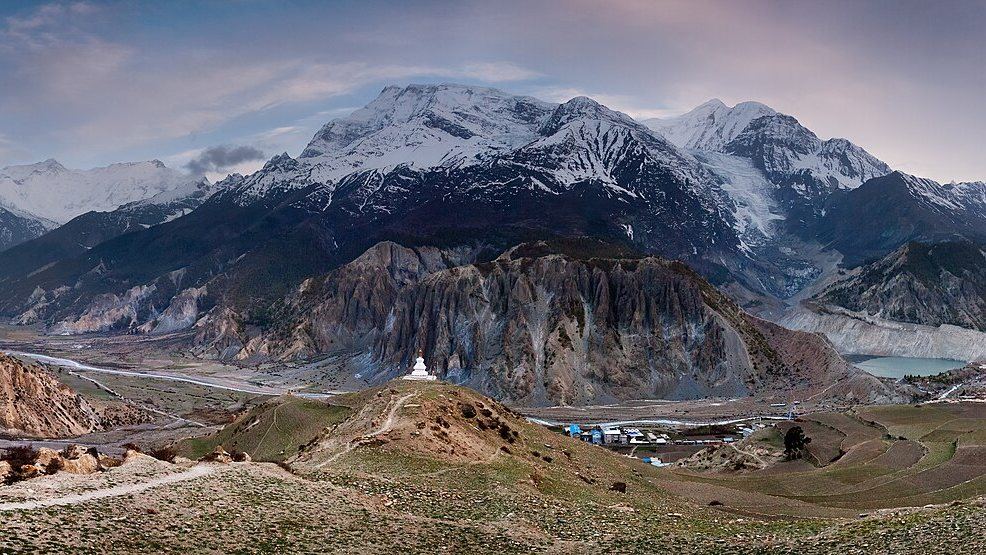
Kathmandu, Patan and Bhaktapur are three separate old capitals inside one valley. Then Pokhara, one night walked up to a ridge with the Annapurnas across the valley, and two in the sal forest at Chitwan, which is not mountains at all.
At a glance
- Duration
- 10 days, 9 nights
- Party
- Private, 2 to 8
- Starts
- Kathmandu
- Ends
- Kathmandu
- Difficulty
- Easy, with one walking day
- From
- USD 2,600
Most ten-day Nepal itineraries are a valley tour with a mountain flight bolted on. This one gives up the scenic flight and spends the money on a night above the valley instead, at a ridge teahouse in the Annapurna foothills where you go to sleep with the range in front of you and see it again before breakfast. It is one night under canvas roofs rather than a trek, and it is what separates a Nepal trip that people talk about from one that was three cities and an aeroplane window.
The other thing this route insists on is Chitwan. The lowland Terai is a different country from the hills: hot, flat, forested, and the place where Nepal keeps its rhinoceros. Two nights is the working minimum, because everything in a river forest happens at dawn and dusk and a single night gives you one of each.
Nine nights is enough for a valley, a lake, a ridge and a forest. It is not enough for Everest Base Camp, Mustang or Annapurna Base Camp, and we would rather say so here than let the word "trek" do work it cannot do.
Day by day
A licensed guide has been compulsory for trekking in Nepal since 1 September 2023, and it is still in force. Enforcement tightened through 2026: checkpoints now scan QR codes and check operator manifests, and reported penalties run to NPR 50,000, about USD 375, plus evacuation at the trekker’s own expense. One licensed guide may lead up to seven trekkers, which is why our party ceiling of eight is deliberate.
The March 2026 change that circulated widely applies only to the thirteen restricted border districts — Upper Mustang, Manaslu, Dolpo and the rest. It removed the old two-person minimum for a restricted-area permit. It did not remove the guide requirement, and nothing on this route is a restricted area.
Our two walking days sit inside the Annapurna Conservation Area, so this journey needs an ACAP permit at USD 25 per person and a TIMS card at NPR 1,000 for group trekkers. It does not need a Sagarmatha National Park permit, which is USD 28 and belongs to the Everest side of the country. Both of ours are included and arranged before you arrive.
Arrive Kathmandu
Met at Tribhuvan and driven in. The airport sits inside the city, so the transfer is short in kilometres and unpredictable in minutes. Visas are issued on arrival and priced by duration: USD 30 for 15 days, USD 50 for 30, USD 125 for 90 days with multiple entry. Bring the fee in USD cash; the queue for the card machines is the slow one.
Nothing is scheduled. If you land early, the walk worth taking is Thamel out into the older lanes east of it, where the shops stop selling fleece.
Kathmandu and Patan
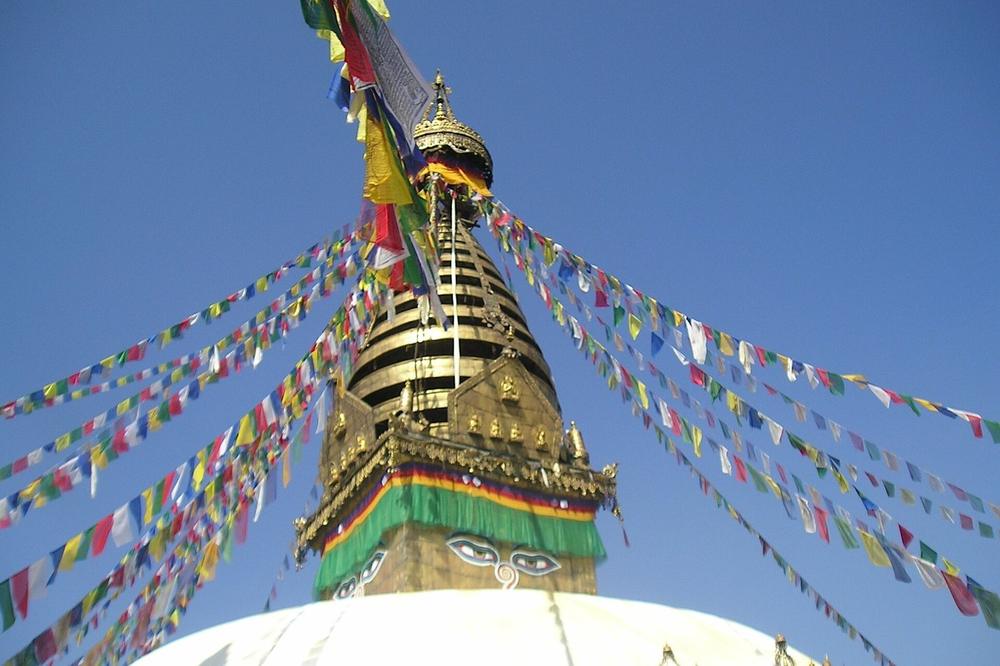
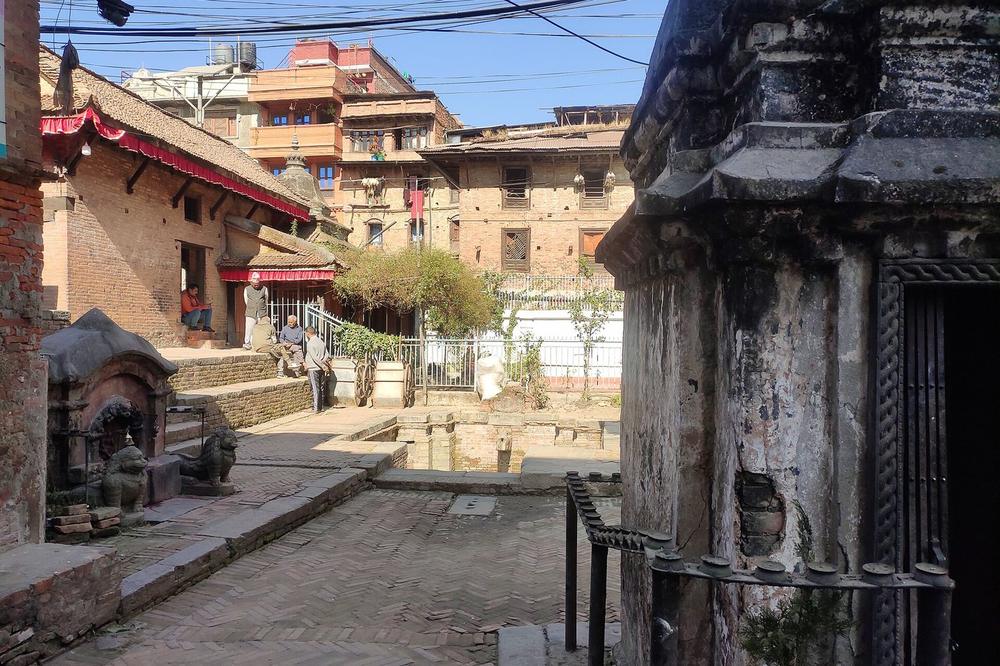
Swayambhunath at eight, up the stairway from the east side rather than the road, while the morning circuit is still being walked by people who live below it. Then down into the old city on foot: the durbar square, the courtyards behind it, and the ongoing work of putting the valley back together after 2015. Some of it is finished and beautiful; some of it is scaffolding, and some is a numbered pile of timber under a tarpaulin.
Patan in the afternoon, across the river, which is the valley’s best hour for anyone who likes objects: metalworkers still beating repoussé in lanes behind the square, and a museum in the old palace that is the only one in Nepal arranged for a visitor rather than for a catalogue.
Bhaktapur and Boudhanath
A full day at Bhaktapur, which is the one to give time to. It is a whole medieval town rather than a square, vehicles are kept out of most of it, and it is the only place in the valley where you can still hear what a Newar city sounded like: grain being winnowed, wood being cut, a potters’ square that is a working yard and not a demonstration.
Boudhanath at dusk, on the way back, when the kora fills with people walking the circuit after work. We do not book any visit to an orphanage or children’s home, in Nepal or anywhere else, and you will be offered them in Kathmandu.
Kathmandu to Pokhara
A short domestic flight west, which is why we do it that way: the road is about 200 km on the Prithvi Highway and takes six to eight hours in good conditions, eight to nine in monsoon or heavy traffic, with a narrow winding stretch through the Trishuli gorge. If cloud cancels the flight, the drive is the fallback and we start it early rather than wait at the airport all morning.
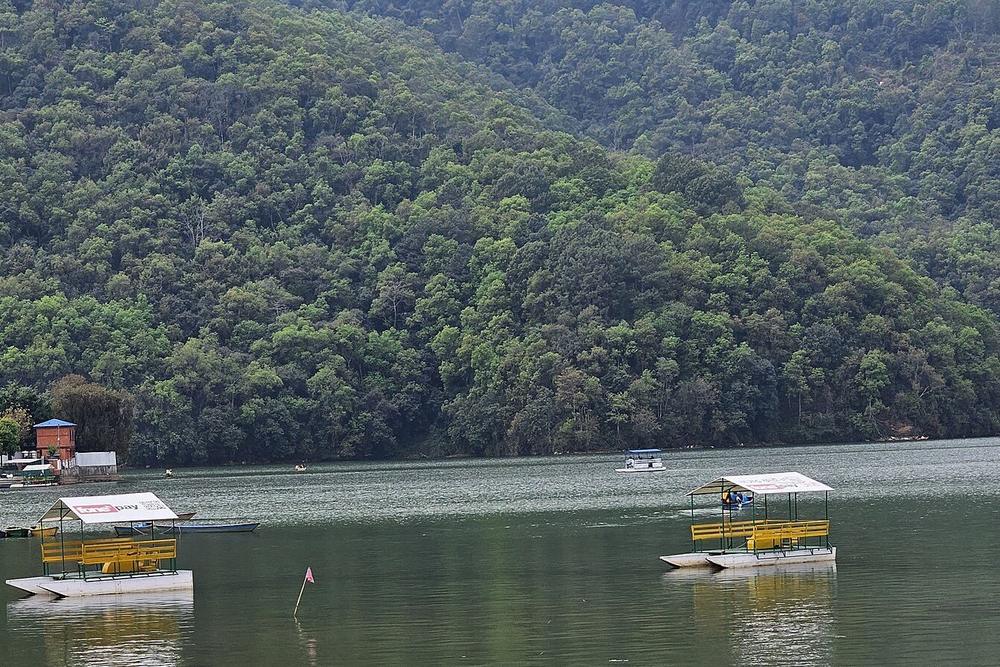
Pokhara sits on a lake with the Annapurnas behind it and does almost nothing else, which after three days in the valley is the point. Afternoon on the water in a rowed boat, and the walk up to the shrine on the island if the lake is calm.
Sarangkot, then up to Australian Camp
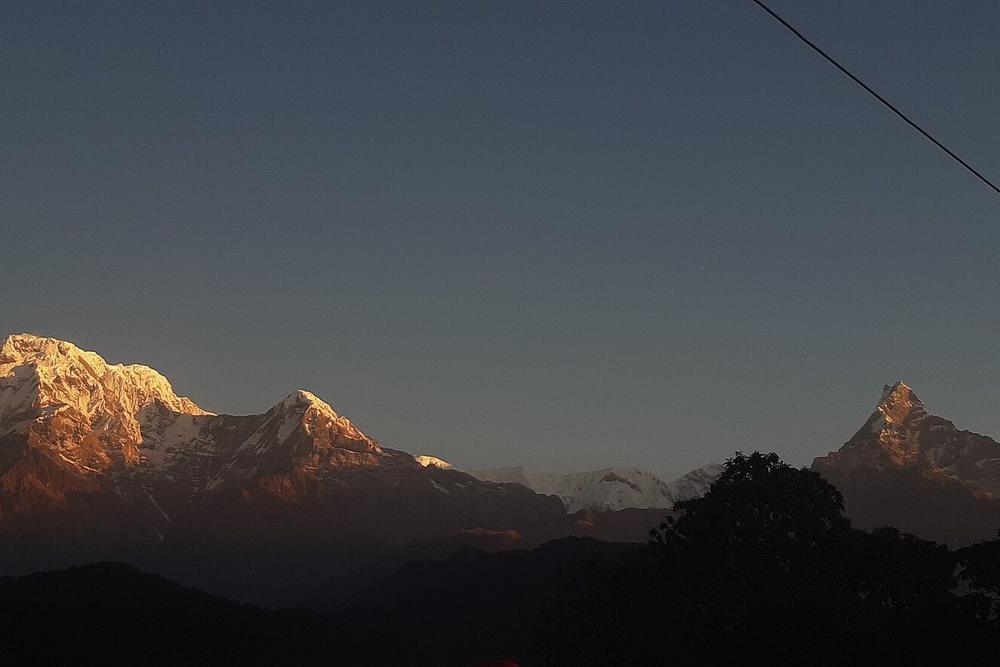
Out before five for Sarangkot, forty-five minutes up by road, for the hour in which the range catches light before the valley does. It is a busy viewpoint and worth it anyway; we stand at the far end of the ridge rather than the built platform.
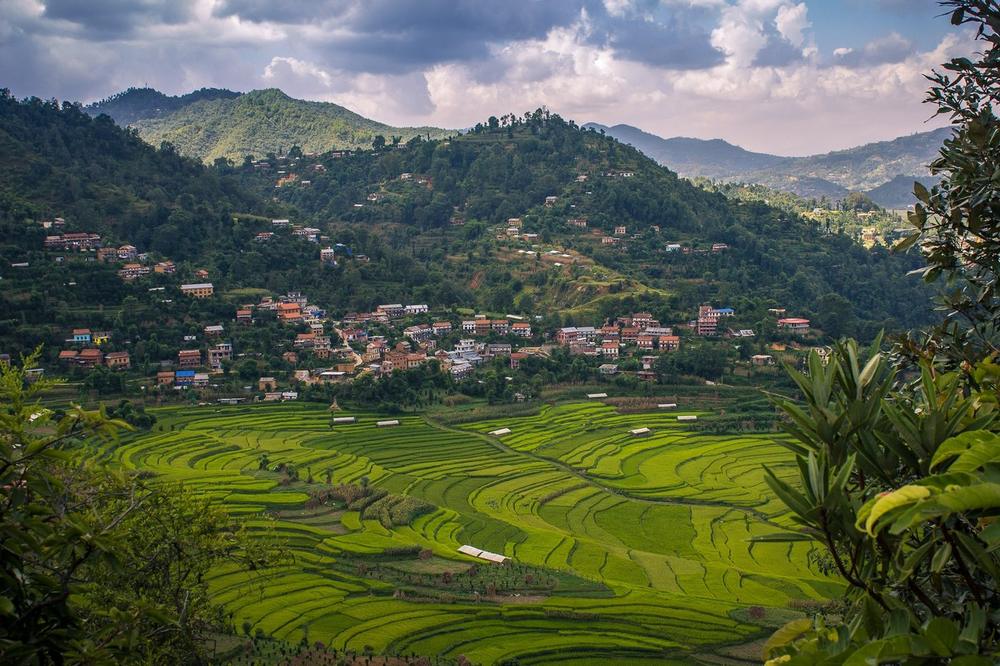
Back for breakfast, then west to the roadhead at Kande and up on foot. It is a steady climb of about two hours on a stone-stepped path through village land, with a licensed guide and a porter carrying the overnight bag. Australian Camp is a handful of teahouses on a grass shoulder facing north. The rooms are simple, the food is dal bhat and it is better than that sounds, and the hot water is not guaranteed.
Down through Dhampus to Pokhara
Out early to see the range clear, then a gentle traverse to Dhampus and down to the road at Phedi: three hours of walking, most of it descending on steps, which is harder on knees than the climb was on lungs. Trekking poles are worth using and we carry a pair for anyone who did not bring them.
Back in Pokhara by early afternoon with the rest of the day free. Most people sleep, and that is the correct use of it.
Pokhara to Chitwan
Roughly five hours south and east, dropping out of the middle hills into the Terai, where the temperature climbs and the architecture changes. Arrive in the afternoon.
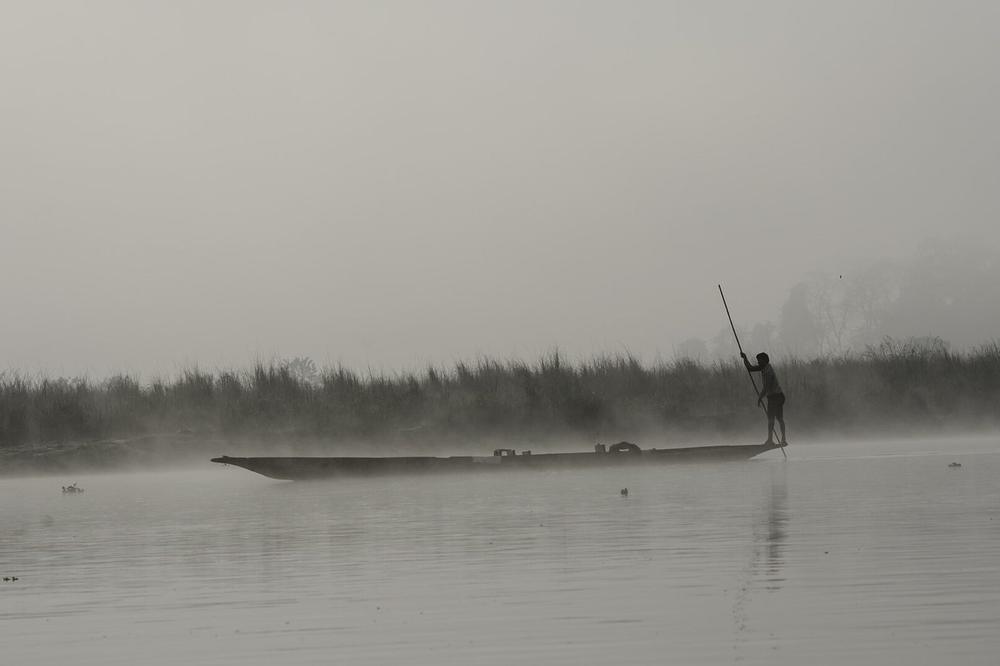
The first outing is on foot or by canoe on the Rapti at the end of the day, along the buffer zone rather than in the core. Crocodile, deer and a great deal of bird are the usual return; rhinoceros happens often enough here that the guides do not oversell it.
Chitwan
Dawn in the park proper, on foot with two licensed naturalists, which is how Chitwan should be done and is not how most of it is sold. Walking a forest that holds rhinoceros and sloth bear is a serious activity with a briefing attached, and the briefing is not theatre.
The afternoon is a Tharu village and the community forest on the far bank. We do not book elephant-back safaris, elephant bathing or any elephant attraction, at Chitwan or elsewhere. Sauraha sells all of them and you will see them from the road; observation-only facilities are a different thing and we will point out which is which.
Chitwan to Kathmandu
A short flight from Bharatpur in the middle of the day, or about five to six hours by road if weather closes it. The afternoon in Kathmandu is free and deliberately so: this is when people buy the thing they saw on day two and did not buy.
We put the last night on the airport side of the city rather than in Thamel, because early departures out of Kathmandu are common and the morning traffic is worse than anything you will have driven in Nepal.
Depart Kathmandu
Breakfast and the transfer. Tribhuvan wants you three hours ahead on international departures and means it; the security queue is a genuine bottleneck. Late flights get a day room.
What it costs
| Party size | Comfortable | Considered |
|---|---|---|
| 2 travellers | USD 3,550 | USD 4,850 |
| 3 – 4 | USD 2,950 | USD 4,000 |
| 5 – 8 | USD 2,600 | USD 3,550 |
Two travellers carry one vehicle, one driver, one guide and one porter between them, and that is why the top row sits 36% above the bottom one. The permit cost is the same USD 25 and NPR 1,000 whatever the party size, so it barely moves.
Comfortable is a good garden hotel in Kathmandu, a lakeside hotel at the quiet end of Pokhara and a solid lodge on the Chitwan boundary. Considered is the small heritage properties in the valley and the better Chitwan lodges, which in the Terai buys you a naturalist team rather than a bigger room.
The teahouse night is the same night in both columns. Australian Camp has no five-star option, it will not have one, and pretending otherwise would be the first dishonest line on this page.
The supplier-level breakdown of a day on the ground in Nepal is on the prices page.
What is and is not included
What the price includes
- Nine nights as listed, named by property in your quote, including the teahouse at Australian Camp
- A private vehicle and driver throughout, fuel and tolls included
- A national guide for the full journey, plus a licensed trekking guide and a porter for days 5 and 6
- The ACAP permit at USD 25 per person and the TIMS card at NPR 1,000
- Two domestic flights: Kathmandu to Pokhara, and Bharatpur to Kathmandu
- Chitwan park entry, the licensed naturalists and the canoe
- All site entrance fees listed day by day, and meals as listed
What it does not include
- International flights into and out of Kathmandu
- The Nepal visa on arrival: USD 30 for 15 days, USD 50 for 30 days, USD 125 for 90 days with multiple entry, payable in USD cash
- Travel insurance, which we require and do not sell
- Meals not listed above, and all drinks including bottled water on the ridge
- Hot showers and charging at the teahouse, which are charged by the item
- Tips for the guide, driver and porter, which are customary and never included
The journey in pictures
Who this journey is wrong for
- Anyone who wants Everest Base Camp. That is twelve to sixteen days, a Sagarmatha National Park permit at USD 28 and a Khumbu municipality permit on top, and an altitude profile this journey does not go near. Booking ten days and hoping to "see Everest" ends in a scenic flight and a photograph of a window frame.
- Anyone who intends to walk without a guide. It has been illegal since 1 September 2023, checkpoints now scan QR codes and check manifests, and the penalty runs to about USD 375 plus your own evacuation. We will not sell the walking days without the licensed guide, and no reputable operator in Kathmandu will either.
- Anyone booking May to August. The monsoon brings heat, haze, cloud, mud, leeches and road closures on the Prithvi Highway, and the ridge night loses the only thing it exists for. December and January are workable in the valley and cold on the ridge, with early December often the clearest week of the winter.
- Travellers who cannot manage three hours of descent on stone steps. Day 6 is the hardest physical thing on the route and there is no vehicle alternative from Australian Camp — the only way down is the way you came up.
- Anyone who wants an elephant-back safari at Chitwan, or a photograph on a chained elephant. Sauraha sells both openly. We book neither, and we will not leave you a free morning in which to organise it privately.
How this compares, and where Nepal fits
| Journey | Days | Countries | From |
|---|---|---|---|
| Nepal | 10 | Nepal | USD 2,600 |
| India, Nepal and Bhutan | 21 | India, Nepal, Bhutan | USD 8,200 |
| Bhutan | 9 | Bhutan | USD 4,900 |
| Rajasthan and the Golden Triangle | 12 | India | USD 3,200 |
Nepal is the cheapest country in the Himalaya to travel well in and the one with the most to give a walker, which is why it pairs naturally with Bhutan, where the daily cost is roughly double and the walking is shorter. Twenty-one days does both plus north India and is the only way to get all three without a transit schedule.
For the valley on its own terms — the three cities, the restoration, the winter air — read the Kathmandu valley page. For which months work across the region, the when to go page has the whole year.
Tell us your dates
Send the month, the number of travellers, and whether anyone in the party has walked at altitude before. A first draft comes back within two working days.
Questions travellers ask most
We are only walking for two days. Do we still need a licensed guide?
Yes. The rule introduced on 1 September 2023 covers trekking routes rather than trek lengths, and the Annapurna area is explicitly one of them. Enforcement in 2026 includes QR-code scanning at checkpoints and manifest checks against the registering agency.
Reported penalties reach NPR 50,000, roughly USD 375, with evacuation at the trekker’s own expense. The guide is inside our price, so this is not an upsell — it is simply how the country works now.
Which permits does this route actually need?
Two. An Annapurna Conservation Area permit at USD 25 per person, because the Kande, Australian Camp and Dhampus ground sits inside it, and a TIMS card at NPR 1,000 for group trekkers booked through a registered agency.
It does not need a Sagarmatha National Park permit at USD 28, which applies to the Everest region, and it does not need a restricted-area permit, which applies to the thirteen border districts. Both of ours are arranged before you land.
Is Nepal settled after the 2025 protests?
Yes. The unrest of September 2025 ended with an interim government under former Chief Justice Sushila Karki, curfews were lifted within days, and elections were held in March 2026 which largely returned the existing parties.
Hotel occupancy was reported above 80% by October 2025 and the Kathmandu, Pokhara, Chitwan and Lumbini routes have run normally throughout. There are no travel restrictions on this itinerary. We would tell you if there were; we decline countries rather than manage them.
Should we fly or drive between Kathmandu and Pokhara?
Fly, and hold the road as the fallback. The Prithvi Highway is about 200 km and takes six to eight hours in good conditions, eight to nine in monsoon or heavy traffic, with a narrow section through the Trishuli gorge that does not reward impatience.
Domestic flights in Nepal are weather-dependent and cancellations happen, mostly in the early morning. Our practice is a mid-morning slot with the vehicle already positioned, so a cancellation costs a day of scenery rather than a night of the itinerary.
Read next
Tell us about the journey you have in mind
Dates, party size and the places you care about are enough to start. You get a draft route and an indicative price, not a brochure.