What vegetarian means changes at every border
Eating well in Asia is the easy half. Eating well with a restriction is a country-by-country problem, and the answer in Kerala has nothing in common with the answer in Khiva.
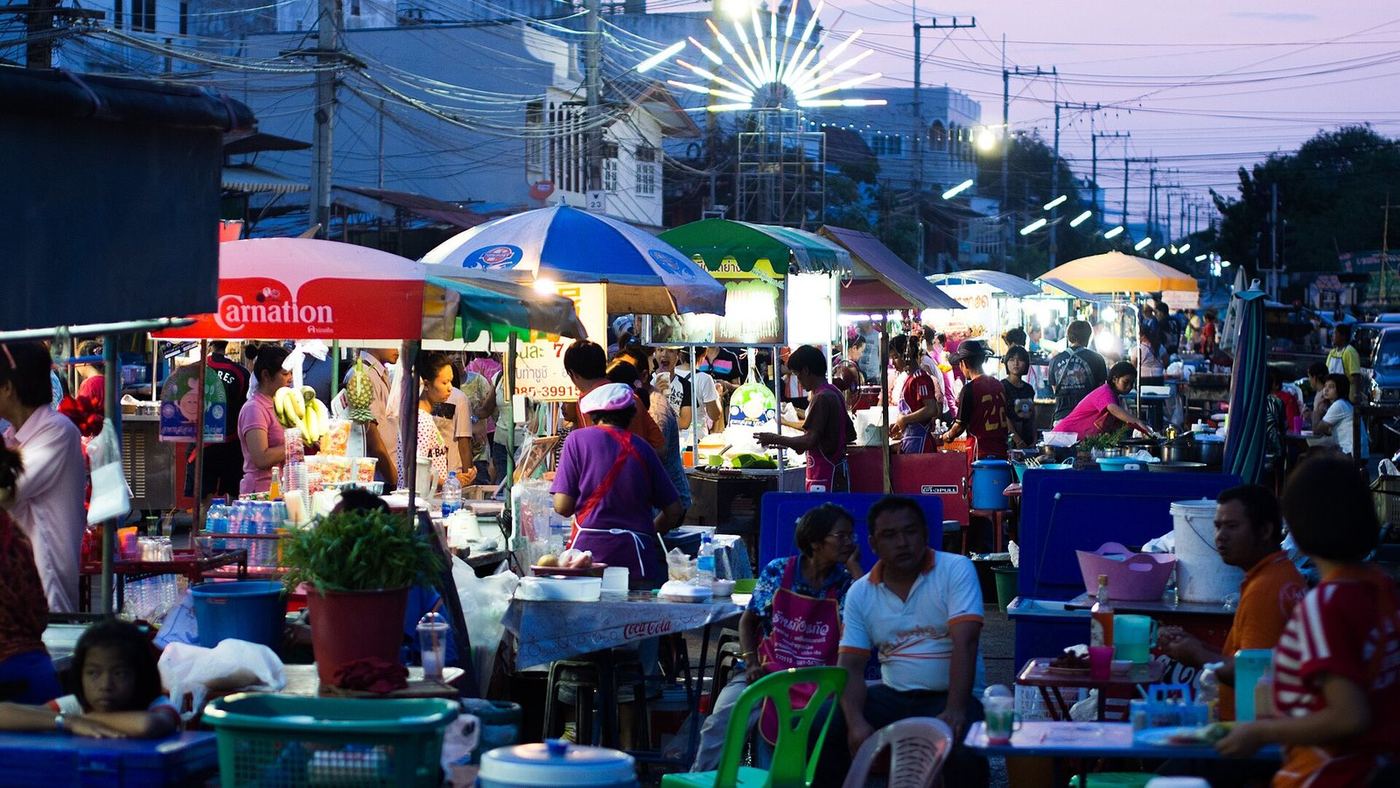
The word vegetarian does not survive the border
A traveller who has eaten vegetarian in India for a fortnight without a single difficult conversation arrives in Vietnam and is served a bowl of vegetable noodles built on fish stock. Nothing has gone wrong. The word has simply been translated into a language that uses it differently.
Across most of mainland Southeast Asia and Japan, the invisible ingredient is a fish or shellfish product used as seasoning rather than as an ingredient: the stock, the sauce, the paste in which the curry begins. Nobody is hiding it. It is salt as far as the kitchen is concerned, and it is not on the menu for the same reason salt is not on the menu.
| Country | What vegetarian usually means there | Where it goes wrong |
|---|---|---|
| India | Genuinely easy, and the only country on this list where it is the default rather than a request. Whole restaurants are vegetarian, packaged food carries a vegetarian mark, and the kitchen understands the question without explanation. | Dairy. Ghee, curd and paneer are everywhere, so vegetarian is simple and vegan is a separate and much harder conversation. |
| Nepal | Easy. Dal bhat is vegetarian as built, and the hill kitchens run on lentils, rice and vegetables with meat as an occasional addition. | Ghee again, and mixed cooking oil in tourist kitchens that also fry meat. |
| Sri Lanka | Easy in practice. Rice and curry arrives as five or six vegetable dishes and the meat is a side rather than the centre. | Dried Maldive fish turns up in sambols and in some vegetable curries without being mentioned. It has to be asked about by name. |
| Vietnam | Possible everywhere and easy where you know to look. There is a real Buddhist vegetarian tradition, food is cooked to it, and it is understood as a category rather than as a foreign eccentricity. | The broth. Fish sauce is in the base of most savoury cooking, and a bowl of vegetable noodles is routinely built on a stock that is not vegetarian at all. |
| Thailand | Workable, and better than its reputation, because the vegan tradition is a named category the kitchen recognises rather than a modification you have to negotiate. | Curry pastes. Shrimp paste and fish sauce are usually in the paste before the pan is hot, so ordering a vegetable curry is not the same as ordering a vegetarian one. |
| Cambodia and Laos | The hardest of the mainland. It can be done in Siem Reap, Phnom Penh, Luang Prabang and Vientiane, and it needs arranging outside them. | Fermented fish is the base note of both cuisines — prahok in Cambodia, padaek in Laos — and it goes into vegetable dishes as seasoning, not as an ingredient anyone thinks to declare. |
| Japan | The country most often got wrong. Temple cooking is an entire vegetarian cuisine, and it is superb, but it is booked in advance rather than found. | Dashi. The stock under most soups, simmered vegetables and dressings is made with dried fish, so a plate of vegetables in an ordinary restaurant is frequently not vegetarian. |
| South Korea | Improving quickly in Seoul and Busan, and temple cuisine is a real and bookable tradition. | Anchovy stock in the everyday soups and stews, and salted seafood in most factory and restaurant kimchi. |
| Indonesia and Malaysia | Malaysia is straightforward — the Indian and Chinese vegetarian restaurants do the work for you. Indonesia is fine in Bali and Java and thinner elsewhere. | Shrimp paste in sambal, which arrives with almost everything, and chicken stock in the rice at cheaper kitchens. |
| Uzbekistan | The hardest country on this site. The everyday repertoire is short: rice cooked with mutton and carrot, skewers, a baked pastry, flatbread, a chopped salad and a soup. | Almost every dish starts with meat or the fat it was cooked in. Tashkent has answers; Khiva and Bukhara have very few, and a vegan fortnight there needs the itinerary built around it from the start. |
| Jordan and Oman | Easy and pleasant. Mezze is largely vegetable and pulse cooking and nobody treats the order as strange. | Meat stock in rice and in soup, and the assumption that a vegetarian eats chicken, which has to be closed off explicitly. |
Two conclusions come out of that table. India, Nepal and Sri Lanka are where a vegetarian traveller can stop thinking about it — India above all, which is why the ten-day Kerala journey is the one we suggest first to a vegetarian family. And Uzbekistan is the one country where we would change the route rather than the order: the ten-day Silk Road cities works for a vegetarian and asks a good deal of a vegan.
Vegan is a harder question than vegetarian everywhere on this page, and the obstacle changes shape as you move. In South Asia it is dairy. In Southeast Asia and Japan it is fish. In Central Asia it is that the underlying repertoire has almost no dish that starts without meat.
Allergies, and what a card in the local language actually does
We write a card for every traveller who tells us they have an allergy: the allergen named in the local language, the words for the ingredients it hides in, and a plain line asking the kitchen whether the dish contains it. It is the single most useful thing we can put in your pocket, and it is worth being precise about its limits.
What the card does
- It removes the language gap, which is the cause of most of the wrong answers.
- It names the hiding places rather than the allergen alone — the stock, the paste, the oil, the garnish — which is what a kitchen actually needs asked.
- It gets a dish changed. Most kitchens in Asia cook to order and will substitute without complaint when they understand the request.
- It survives your guide being elsewhere and it works at a roadside stop that nobody briefed.
What the card does not do
- It cannot inspect a stock pot that was made at six in the morning.
- It cannot separate a fryer, and it cannot give you a second wok. A single pan is the normal working method across most of Asia, and rinsing between dishes is not.
- It cannot audit a bought-in ingredient. Curry pastes, sambals, sauces and stock bases frequently arrive at the kitchen already made, and the cook knows what is in them only in the way you know what is in a jar you did not fill.
- It is not a medical device, and it does not replace the medication your doctor has prescribed or the plan they have given you for using it.
Where avoidance takes planning rather than a sentence to a waiter
Nuts. Peanut is a garnish, a sauce base and a frying oil across Thailand, Vietnam, Indonesia and Malaysia, and it appears in dishes with no visible nut in them. In these countries a nut allergy is an itinerary input: restaurants briefed ahead, a guide who orders, and a car that carries food you know is safe.
Shellfish and fish. Harder than nuts, because it is structural. Shrimp paste, fish sauce, oyster sauce and dried fish are seasonings in Thailand, Vietnam, Cambodia, Laos, Indonesia and Malaysia, and dried fish stock is the base of ordinary Japanese cooking. A traveller avoiding shellfish in Japan is usually better served by a hotel or ryokan kitchen briefed a fortnight ahead than by walking into a restaurant and explaining.
Gluten. The problem is soy sauce, which in Japan, Korea, Taiwan and most Chinese-influenced cooking is brewed with wheat and used in almost everything. Wheat-free soy sauce exists and is not what a restaurant has open. A coeliac traveller in Japan needs the kitchens told in advance and a supply of their own sauce; the same traveller in southern India, where the everyday cooking is built on rice, lentils and coconut, has one of the easiest countries in the world.
Sesame and egg. Sesame oil is a finishing ingredient in Korean cooking rather than an occasional one. Egg turns up in fried rice, in noodle dishes and in batters, often without mention.
We can brief kitchens, write cards, order for you, carry food in the car and change where you eat. We cannot certify that any kitchen in Asia is free of an allergen, and no operator can. Anyone who tells you otherwise is selling you confidence rather than a service. Talk to your doctor about what you carry, how much of it, and what you do if you need help — and tell us the answer, because it changes which nights we are willing to put you a long way from a hospital.
Halal and kosher
Halal
Straightforward in Malaysia, Indonesia, Brunei, Jordan, Oman, Uzbekistan and Kyrgyzstan, where the meat supply is halal by default and the question does not need asking. It is also easy in the Muslim quarters of Indian and Sri Lankan cities, and in parts of southern Thailand and the southern Philippines.
It takes work in Japan, South Korea, Taiwan, Vietnam, Cambodia and Laos. The obstacle in the mainland Southeast Asian countries is not a shortage of certified restaurants so much as pork, which is the ordinary meat, and lard and pork stock, which are in a great deal of cooking that contains no visible pork. In Japan and Korea, certified kitchens exist in the larger cities and thin out quickly outside them, and the alcohol used in seasoning — mirin, cooking sake, soju in marinades — is a separate question from the meat. Where a journey passes through places with nothing certified, we plan the days around seafood and vegetarian kitchens rather than pretend the problem is solved.
Kosher
Nowhere in Asia is kosher observance straightforward, and we would rather say so than imply we have a network. A small number of cities have a community kitchen or a Chabad house that serves meals, and where one exists on your route we will contact it and tell you exactly what it offers before you plan around it. Everywhere else the practical answer is sealed imported food carried with you, fruit and vegetables bought locally, hotel rooms with a fridge, and a route that does not leave you three days from a resupply.
For both, the operational point is the same: this belongs in the enquiry, not in the final week. What we can do with eight weeks and a private car is different in kind from what anyone can do on the day, which is set out under how to book.
Water, ice, street food, and the honest position
Drinking water is in the vehicle on every journey we run, and it is in the inclusions on every tour page for that reason. Beyond that, the sensible practice across the region is bottled or filtered water for drinking and for teeth, and nobody who follows it finds it onerous.
Ice is the question we get asked most and the one with the least useful general answer. In the cities and in any hotel or restaurant of the standard we book, ice is commercially produced. At a roadside stall in a hot country in April, you are relying on a chain of custody you cannot see. We tell guides to order drinks without ice where they would not take it themselves, which is a more honest instruction than a rule.
Where street food is the safer buy
A stall that sells one dish, cooks it in front of you over high heat, and turns its stock over three times a day is a better proposition than a buffet tray that was filled at seven and is still there at ten. That is not romance about street food; it is arithmetic about how long food sits. In Vietnam, Thailand and Malaysia the busiest stalls are frequently the best-run kitchens in the street.
Where it is not
Pre-cut fruit, cold sauces, anything dressed and left out, shellfish at the end of a hot afternoon, and any stall with no queue in a place with plenty of them. In countries where we would generally steer you towards a restaurant rather than a stall, the reason is usually the water used for washing rather than the cooking itself. And a traveller with a serious allergy should read the whole of this section as not applying to them: a stall cannot answer the questions their card asks.
The blunt version. Most travellers to Asia have an uneventful fortnight, some have a bad thirty-six hours, and the second group is not neatly divided from the first by who ate at a stall. What actually helps is a car with water in it, a guide who knows which kitchens they would feed their own family from, and an itinerary with enough slack that losing a morning costs a morning.
What a private journey can do here that a group departure cannot
This is the part of our product that a set-departure tour cannot replicate, and food is where the difference is most visible.
- Every restaurant on your itinerary is briefed before you arrive, by phone, in the local language, by the person who booked it — not by you at the table.
- Your card travels with the guide as well as with you, and the guide orders.
- A lunch stop can move. If the kitchen we planned cannot feed you safely, we go somewhere that can, which costs twenty minutes rather than an argument with thirty other passengers.
- Fixed-menu houses can be changed in advance. A ryokan kaiseki or a desert camp dinner is a set sequence cooked for the house, and with two or three weeks’ notice it is rewritten for you; with two hours it is not.
- Meal times bend. A child who eats at 11:30, a traveller fasting during Ramadan, or a coeliac who needs to eat before a long drive all change the shape of the day, and a private car absorbs that.
The comparison in full, including the cases where a group departure is still the better purchase, is on private or group. Dietary needs given at enquiry are design inputs; given in the final week they are a scramble, and the difference shows on the plate.
Four meals worth building a day around
The court cooking of Hue, Vietnam
Hue cooks small: a dozen little dishes rather than one large one, a legacy of feeding an imperial household that wanted variety more than volume. It is the meal that changes people’s minds about Vietnamese food after a week of noodles, and it sits in the middle of the eleven-day Vietnam journey. Tell us in advance if you are vegetarian: a good deal of the repertoire is shrimp and pork, and the vegetarian version of it exists but is cooked to order.
Kaiseki at a ryokan, Japan
A multi-course dinner served in sequence in your own room or a private dining room, built on what the season has, eaten in a robe, followed by a hot spring bath. It is the best evening on the twelve-day Japan journey and it is also the strictest: the menu is set for the house, dashi is in most of it, and changing it needs a fortnight’s notice rather than a word at the door.
A sadya on a banana leaf, Kerala
Twenty or more preparations laid out on a leaf in a fixed order and eaten with the right hand, and vegetarian by construction rather than by concession. It is the clearest illustration on the whole site of why a vegetarian traveller should point at south India first, and it is a fixture of the Kerala journey.
Plov from the kazan, Uzbekistan
Rice, mutton, carrot and cumin cooked in a wide iron pot for a hundred people and served at midday because that is when it is ready. Worth arranging the day around, and worth knowing that it is also the country’s answer to nearly every other meal — the counterweight to which is on the Uzbekistan page.
Tell us the restriction before you tell us the route
Coeliac, nut allergy, vegan, halal, kosher, or a child who eats four things. Send it with the enquiry and it shapes the itinerary; send it in the last week and it only shapes the apologies.
Questions travellers ask most
Can you guarantee a kitchen will be free of nuts, or of gluten?
No, and neither can anybody else operating in this region. Single-wok cooking, shared fryers and bought-in pastes make a guarantee impossible to stand behind, and an operator who gives you one has not thought about how the kitchen works.
What we do instead: brief every restaurant on the itinerary in advance, put a card in the local language in your pocket and the guide’s, keep safe food in the car, and choose kitchens that cook to order rather than in batches. Ask your doctor what you should carry and what your plan is if you need it, and tell us the answer — it changes which remote nights we will build in.
We are vegan. Which countries should we choose?
India first, and southern India in particular, where rice, lentils, coconut and vegetables are the everyday cooking rather than a special order. Then Vietnam and Thailand, where a Buddhist vegan tradition exists as a recognised category and kitchens know what it means. Sri Lanka and Nepal both work well.
The countries that will cost you effort are Uzbekistan, Cambodia and Laos outside the main towns, and Japan and Korea outside the cities. All are possible with the itinerary built around it. None is comfortable if the restriction arrives after the route is fixed.
Is the water safe, and should we avoid ice?
Drink bottled or filtered water and use it for your teeth. We carry drinking water in the vehicle on every journey, and it is listed in the inclusions on every tour page.
Ice in city restaurants and in the hotels we book is commercially made. At a roadside stall in the hot months, it is a chain you cannot check. Our guides are told to order without ice anywhere they would not take it themselves. Anything beyond that — what to carry, what to take if you are ill — is a question for your doctor before you leave.
How far ahead do you need to know about a dietary requirement?
At enquiry, before the itinerary is drawn. It is not a detail to be added later; it decides which restaurants go on the route, which hotels we choose, and occasionally which country we suggest.
The hard deadline is two to three weeks before you travel, because that is what a ryokan, a desert camp or a homestay needs to cook a genuinely different menu rather than remove things from the one they had planned.
Read next
Tell us about the journey you have in mind
Dates, party size and the places you care about are enough to start. You get a draft route and an indicative price, not a brochure.