Nine nights from the spice coast to the Western Ghats and back down
Kochi, the tea country at the top of a long climbing road, a tiger reserve you walk rather than drive, one night on the water at Alleppey, and the last two on a cliff above the Arabian Sea. South India runs on a different calendar from the north.
At a glance
- Duration
- 10 days, 9 nights
- Party
- Private, 2 to 8
- Starts
- Kochi
- Ends
- Trivandrum
- Difficulty
- Easy
- From
- USD 2,700
Kerala is the state most first-time visitors to India should probably have gone to second. It is green, coastal, litigious about its own environment, and almost entirely without the monumental architecture that makes the north photograph the way it does. Nobody comes here for a fort. They come for a landscape that changes four times in nine nights: sea level at Kochi, tea at Munnar, forest at Periyar, flat water at Alleppey, then sea level again.
Ten days is the right length for that sequence and is close to the minimum. Take a night out and something has to be driven past rather than stopped at, and on this route the drives are the part people underestimate: four hours up to Munnar, four across to Periyar, four down to the water. None of them is unpleasant. All of them are longer than the map suggests, because the road through the Ghats bends more than it climbs.
If the forts and the desert are what you actually want, take the twelve-day Rajasthan journey instead and come to Kerala another year. The two states have almost nothing in common beyond a passport stamp.
Day by day
South India’s dry window is roughly December to February, and it is the same window in which Delhi’s air is at its worst — broadly October to January, driven by stubble burning, temperature inversion and traffic. That is a useful accident. A traveller who wants India in January is better served by this route than by the north, and we will say so rather than sell the north in the wrong month. The wider month-by-month picture is on the when to go page.
Arrive Kochi
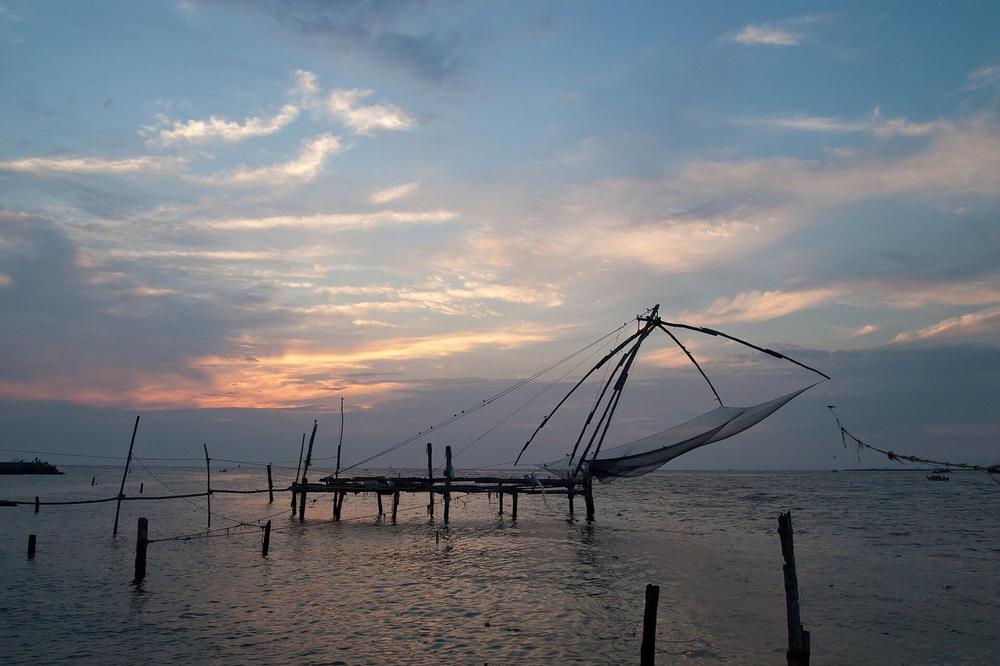
Met at Cochin airport and driven down to Fort Kochi, which takes about an hour and a quarter and ends on a peninsula where the traffic stops mattering. Nothing is scheduled. The walk that makes sense on a first afternoon is the sea wall at the north end, where the cantilevered Chinese fishing nets are worked by hand at the turn of the tide and by nobody at all in between.
Fort Kochi and Mattancherry on foot
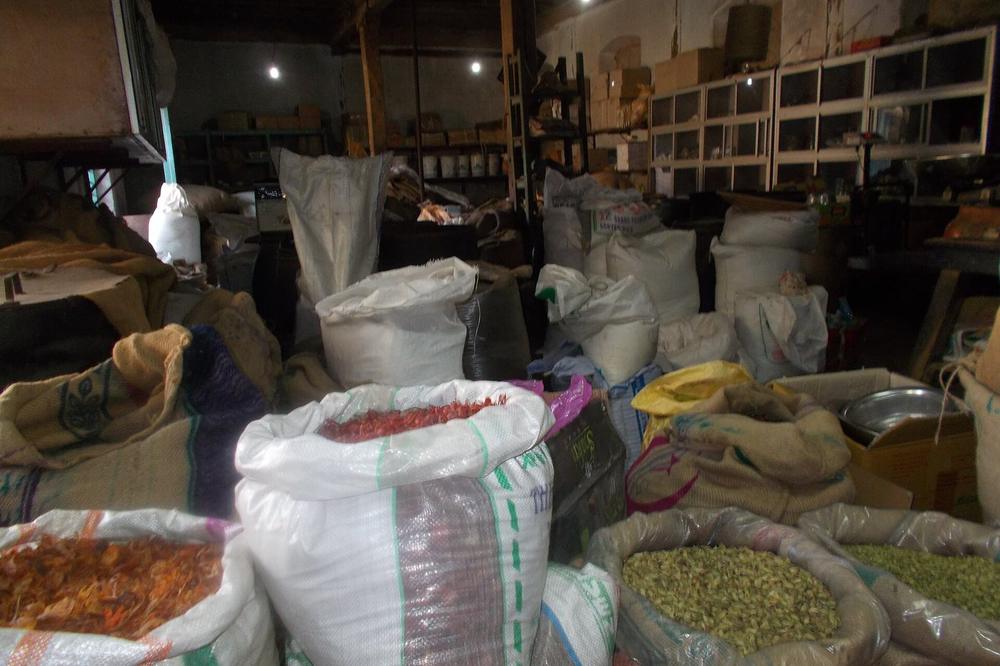
A morning walking the peninsula with a guide who can keep the layers straight: a Portuguese church, a Dutch cemetery, a British Residency, a synagogue in a quarter that still smells of the pepper stored around it, and godowns where ginger and cardamom are graded on the floor. Kochi traded before it was colonised and kept trading after; the buildings are the receipts.
The evening option is a Kathakali performance, and we book the version where you arrive an hour early to watch the make-up go on. The make-up is the part that holds people. The performance itself is slow, loud and untranslated, and we would rather you knew that before the ticket than after it.
Kochi to Munnar
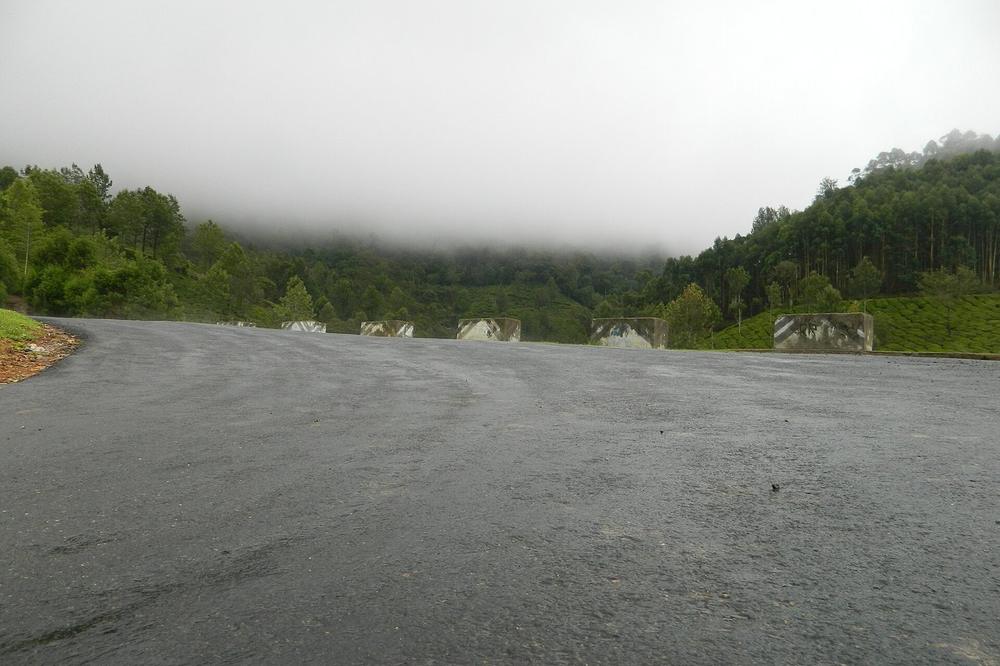
Leave at 08:30 and climb. The road runs east through rubber, then pineapple, then the first tea, and the last hour is switchbacks with the temperature falling as you go. Four hours with two stops, and the second stop is worth holding out for: the valley opens somewhere above Adimali and the plantations start reading as landscape rather than agriculture.
Munnar town itself is a scruffy hill station with too many buses. You are not staying in it. The estates above it are quiet, genuinely cold after dark, and a different climate from the coast you left at breakfast.
Munnar
Out at first light, because the mist sits in the valleys until about nine and that is the hour the tea country is worth photographing. A walk on estate paths with a guide who has picked, not a driver who has stopped: how a bush is kept at plucking height for a century, why two leaves and a bud, what the machine did to the wage.
The afternoon is a working factory if one is rolling that day, and free if it is not. Munnar is also where anyone who wants a hard walk should say so. There are longer routes on the ridges above the estates, and they need to be arranged the evening before rather than at breakfast.
Munnar to Periyar
South along the ridge and down, about four hours through cardamom rather than tea. The smell changes at the point the crop does, which is a thing people notice with the windows open and miss entirely with the air conditioning on.
Afternoon at a cardamom and pepper smallholding rather than a spice showroom. The difference matters: one is a farm that sells what it grows, the other is a shop with a commission arrangement, and we do not take clients to the second.
Periyar
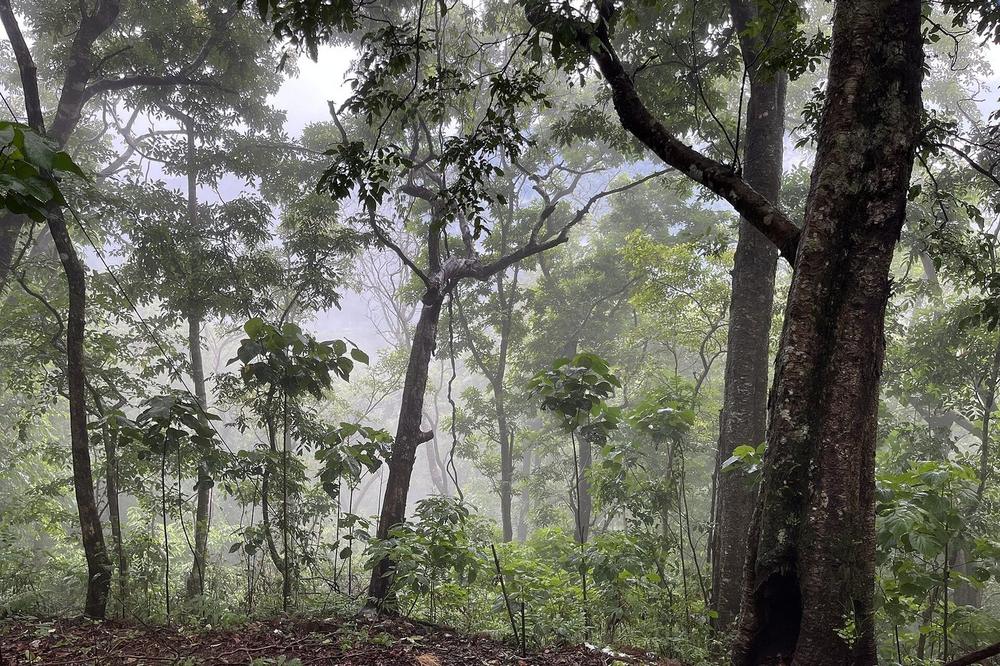
Periyar is a tiger reserve built round a reservoir, and the standard visit is a boat that carries a hundred people across a lake at eleven in the morning. We do the other thing: a walk at dawn inside the reserve with a forest department guide, three hours, single file, no vehicles, on ground where elephant and gaur are genuinely resident.
You may see nothing. That is the honest position on every Indian reserve and it is particularly true here, where the forest is thick and the animals are not habituated to jeeps. What you do get is three hours inside a working forest at the only hour it is quiet, which is more than the boat offers and costs a very early alarm.
We do not book elephant rides, elephant camps or any attraction built on a captive elephant, here or anywhere else in Asia. Thekkady sells all three, loudly, and you will be offered them by somebody who is not us.
Periyar to the backwaters
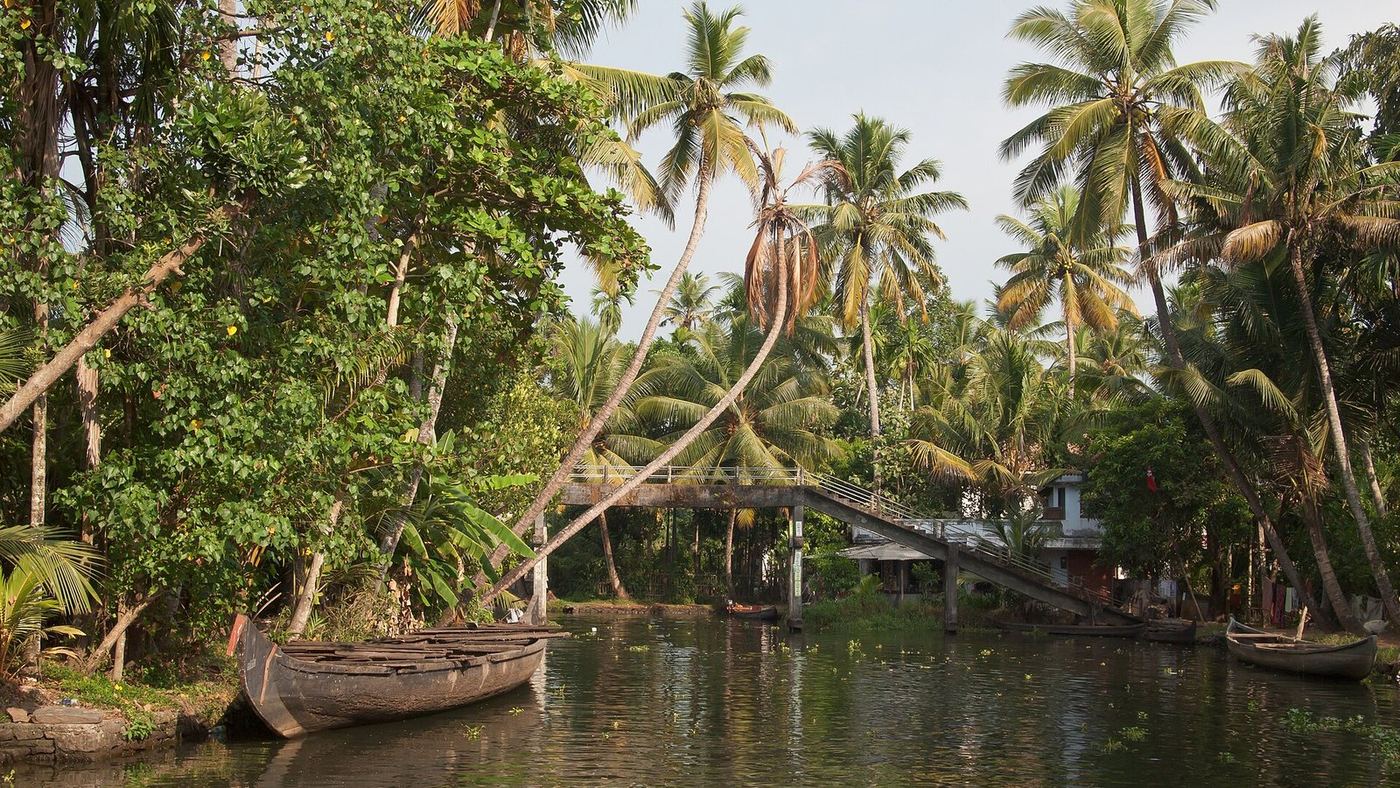
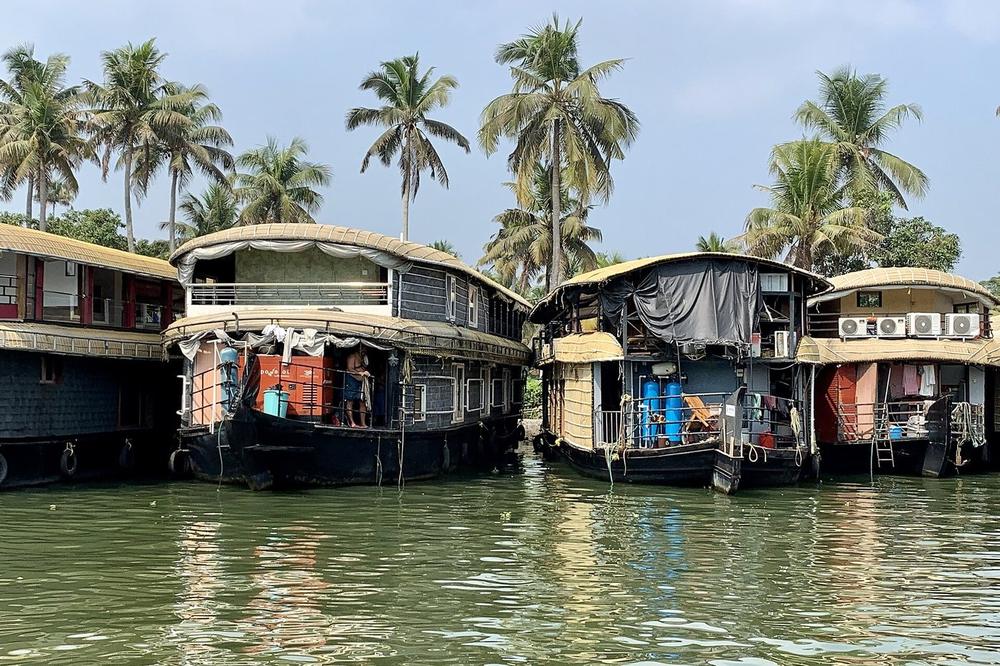
Down out of the hills to Alleppey, about four hours, and aboard around noon. The backwaters are a network of lakes, canals and rice polders below sea level, worked by people who live on the banks, and the houseboat fleet that serves them is large and not uniformly well behaved.
We use boats with sealed waste tanks and a crew of three, and we moor for the night in a narrow canal rather than out on Vembanad lake with sixty others. The afternoon is slow by design. Lunch is cooked on board, the fish comes off a boat that comes alongside, and the engine goes off at about five.
The backwaters to Varkala
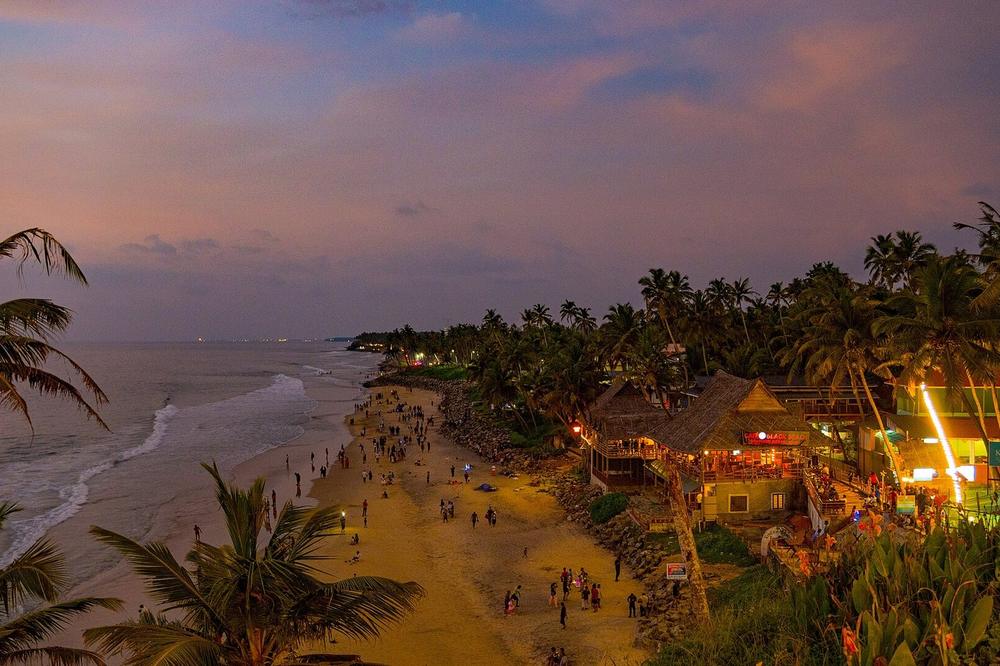
Off the boat after breakfast and south along the coast, about two and a half hours. Varkala is a cliff with a beach at the bottom of it, a Hindu pilgrimage site at the north end and a strip of cafes on the top that we will not pretend is anything other than a tourist strip.
The rest of the day is nothing. This is deliberate: after Munnar, Periyar and a night on a boat, the ninth night should not involve a monument.
Varkala, free
Nothing scheduled. The sea at Varkala has a shore break and a current, and the lifeguard flags mean what they say; the hotel pool exists for the days they are red. If you would rather do something, the two we push are a morning at the Sivagiri math above the town, which is a working ashram rather than a sight, and a properly booked ayurvedic consultation and treatment, which needs three hours and should not be confused with a spa massage.
Depart Trivandrum
Breakfast, then about an hour down to Trivandrum airport. Late departures get a day room rather than a lobby, and if you are connecting through the Gulf we ask for the flight number a week ahead so the transfer is built round it rather than round checkout.
What it costs
| Party size | Comfortable | Considered |
|---|---|---|
| 2 travellers | USD 3,650 | USD 4,950 |
| 3 – 4 | USD 3,050 | USD 4,150 |
| 5 – 8 | USD 2,700 | USD 3,650 |
A party of two carries one car, one driver and one guide between two people. That is the whole reason the top row is 36% above the bottom one, and nothing else on this route moves the number nearly as much — not the month, not the hotel grade.
Comfortable is the heritage house in Fort Kochi, an estate bungalow at Munnar and a good plantation hotel at Thekkady: mid-range in Indian terms, roughly the USD 60 to 120 a night band, and better than that band suggests because Kerala has an unusual number of owner-run places. Considered is the five-star and palace-grade tier, USD 180 to 400 a night and upward, which in this state means the coast and Kochi more than the hills.
The houseboat is the one line where the grades genuinely diverge. A cheap boat and an expensive boat look similar in a photograph and are not similar at all after dark, and the difference is mostly the waste tank and the crew.
What a day on the ground costs before any operator margin — the car, the driver, the guide, the beds — is broken down on the prices page.
What is and is not included
What the price includes
- Nine nights as listed, named by property in your quote
- A private car and driver for the full ten days, fuel, tolls and parking included
- A national guide in Kerala, and local specialist guides at Kochi, Munnar and Periyar
- The private houseboat for one night, with its crew, fuel and all meals aboard
- The Periyar reserve walk with a forest department guide, and reserve entry
- All entrance fees for the sites listed day by day
- Meals as listed on each day, and drinking water in the vehicle
What it does not include
- International flights into Kochi and out of Trivandrum
- The Indian e-Tourist visa: USD 25 for arrivals July to March, USD 10 April to June, plus a 3% bank charge, with a higher reciprocal fee for UK passports
- Travel insurance, which we require and do not sell
- Meals not listed above, and all drinks
- Ayurvedic treatments at Varkala, which are booked but paid locally
- Tips, which are customary in India and never built into our prices
The journey in pictures
Who this journey is wrong for
- Anyone who came to India for monuments. Kerala has no Taj, no Amber Fort and no city wall; the tallest thing you will look at in nine nights is a tea slope. If the photographs that made you book India were of forts, book Rajasthan.
- Travellers who cannot cope with humidity. Only the two Munnar nights are cool. Kochi, Alleppey and Varkala sit at sea level and stay humid even in the driest weeks of January.
- Anyone who needs to see a tiger. Periyar has them and almost nobody sees one. The walk is sold here as three hours inside a forest, not as a sighting, and a client who books it expecting big cats will finish the morning disappointed.
- Anyone travelling June to September. The monsoon reaches Kerala before it reaches anywhere else in India, the sea at Varkala closes, and the backwater views turn grey. It is green, cheap and empty, and for some travellers that trade is right — but it is a trade, and we will put it to you as one.
- Anyone who wants to ride an elephant, or photograph one in a chain. Thekkady sells both. We will not book either, and we will not quietly leave you a free afternoon in which to arrange it yourself.
How this compares with our other south Asian journeys
| Journey | Days | Countries | From |
|---|---|---|---|
| Kerala and south India | 10 | India | USD 2,700 |
| Rajasthan and the Golden Triangle | 12 | India | USD 3,200 |
| Sri Lanka and south India | 19 | Sri Lanka, India | USD 5,900 |
| Sri Lanka | 11 | Sri Lanka | USD 3,100 |
Kerala and Sri Lanka are the obvious pairing and the nineteen-day version does it properly, in that order, ending at Kochi. They are close geographically and not much alike: Sri Lanka has the ruins and the hill railway, Kerala has the water and the food. Doing both in twelve days produces two half journeys.
For what this state is like outside a fixed route, and how many nights the rest of India holds, read the India destination page.
Tell us your dates
Send the month, the number of travellers and anything already fixed at either end. A first draft itinerary comes back within two working days.
Questions travellers ask most
Is one night on a houseboat enough?
One is right and two is usually worse. The first afternoon and evening on the water are the whole point; the second day is the same canal at the same speed, and by lunchtime most people want to be on land.
If the water is what you came for, the better use of the extra night is a lake-side hotel at Kumarakom rather than a second night aboard. Say so at the draft stage and we will redraw it.
What visa do we need, and when should we apply?
The Indian e-Tourist visa. The 30-day version costs USD 25 for arrivals between July and March and USD 10 for arrivals between April and June, with a 3% bank charge on top. UK passport holders pay a higher reciprocal fee — check the official fee calculator before you budget it.
The application window opens 120 days before travel and closes four days before arrival. Most approvals come back within about 72 hours, but applying in the last week is how people end up rebooking flights.
Can we combine this with Rajasthan, or with Sri Lanka?
With Sri Lanka, easily, and we sell it as a nineteen-day journey ending in Kochi. The two work in the same months.
With Rajasthan it is more awkward than the map suggests. The domestic flight is long, and December to February is simultaneously Kerala at its best and the tail of the season in which Delhi’s air is worst. If you want both, take the north in late February or March and the south immediately after, and allow at least eighteen days.
What actually happens if we book July or August?
It runs. The road to Munnar stays open, the houseboats sail, and the rate drops. What you lose is the view: the Ghats are in cloud most days, Periyar’s dawn walk is often cancelled by the forest department after heavy rain, and the sea at Varkala is closed to swimming.
We will quote it, and we will put all of that in writing in the same email. What we will not do is sell a monsoon departure as the classic season with a discount attached.
Read next
Tell us about the journey you have in mind
Dates, party size and the places you care about are enough to start. You get a draft route and an indicative price, not a brochure.