Four nights in Luang Prabang, two on the Nam Ou, and the train south
The slowest country in Southeast Asia, taken at the speed it rewards. Luang Prabang for long enough to stop being a checklist, the river north of it, and the two-hour train that replaced a six-hour road.
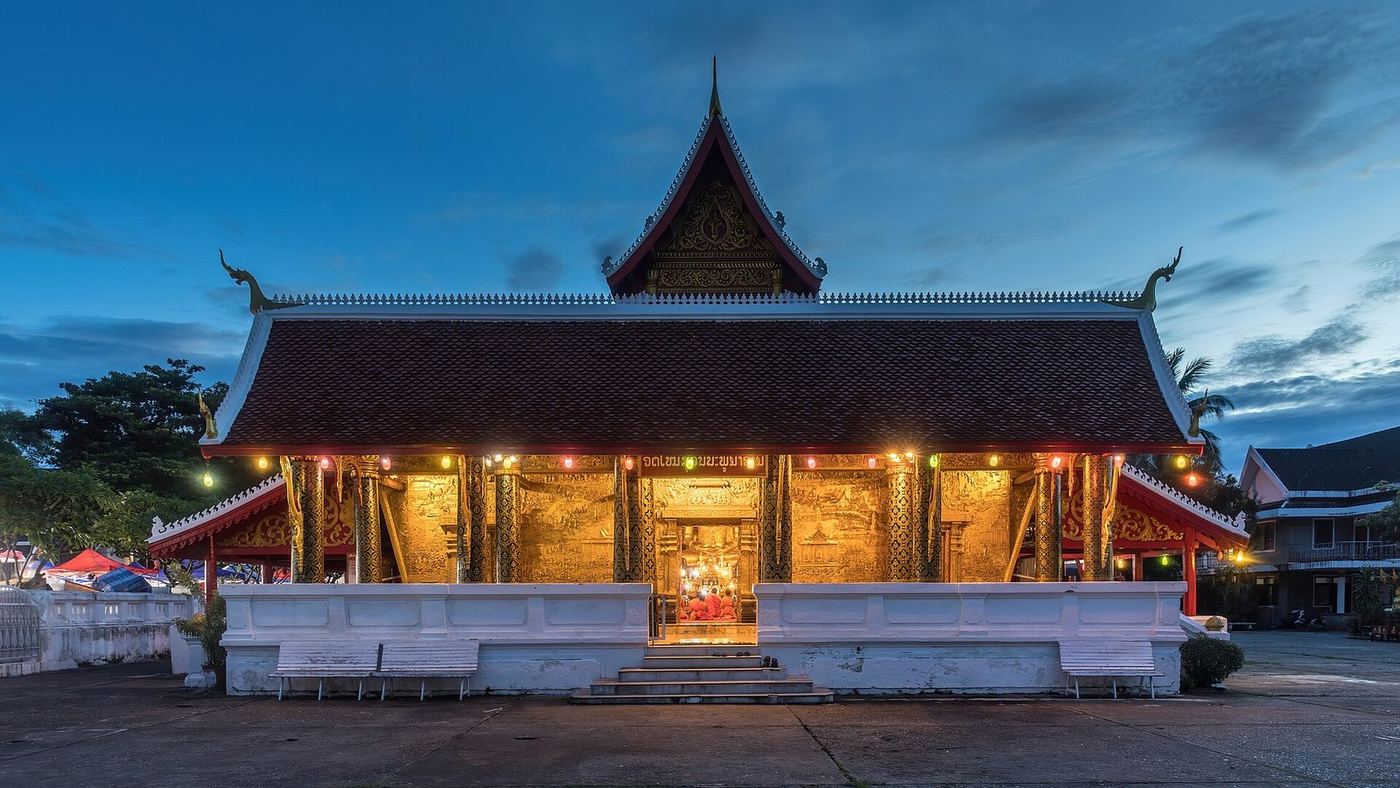
At a glance
- Duration
- 9 days, 8 nights
- Party
- Private, 2 to 8
- Starts
- Luang Prabang
- Ends
- Vientiane
- Difficulty
- Easy, one steep morning
- From
- USD 2,300
Laos is small on a map and slow on the ground, and the mistake most itineraries make is treating it as a two-night stop between Hanoi and Angkor. Nine days is enough to do the opposite: sit in one town until it stops being a set of sights, go north to the river where the road runs out, and arrive in the capital with nothing left to prove.
Four of the eight nights are in Luang Prabang. That is deliberate, and it is the part of this itinerary people argue with before they travel and defend afterwards. A town of low tiled roofs on a peninsula between two rivers does not open up in forty-eight hours; it opens up when you have walked the same street at six in the morning and again at nine at night.
The one routing fact that shapes everything else: the Laos–China railway now runs Vientiane to Luang Prabang in about two hours, against five to six and a half hours on the road. We use it southbound on day seven. Both stations sit outside their towns, so the real door-to-door figure is longer than the timetable, and we build the transfer and the security queue into the day rather than pretending they do not exist.
Day by day
Seats on the fast C-series services are the constraint, not the fare. Second class runs about 330,000 kip and first class about 522,000 kip, which is roughly USD 16 and USD 25, but allocation opens on a short window and sells out on Lao holidays. We book first class as soon as the departure is confirmed. If the day we need is gone, the fallback is the road, five to six and a half hours, and we tell you before you leave home rather than at the station.
Arrive Luang Prabang
The airport is close enough to town that the transfer is over before the air-conditioning has taken effect, which is not something you can say about many arrivals in this region. Nothing is scheduled.
If you land before dark, walk the length of the peninsula and back — about forty minutes at an unhurried pace, Mekong on one side, Nam Khan on the other. That walk is the whole geography of the town, and having it in your legs on the first evening makes the next three days easier to hold together.
The alms round, the market, and Wat Xieng Thong
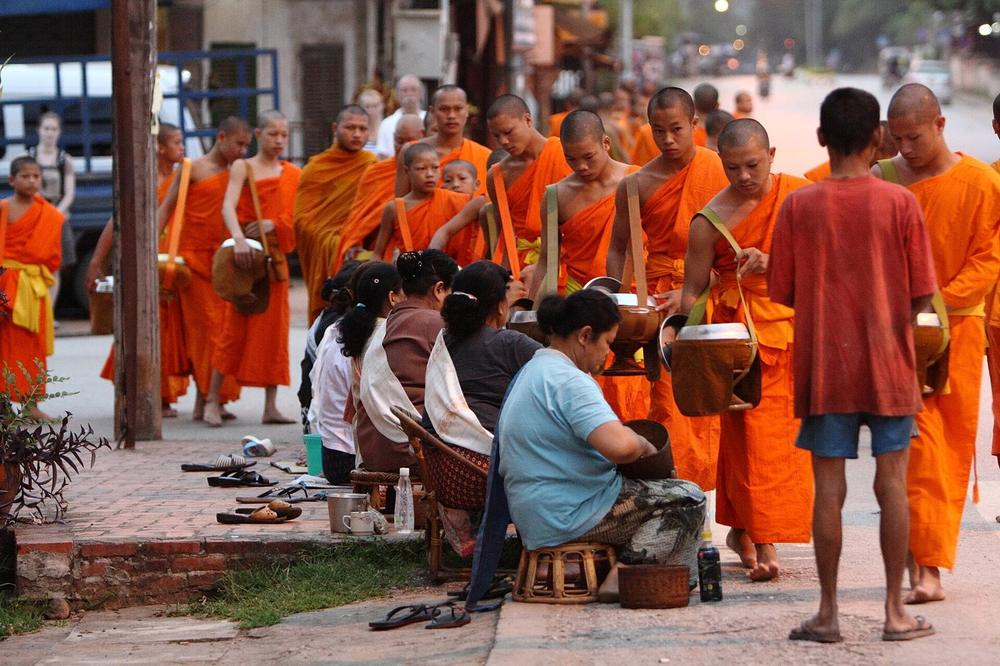
Tak bat happens at first light, and it is a monastic discipline rather than a performance. Our rule is simple and we brief it the night before: sit or kneel below the level of the monks, stay on the far pavement, no flash, no stepping into the line, and do not buy the sticky rice sold at the kerbside, which is often not fit to be offered. You are welcome to skip it entirely and we will not think less of the morning.
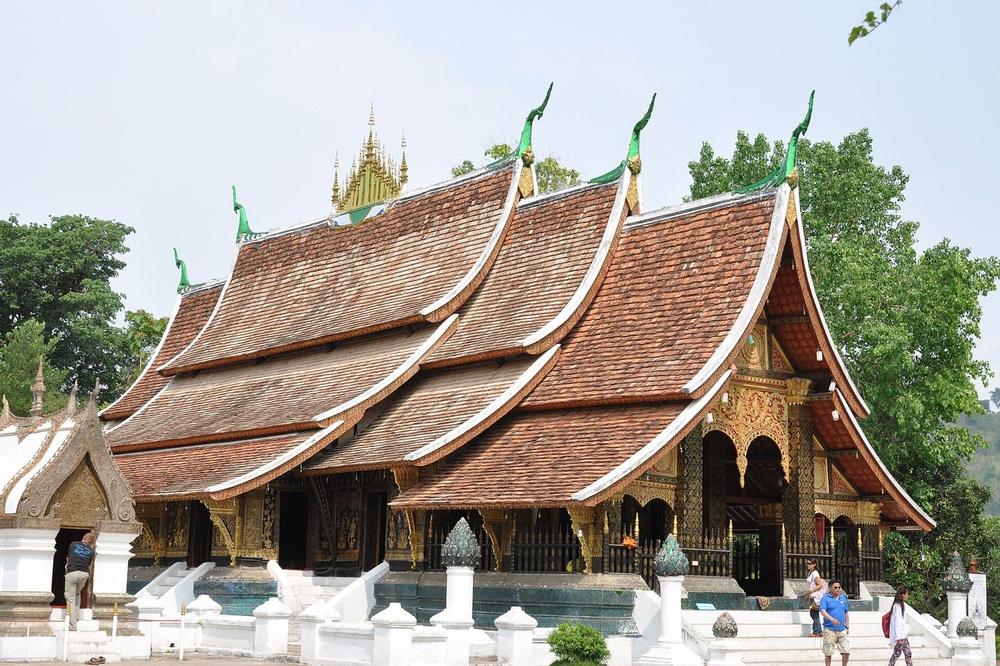
Afterwards the fresh market, which sells herbs and river fish to people who live here and has almost nothing on a stall for a visitor to buy. Late morning at Wat Xieng Thong, at the end of the peninsula, whose roofs come almost to the ground and whose mosaic wall is best before the heat.
The afternoon is the Royal Palace and the ethnology collection across town, which sets out the highland and lowland peoples of this country better than any guide can do standing in a temple courtyard.
Kuang Si
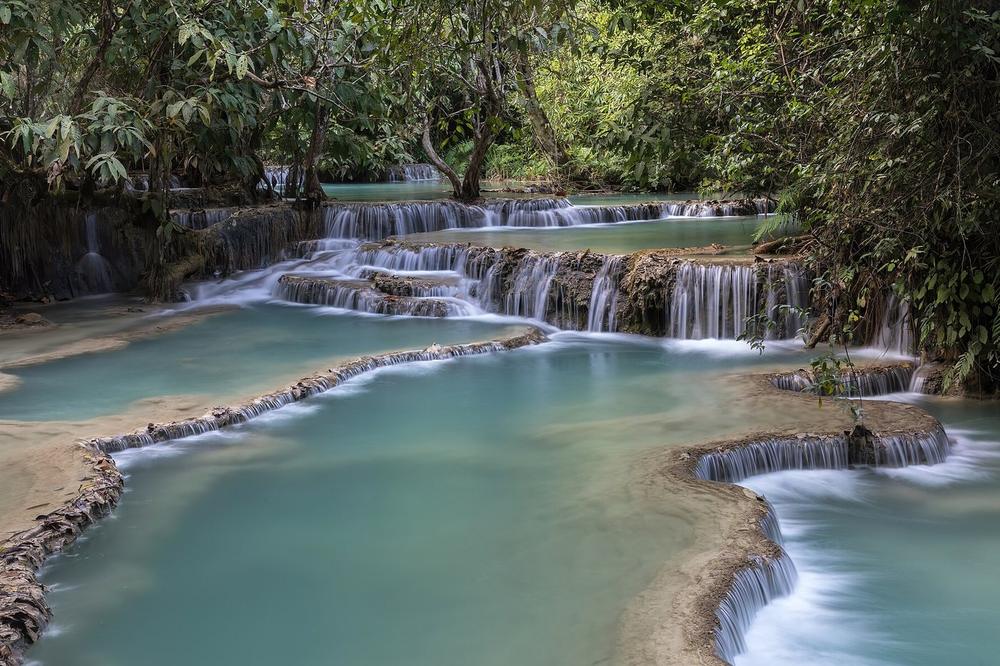
The falls are an hour south, and the hour is the point: leave at opening and you get the limestone pools to yourselves for the first forty minutes, arrive at eleven and you are queueing on a boardwalk. The water is colder than the photographs suggest. Everybody swims anyway.
The bear enclosure at the entrance is a rescue operation with no handling, no photographs with animals and no feeding by visitors. We stop there because it is the opposite of the attractions we refuse to book, and because the staff will tell you what the bears were rescued from.
Back in town by mid-afternoon. The climb up Phou Si is 328 steps and we do it at four rather than at sunset, when the summit becomes a scrum and the view is no better.
Upriver on the Mekong, then a free afternoon
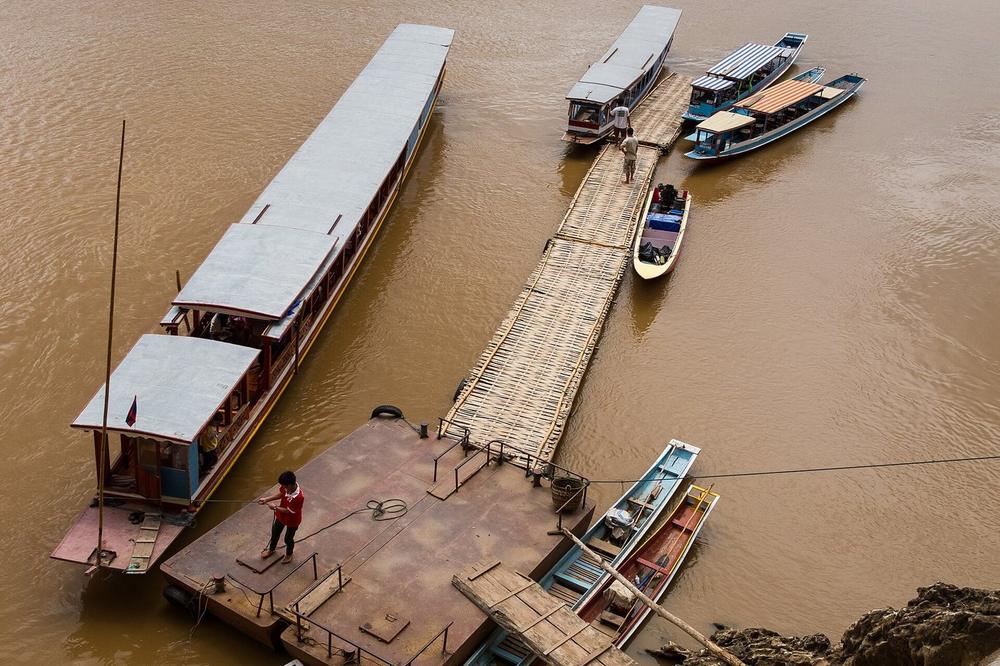
A slow boat north against the current to the Pak Ou caves, two limestone chambers stacked above the water and filled with several thousand abandoned Buddha figures left there over generations. Two hours up, a little over one back with the current behind you.
The afternoon is open. The two suggestions we push are the weaving households on the far bank of the Nam Khan, reached by a footbridge that is rebuilt every dry season, and doing absolutely nothing on a terrace above the river until it gets dark.
North to Nong Khiaw
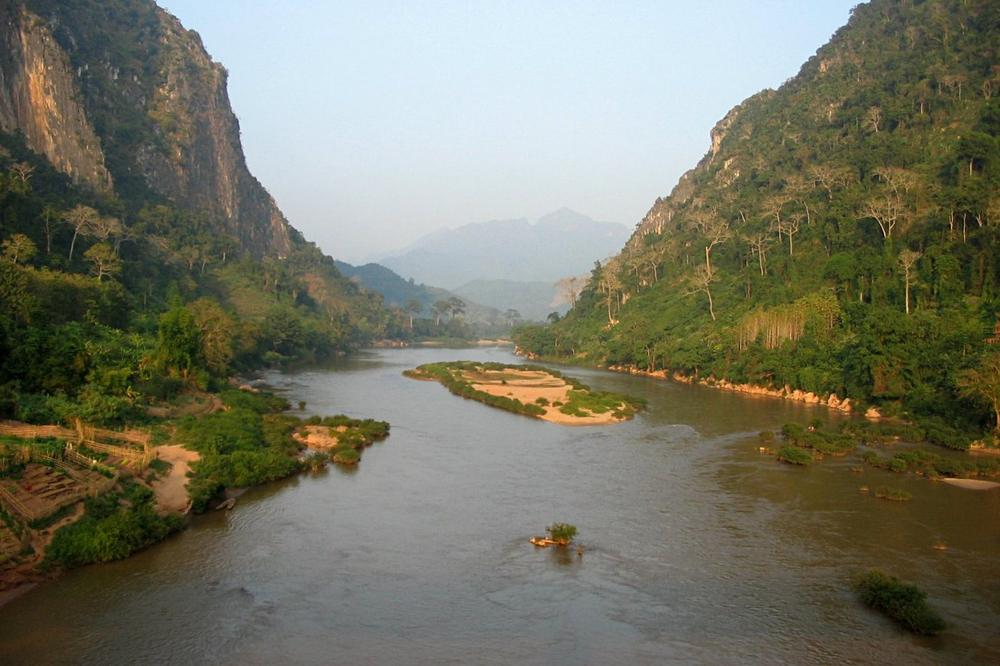
Three hours by road into the limestone, climbing most of the way. Nong Khiaw is where the Nam Ou runs between two vertical walls of rock and the town is a single street and a bridge.
Set expectations now: the electricity is not reliable after ten at night, cash machines here are not to be relied on either, and the best room in town is a timber bungalow with a fan, a mosquito net and a river in front of it. This is the part of the journey people remember, and it is also the part with the lowest thread count.
The Nam Ou
Two ways to spend it and we let you choose on the day, because the weather decides more than we do. The viewpoint above town is a steep, rooted hour and twenty minutes with a rope handline in two places, and the valley under mist at seven in the morning is the single image most people bring home from Laos.
The alternative is a longboat an hour upriver to Muang Ngoi, a village the road still has not reached, where the day is a walk out to the rice and back and a lunch cooked by whoever is cooking. Slower, flatter, and no worse.
Back to Luang Prabang, then the train to Vientiane
Three hours south by road in the morning, then out to the railway station, which sits well outside the town and needs a security queue built into the plan. The train itself is the easy part: air-conditioned, up to 160 kilometres an hour, and in Vientiane before the light goes.
Two hours of track replaces a full day of road. It is the only piece of new infrastructure in this country that genuinely rearranges an itinerary, and it is why nine days here now covers ground that used to need eleven.
Vientiane, in one day
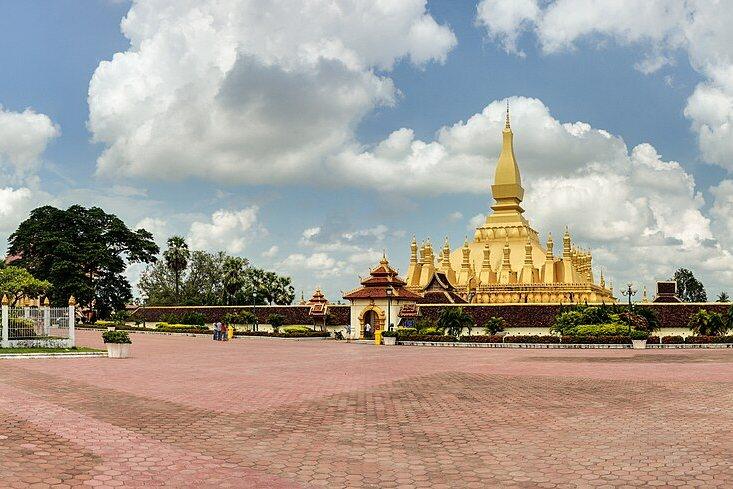
The capital is low-rise, unhurried and about a third as interesting as Luang Prabang, and we would rather say that than sell you three nights of it. One full day covers what matters. That Luang in the morning, the Patuxai arch built from cement donated for an airport runway, and Wat Si Saket, which is the oldest thing standing in the city.
The reason the day earns its place is the visitor centre run by the rehabilitation service for people injured by unexploded ordnance. Bombs dropped on this country half a century ago are still in the ground, and still going off; an hour there changes what the rest of the country looks like. It is plain, unsentimental and free to enter.
Sunset on the Mekong embankment, with Thailand on the far bank.
Depart Vientiane
Breakfast, then the airport, which is close in and rarely busy. Late flights get a day room rather than a lobby chair.
What it costs
| Party size | Comfortable | Considered |
|---|---|---|
| 2 travellers | USD 3,150 | USD 4,300 |
| 3 – 4 | USD 2,600 | USD 3,550 |
| 5 – 8 | USD 2,300 | USD 3,150 |
A party of two pays for the same car, the same driver and the same guide as a party of five, which is the whole of the difference between the columns. Season moves the number far less here than it does in Vietnam or Japan, because Luang Prabang has a small stock of good rooms and they are priced against each other rather than against demand.
Comfortable means the converted timber houses on the Luang Prabang peninsula and the best bungalow on the river at Nong Khiaw. Considered buys a genuinely better room in Luang Prabang and Vientiane, where such rooms exist, and the identical bungalow at Nong Khiaw, where they do not. We will not invent a luxury tier for a town that has none.
What a day on the ground actually costs across the region, before any operator margin, is set out on the prices page and country by country under cost by country.
What is and is not included
What the price includes
- Eight nights as listed, named by property in your quote
- A private car and driver throughout, including the Nong Khiaw road legs
- One national Lao guide with you for the whole journey
- First-class seats on the Luang Prabang to Vientiane train, and the road transfers to and from both stations
- The Mekong boat to Pak Ou, and the Nam Ou longboat if you choose it
- All entrance fees named in the itinerary
- Meals as listed day by day, and drinking water in the vehicle
What it does not include
- International flights into Luang Prabang and out of Vientiane
- The Lao e-visa, USD 50 for US, UK, EU and Australian passports; visa on arrival is also available
- Travel insurance, which we require and do not sell
- Meals not listed above, and all drinks
- Tips, which are customary here and never built into our prices
- The guided trek to the waterfalls behind Nong Khiaw, if you want a second walking day
The journey in pictures
Who this journey is wrong for
- Anyone who needs a five-star room every night. Two of the eight nights are a timber bungalow with a fan at Nong Khiaw, because that is the best bed on that river and there is no upgrade to sell you.
- Travellers whose dates fall between May and September. The monsoon turns the rural roads north of Luang Prabang slow or impassable, the Nam Ou runs brown and high, and the viewpoint path becomes a mudslide. November to February is the window; October and March work.
- Anyone who wants a coastline or a single great monument. Laos is landlocked and has nothing at the scale of Angkor or Bagan. What it has is a river, a town and the pace — if that reads as thin, book Cambodia in nine days instead.
- Parties who need a guaranteed departure time on day seven. Train seat allocation in Laos is genuinely difficult and we will occasionally have to put you in a car for five to six and a half hours instead.
- Families with children under about six. The drives are long for small legs, the Nong Khiaw bungalows have no pool, and the day in Vientiane turns on a museum about landmine injuries that we would not walk a young child through.
How this compares
| Journey | Days | Countries | From |
|---|---|---|---|
| Laos | 9 | Laos | USD 2,300 |
| Cambodia | 9 | Cambodia | USD 2,150 |
| Vietnam | 11 | Vietnam | USD 2,650 |
| Grand Indochina | 22 | Vietnam, Laos, Cambodia | USD 6,900 |
Laos is the country travellers most often bolt on to a Vietnam trip for two nights and most often say afterwards they should have given a week. If you have three weeks, the twenty-two-day route through all three countries carries five nights here and is the better buy. If you have nine days and want one country, this is the one that repays it, for the simple reason that it is the least crowded.
Which month suits which country across the region is set out under when to go, and the country itself under Laos.
Tell us your dates
Send the month, the number of travellers and anything already booked at either end. A first draft itinerary comes back within two working days.
Questions travellers ask most
Is the train really better than flying or driving between Luang Prabang and Vientiane?
On time, yes, and not marginally. The fast service covers it in about two hours against five to six and a half by road, at up to 160 kilometres an hour, air-conditioned, with a dining car.
The catch is at both ends: neither station is in its town, so add a road transfer and a security queue to the timetable. Counted door to door it is still half a day rather than a whole one, and it removes the least interesting drive in the country.
What do we need to enter Laos?
An e-visa costs USD 50 for US, UK, EU and Australian passports and normally takes four to five working days to process. Visa on arrival is also available. The fee is not refunded if an application is withdrawn or refused, so apply once and apply early.
We send the current application links with your first draft. Entry rules for every country we sell are kept up to date under visas and entry.
Four nights in Luang Prabang — is that too many?
It is the question we get most often about this route, and the answer is that the town has two days of sights and four days of value. Two nights buys the temples, the palace and the falls at a trot.
The fourth morning is when you stop navigating and start noticing: which cafe the guides use, what the market looks like at half past five, how quiet the peninsula goes after nine at night. If you would rather have that time on the river, we will move a night to Nong Khiaw instead.
Can we travel in the wet season?
You can, and it is cheaper, greener and almost empty. The rain in Laos falls in heavy bursts rather than all day, and the Kuang Si pools are at their fullest.
What we will not do in July or August is promise the northern road legs. The route to Nong Khiaw can close, and a journey built around the Nam Ou without the Nam Ou is not worth your money. For a June-to-September departure we redraw this as a Luang Prabang and Vientiane journey with a longer stay in each.
Read next
Tell us about the journey you have in mind
Dates, party size and the places you care about are enough to start. You get a draft route and an indicative price, not a brochure.