Delhi to Udaipur, past where most trips stop
The Golden Triangle is three cities and four days. This journey does those four days properly and then keeps driving west, into Ranthambore, Jodhpur and Udaipur, which is where Rajasthan stops being a monument circuit.
At a glance
- Duration
- 12 days, 11 nights
- Party
- Private, 2 to 8
- Starts
- Delhi
- Ends
- Udaipur
- Difficulty
- Easy to moderate
- From
- USD 3,200
The Golden Triangle — Delhi, Agra, Jaipur — is genuinely worth the four days it takes. The problem is that it is sold as a whole holiday, and it is not. Delhi to Agra is 230 km on the Yamuna Expressway, about three to three and a half hours, and Delhi to Jaipur is a shade over three hours since the new expressway opened. Three cities that close together, seen in five days, is a coach schedule with a monument at each end of it.
Twelve days is what it takes to do those three and then drive west into the desert. Jodhpur is a fort on a rock above a city painted blue. Udaipur is a lake with three palaces on and around it. Between Agra and Jaipur we put two nights at Ranthambore, which is a national park in a ruined fort, and where the tiger is a possibility rather than a fixture.
This is a driving journey. Four of the twelve days are transfers of three hours or more, and one of them is most of a day. That is the shape of Rajasthan; the distances are the reason the state has forts rather than suburbs.
Day by day
Delhi’s air quality is at its worst from roughly October to January, when stubble burning north of the city meets a winter temperature inversion. In October 2025 the city was again among the ten most polluted in the world, with an air quality index above 200; the 2024 annual average was around 178, which is classed as unhealthy. We do not hide this and we do not cancel over it. What we do is schedule the Delhi sightseeing early in the morning, keep outdoor time short in November, December and January, and get you out to Rajasthan, where the air is a different proposition. If anyone in the party has asthma or a heart condition, tell us at the enquiry and we will move the Delhi nights to the end and shorten them.
Arrive Delhi
Met at Indira Gandhi International and driven in. Most flights from Europe and North America land late at night or before dawn, which is why the first night is a real night rather than a technicality: we hold your room from the morning of arrival so that a 03:00 landing does not mean sitting in a lobby.
Nothing scheduled. If you land in daylight and have energy, Lodhi Garden is ten minutes away, is full of fifteenth-century tombs and people exercising among them, and is the gentlest possible introduction to the country.
Delhi, old and new, in that order
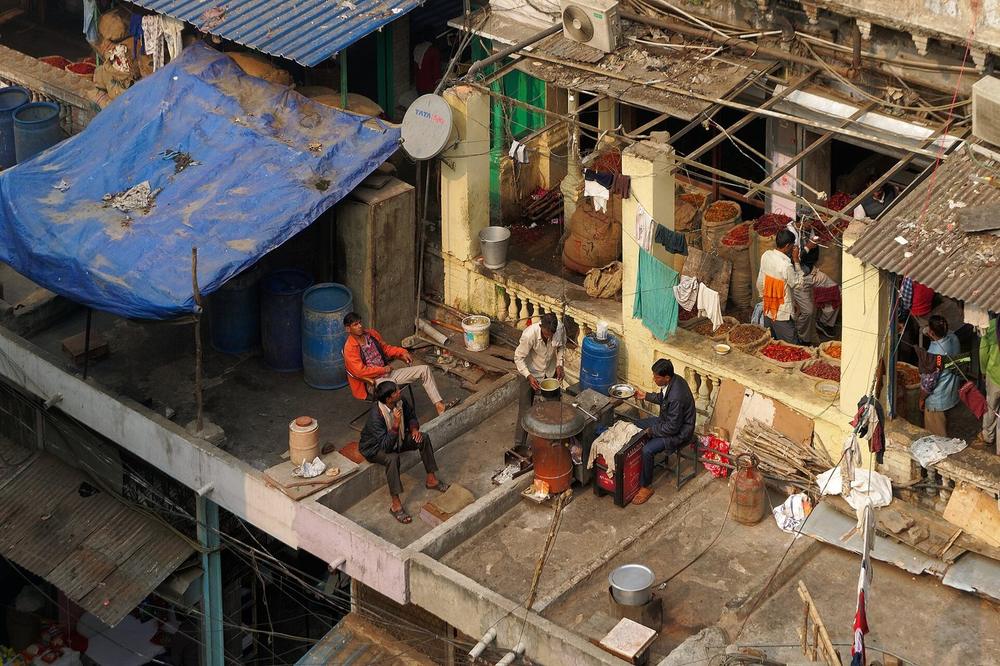
Out early. Old Delhi first, because it is the part that gets unbearable by eleven: Jama Masjid, then the lanes of Chandni Chowk on foot and by cycle rickshaw, through the spice market at Khari Baoli, where the air will make you cough and everybody who works there will find that funny.
The afternoon is the other three cities that share the name: Humayun’s tomb, which is the building the Taj is descended from and is much the better piece of architecture; the Qutb Minar complex; and a slow drive down the Lutyens avenues that the British laid out in the 1920s and 30s.
Delhi to Agra
Leave after an early breakfast and take the Yamuna Expressway: 230 km, three to three and a half hours, plus half an hour to clear central Delhi. It is a good road and a dull one, which is what you want on a transfer day.
The afternoon is Agra Fort, which almost everybody skips and should not. It is a red sandstone city of a fort, it holds the marble apartments where Shah Jahan spent his last years under house arrest by his own son, and from its east wall you see the Taj across the river bend — which is the view he had. Do the fort first and the Taj second, and the second morning lands differently.
The Taj at opening, then east to Ranthambore
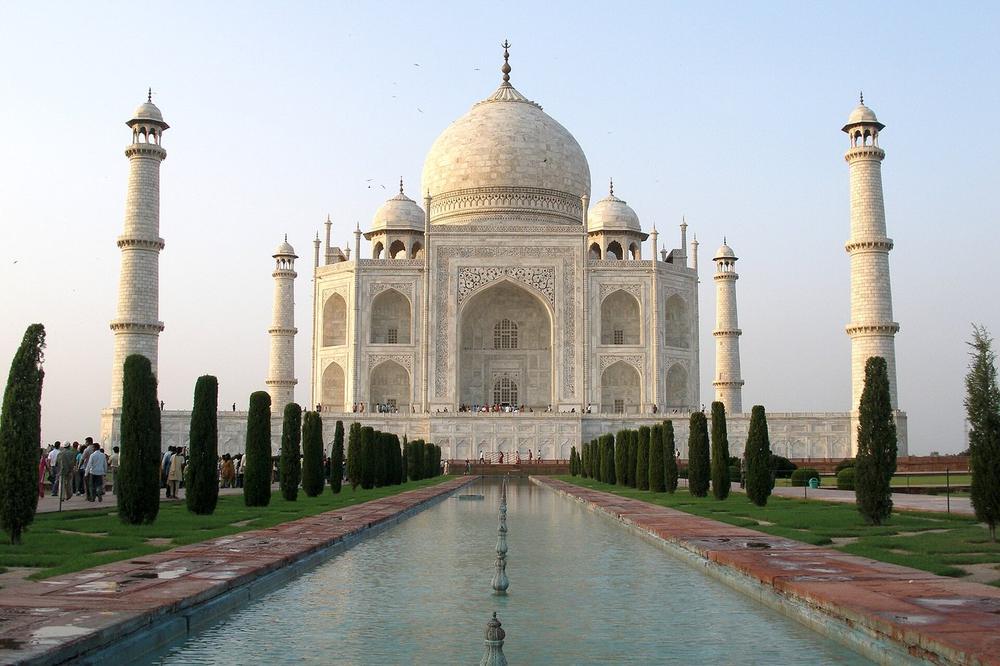
At the gate before it opens. The foreigner ticket is INR 1,300, which includes shoe covers, a bottle of water and the e-rickshaw token for the last stretch, and there is a further INR 200 to go inside the mausoleum chamber itself. Pay it. The inlay work on the cenotaphs is the reason the building is famous and you cannot see it from the platform.
A caution worth having in advance: the marble is discolouring. Pollution, dust and river-borne biological growth have been yellowing it for years, the conservation body has been running well below its staffing, and the courts have been pressing the government about it since long before your booking. The building is open and it is extraordinary. It is not white.
Then east. The train from Agra to Sawai Madhopur is the civilised way to do this leg and we book it under the Foreign Tourist Quota, which opens 365 days ahead against your passport rather than the 120 days the general quota gets. If the quota is gone, we drive, and it is a long afternoon.
Ranthambore: two safaris
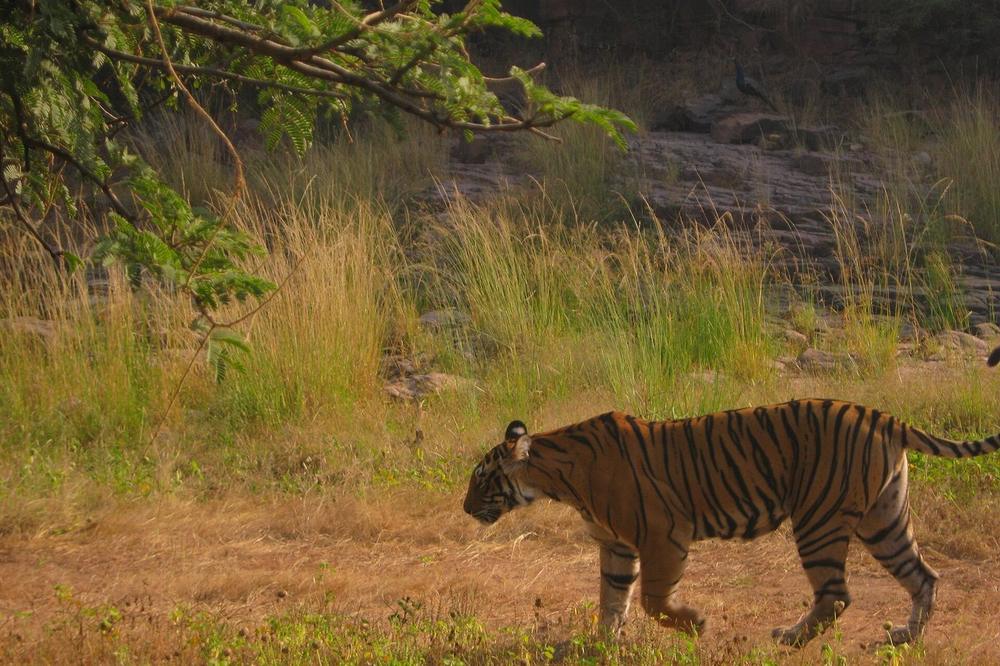
Out at dawn and again in the mid-afternoon. Ranthambore runs ten safari zones and they are allocated by permit, not by choice: zones one to five have historically produced the higher tiger sighting rates, zones six to ten are quieter in both senses. We book 30 to 60 days ahead to have any say at all in which zone and which slot you get, and even then the allocation is the park’s.
Between the two drives, the fort. Ranthambore Fort sits inside the reserve on a flat-topped hill, is tenth-century in parts, and is still a working temple that Indian families climb to on a Wednesday. It is the best two hours in the park that do not involve a jeep.
Ranthambore: one more drive, then Jaipur
A third safari at dawn, which is the one that most often works — three drives is roughly where the odds become reasonable rather than optimistic. Breakfast at the lodge afterwards and leave by mid-morning.
Jaipur by the middle of the afternoon. The rest of the day is deliberately light: a walk through the old city inside the pink walls, which was laid out on a grid in 1727 and is still using it, and the Jantar Mantar observatory at the end of the afternoon when the instruments throw long shadows and finally make sense.
Jaipur: Amber, and the city palace
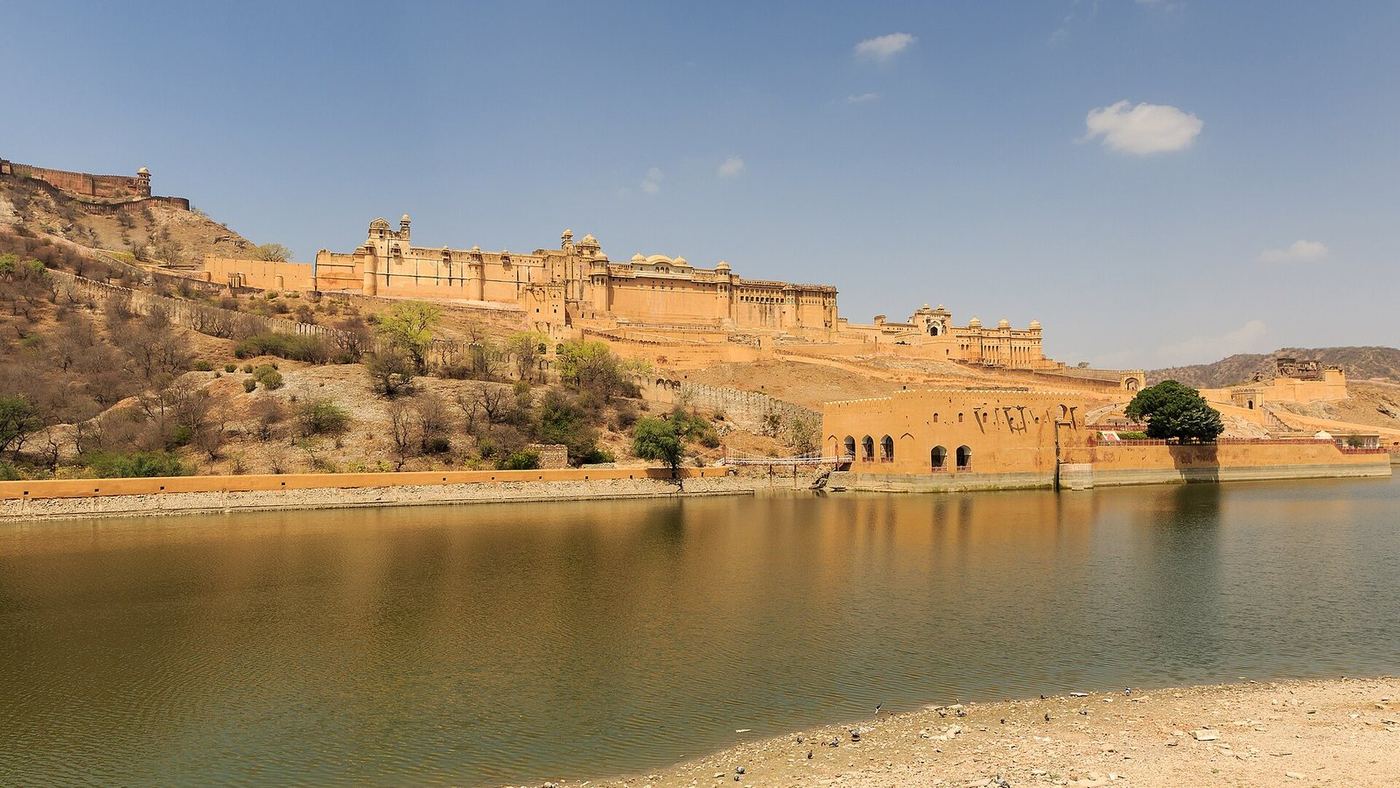
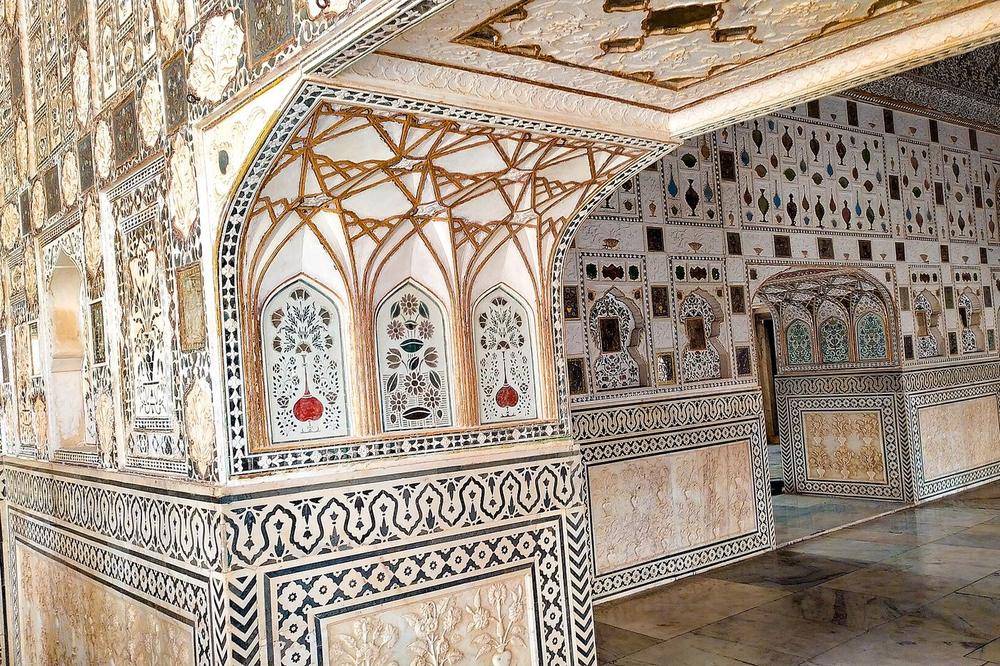
Amber Fort first thing, up the ramp on foot. We do not put clients on the elephants, here or anywhere, and we will say why if you ask. Foreigner entry is around INR 200, though the published figure moves and we cover it in your quote either way. The mirrored hall and the Ganesh Pol are the set pieces; the water gardens below in the lake are the thing people photograph on the way up without knowing what they are.
The afternoon is the City Palace and the textile quarter. Jaipur is a working craft city — block printing, blue pottery, gem cutting — and the difference between a workshop and a commission-paying showroom is the single most useful thing a guide does for you all week. We take you to workshops. We do not take a commission, from anybody, ever.
Jaipur to Jodhpur
A long westward drive across the Aravalli range and out into drier country. We break it at Pushkar or at the Ajmer dargah depending on the day of the week and how busy the shrine is; both are working religious sites and neither is a photo stop.
Jodhpur in the late afternoon. The blue of the old city is real, it is lime and indigo wash, and the explanation everyone gives you about Brahmin houses is only half of it — the rest is that it keeps insects off and the walls cool.
Jodhpur: the fort above and the city below
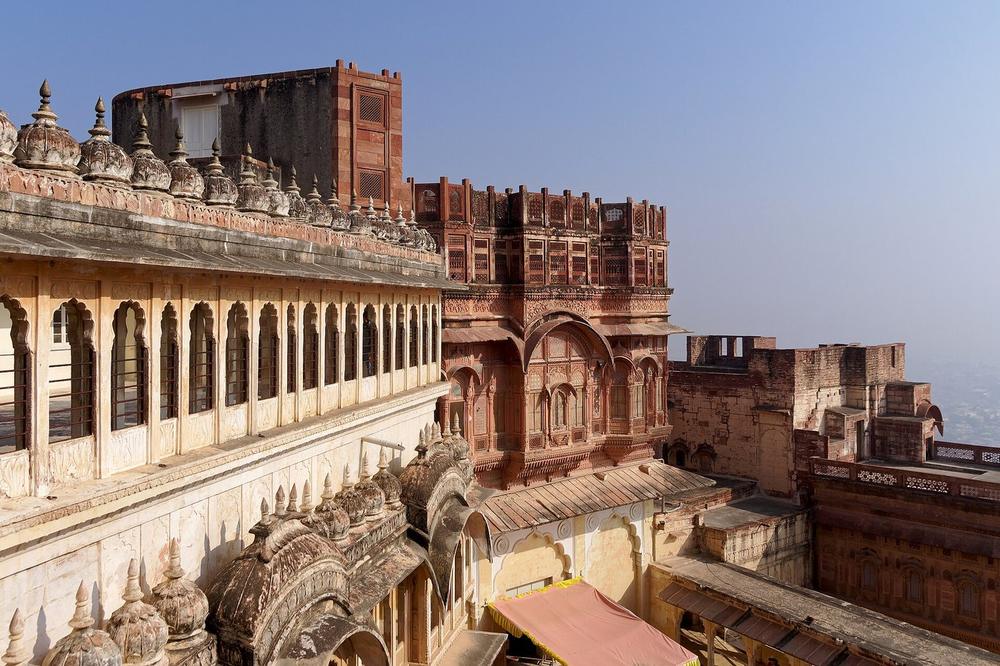
Mehrangarh in the morning, and it is the finest fort in India by some distance: a sheer cliff with the walls built straight up off the top of it, cannon marks from a siege still in the gate, and an audio guide that is genuinely worth taking even with a guide beside you. Give it three hours.
The afternoon is the old city on foot: the clock tower market, the spice sellers, the stepwell at Toorji ka Jhalra that was excavated out of a rubbish dump in the last fifteen years and is now where the neighbourhood swims. Evening on a roof, looking up at the fort, which is lit.
Jodhpur to Udaipur, by way of Ranakpur
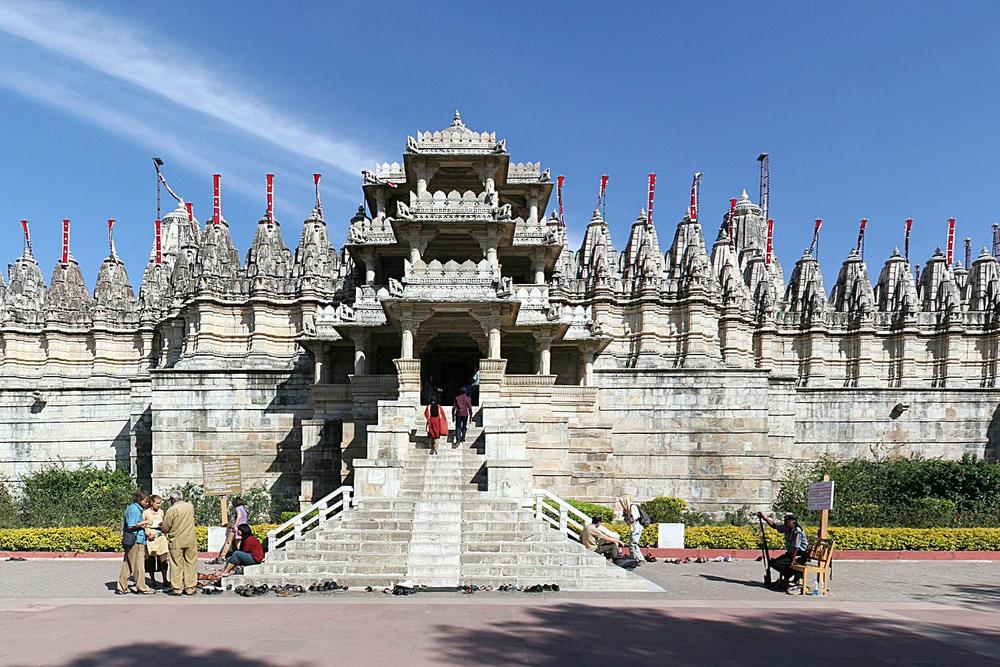
South through the Aravallis on the road that most people fly over. The stop is Ranakpur, a fifteenth-century Jain temple in white marble with more than a thousand carved pillars, no two of them the same, standing in a wooded valley with almost nobody in it. It is the single most surprising building on this route and it exists on the itinerary because of the drive, not despite it.
Into Udaipur in the late afternoon. Sunset from the eastern shore of Lake Pichola, then dinner.
Udaipur
The City Palace in the morning — it is the largest in Rajasthan and the route through it is one-way and slow, so we go at opening. Then the boat on Lake Pichola, which is the only way to see what the city is actually shaped like, and Jagdish temple on the walk back up.
The afternoon is free, and the two things we push are the miniature painting workshops in the lanes behind the palace, where you can watch squirrel-hair brushwork done at a scale that seems impossible, and Sajjangarh above the city for the last hour of light. Neither is compulsory and doing nothing beside the lake is a defensible use of the day.
Depart Udaipur
Breakfast, then the transfer to Maharana Pratap airport for the connection to Delhi or Mumbai. Udaipur is a small airport and the domestic connection is usually smoother than driving back the way you came, which would take two days.
What it costs
| Party size | Comfortable | Considered |
|---|---|---|
| 2 travellers | USD 4,350 | USD 5,900 |
| 3 – 4 | USD 3,600 | USD 4,900 |
| 5 – 8 | USD 3,200 | USD 4,350 |
India is a tier D country on this site, USD 190 to 300 per person per day for a party of four, land only, and twelve days at the middle of that band is where the from-price sits. The vehicle is a large part of it: an Innova-class SUV with a driver runs roughly USD 65 to 90 a day inclusive of fuel, tolls, parking and the driver’s own allowance, and a sedan roughly USD 45 to 60. On a route with four long transfer days, that line matters more than it does in a city journey.
Two travellers pay 36% more each than a party of five, for the plain reason that the car, the driver and the guide are the same car, driver and guide either way.
Comfortable is the mid-range band, broadly USD 60 to 120 a night, and in Rajasthan that buys a converted haveli rather than a chain hotel, which is the better room in almost every town on this route. Considered is the Oberoi and Taj tier, USD 180 to 400 a night and upwards, and it is worth the difference in exactly three places on this itinerary: Agra, Jodhpur and Udaipur. We will tell you where it is not worth it. How a quote is built line by line is set out on the prices page.
What is and is not included
What the price includes
- Eleven nights as listed, each property named in your quote
- A private car and driver for the full twelve days, with fuel, tolls, parking and the driver’s allowance
- A national guide, plus city guides in Delhi, Agra, Jaipur, Jodhpur and Udaipur
- Three shared-jeep safaris at Ranthambore, with the zone permits
- All monument entries, including the Taj foreigner ticket at INR 1,300 and the INR 200 mausoleum surcharge
- The Agra to Sawai Madhopur rail leg, booked on the Foreign Tourist Quota
- Meals as listed, all meals at the Ranthambore lodge, and water in the vehicle
What it does not include
- International flights, and the domestic flight out of Udaipur
- The Indian e-Tourist visa: USD 10 for a 30-day visa on an April to June arrival, USD 25 from July to March, plus a 3% bank charge. UK passports pay a higher reciprocal fee
- Travel insurance, which we require and do not sell
- A private jeep at Ranthambore instead of a shared one, which we can arrange
- Meals not listed, and all drinks
- Tips for the driver and guides, which are customary in India and are never built into our prices
The journey in pictures
Who this journey is wrong for
- Anyone who can only travel in May or June. Rajasthan in those two months is extreme daytime heat, and no amount of air conditioning makes a fort at midday a good idea. October to March is the season; February and March are the pick of it. We will decline the booking rather than sell you June.
- Anyone who needs to see a tiger. Three drives at Ranthambore is a reasonable chance and nothing more. Zones one to five sight more often than six to ten, the zone is allocated by permit rather than chosen, and zones one to five close altogether in the monsoon. If a tiger is the point of the trip, the reserve to book is Bandhavgarh and the trip is a different one.
- Travellers with asthma or a heart condition who insist on Delhi in November, December or January. The air is genuinely bad in that window and we would rather move your Delhi nights to a single arrival night at the end than have you wheezing through Chandni Chowk.
- Anyone who does not want to sit in a car. Four days on this route are transfers of three hours or more and two of those are most of a day. The distances are why Jodhpur and Udaipur are still worth going to; there is no version of this journey that removes them.
- Anyone who wants the palaces without what is in front of them. There are hawkers at every monument gate, there is visible poverty on the road into every city, and a guide who tells you otherwise is not doing the job. India is not a difficult country to travel and it is a confronting one to look at.
How this compares
| Journey | Days | Region | From |
|---|---|---|---|
| Rajasthan and the Golden Triangle | 12 | North India | USD 3,200 |
| Kerala and south India | 10 | South India | USD 2,700 |
| India, Nepal and Bhutan | 21 | North India and the Himalaya | USD 8,200 |
| Sri Lanka and south India | 19 | South Asia | USD 5,900 |
North and south India are not two versions of the same country and choosing between them on price is the wrong axis. Rajasthan is forts, desert, distance and noise; Kerala is water, green, Christianity and Communism, and it is far quieter. Travellers with three weeks do both, in that order, with a flight in between. The country page at destinations, India lays out how the regions differ by season, and how many days is the honest arithmetic of fitting India into a fortnight.
Tell us your dates
Send the month, the number of travellers, and whether Ranthambore stays in. A first draft comes back within two working days.
Questions travellers ask most
What visa do we need, and when should we apply?
The e-Tourist visa, applied for online. A 30-day visa costs USD 10 for arrivals between April and June and USD 25 for arrivals from July to March — so a winter trip, which is what this journey is, falls in the USD 25 band. The one-year version is USD 40. All of them carry an additional 3% bank charge, and UK nationals pay a higher reciprocal fee than US, EU and Australian passports.
The application window opens 120 days before travel and the visa must be applied for at least four days before arrival. Most are issued within about 72 hours. Apply a month out, not a week out, and send us the approval so that we can put it in your documents. Our visas and entry page carries the position for every country we sell.
Is Delhi worth two nights given the air quality?
Between February and September, yes, without hesitation — Humayun’s tomb and the old city are among the best things in north India.
From October to January it is a judgement call and we make it with you. That is the worst window: stubble burning to the north, a temperature inversion holding it down, and an index that regularly goes above 200. Our standard adjustment is to sightsee between seven and eleven in the morning, cut the afternoon, and keep the second Delhi night as an arrival buffer rather than a sightseeing day. For a party with a respiratory condition we cut Delhi to one night and add it to Udaipur.
How much of the Taj Mahal ticket do we actually need?
The foreigner ticket is INR 1,300 and it includes shoe covers, a bottle of water and the e-rickshaw that takes you the last stretch to the gate, since fuel vehicles are kept away from the monument. The mausoleum chamber is a separate INR 200 on top, and it is the part worth paying for: the inlaid cenotaphs and the marble screen are not visible from outside.
Go at opening rather than at sunset. Expect the marble to look yellowed in places — pollution and biological growth from the river have been discolouring it for years and the conservation effort has been chronically understaffed. It is still the building everyone says it is.
Will we see a tiger at Ranthambore?
Possibly. We build in three drives rather than the one or two most twelve-day itineraries manage, because a single drive is close to a lottery ticket.
The mechanics matter. The park has ten zones; one to five have historically produced more sightings, six to ten are quieter. Zones are allocated by permit and the allocation is the park’s, not ours, which is why we book 30 to 60 days ahead to have any influence on zone and time slot. In the monsoon, roughly July to September, zones one to five close entirely and only six to ten run — another reason this journey is a winter one.
Read next
Tell us about the journey you have in mind
Dates, party size and the places you care about are enough to start. You get a draft route and an indicative price, not a brochure.