Seoul to Busan, with one night in a monastery in between
Three nights in Seoul, then the KTX south to a temple that takes guests, two nights among Gyeongju's burial mounds and two in Busan, which is the least Seoul-like city in the country.
At a glance
- Duration
- 9 days, 8 nights
- Party
- Private, 2 to 8
- Starts
- Seoul
- Ends
- Busan
- Difficulty
- Easy
- From
- USD 3,900
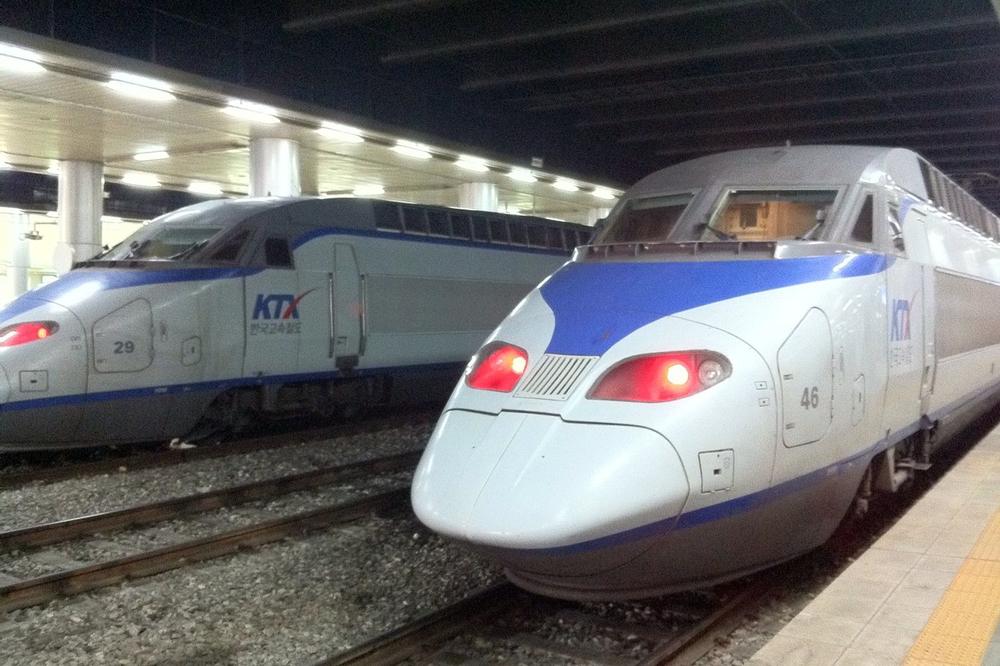
South Korea is a small country with a fast railway down the middle of it, which means nine days is enough to see it properly rather than enough to sample it. The whole length of the Gyeongbu line, Seoul to Busan, is 2 hours 15 minutes on the fastest train and usually 2 hours 30 to 2 hours 50. Everything on this route sits on or beside that line.
Three nights is the working minimum for Seoul: one for the palaces and the old quarter, one for whatever you came for — the DMZ, the galleries, the food streets — and one to lose to jet lag without losing a sight. The five nights that follow are the point of the journey. Seoul is a world city and it behaves like one. Gyeongju is a town of orchards with fifth-century royal tombs in the middle of it, and Busan is a port that grew up a mountainside.
The one night that changes the shape of the trip is the monastery. It is a templestay in a working temple, with a dawn service, a meal eaten in silence and a mattress on a heated floor. Nobody has ever told us it was the comfortable night of the journey. A good number have told us it was the one they remember.
Day by day
On 1 September 2026 the SRT and Korail high-speed services were integrated. Former SRT trains now run and are sold as KTX-Sancheon, and departures from Seoul Station and from Suseo appear together in one Korail+ search. Advice written before that date treats them as two separate booking systems; it is out of date. We hold your seats ourselves, so this is background rather than homework, but if you buy a Korail Pass separately, confirm Suseo-departure coverage at the point of purchase.
Arrive Seoul
Met at Incheon and driven in. Incheon sits on reclaimed land west of the city and the transfer is entirely a question of the hour: quick at midday, slow from four in the afternoon. Nothing is scheduled on this day and we do not pretend otherwise by putting a temple on it.
If you land in the morning and want to stay upright, the walk that works is the Cheonggyecheon stream east from the city hall end, then up into Jongno for dinner. It is flat, it is shaded, and it ends where the food is.
Seoul: the palace quarter, and what is behind it
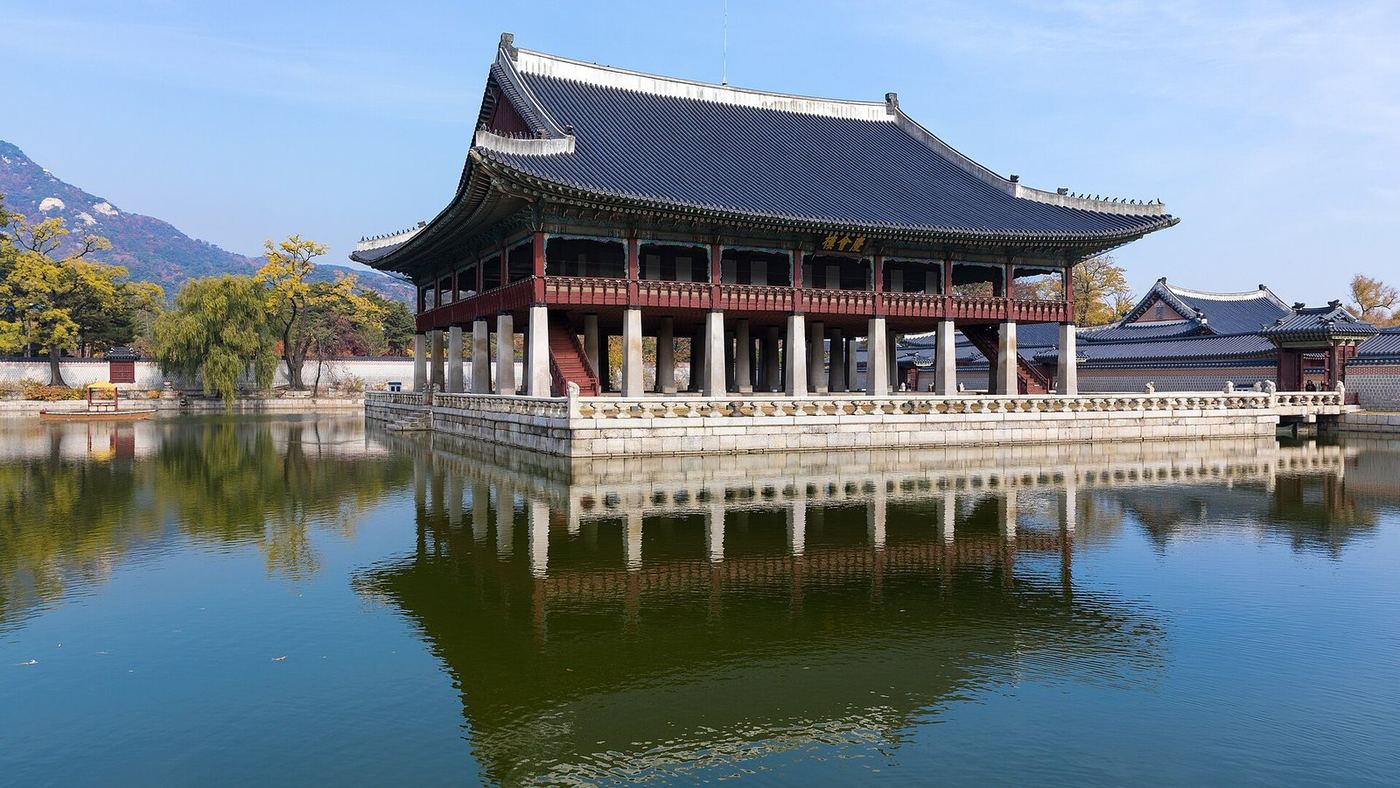
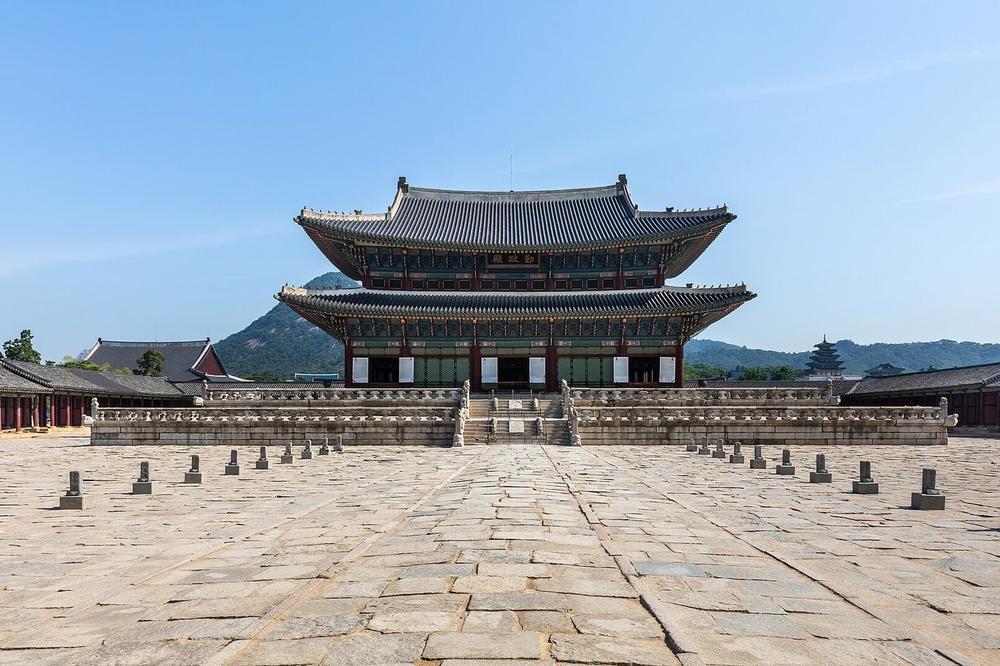
Gyeongbokgung at opening, before the rented hanbok crowds fill the courtyards, then Changdeokgung and its Secret Garden, which is the finer of the two palaces and the less photographed. Between them, the guide will explain why so much of what you are looking at is a reconstruction: the Japanese colonial period demolished most of Gyeongbokgung, and the rebuild has been running since the 1990s.
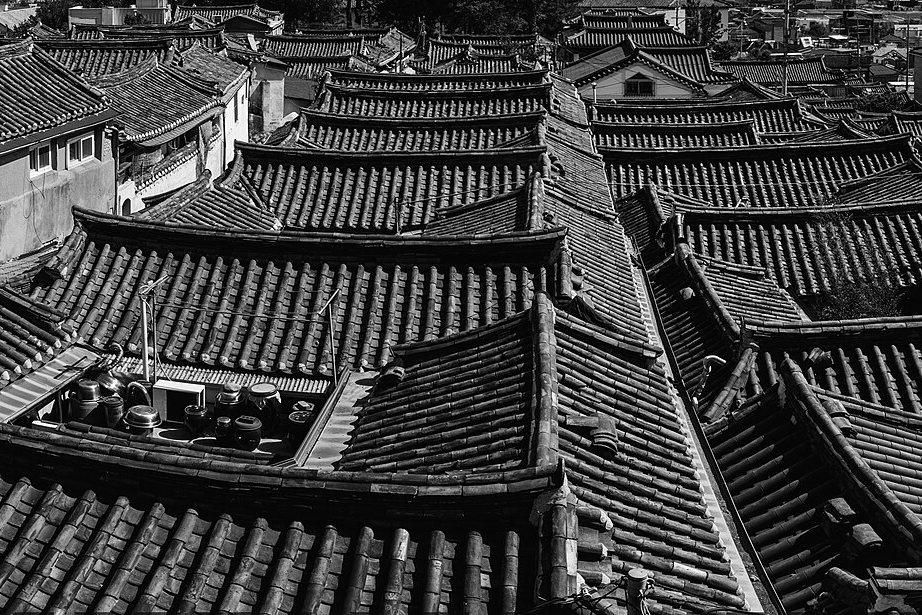
The afternoon goes to Bukchon and Ikseon-dong. Bukchon is a residential district, not an attraction, and the city now marshals visitor hours in its lanes after years of complaints from the people who live there. We go early, we keep to the through streets, and we do not stand outside anyone’s door.
Seoul: the border, or the city
Two honest options and we will build whichever you choose. North: the DMZ, a half day out and back with a guide, the observation posts and the Third Tunnel. Access to the Joint Security Area itself has been suspended and reinstated more than once in recent years and is decided by the military, not by us; we confirm what is running about a fortnight out and tell you plainly if it is not.
South: the other city. Leeum and the Seoul Museum of Art in the morning, Gwangjang market at lunchtime for bindaetteok and raw beef, and the evening in Euljiro, which is a printing and metalwork district that fills with bars after the workshops shut.
Seoul south by KTX, then a monastery
Mid-morning down the Gyeongbu line. Standard class end to end is currently about KRW 53,900 and first class about KRW 78,400; we get off short of Busan, and the ticket is in the price of your journey either way. The train is the quiet, unremarkable, entirely reliable spine of travel in this country and it sets the tone for the rest of the week.
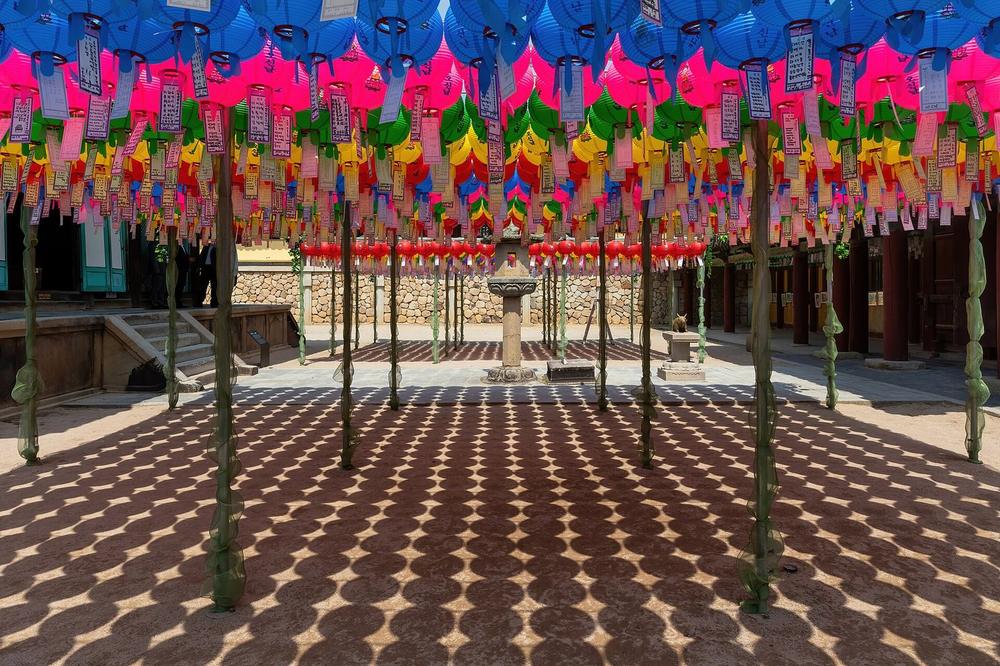
You are at the temple by late afternoon, in time to be shown what happens and when. The evening service is at dusk, the meal is eaten in silence from a set of nested bowls that you wash yourself, and the lights go out early because the morning service does not wait.
The temple morning, then Gyeongju
Woken before first light for the morning service. Those who want it can do the prostrations; those who do not can sit at the back, and nobody minds. Tea with a monk afterwards is the part most guests would not have predicted mattering.
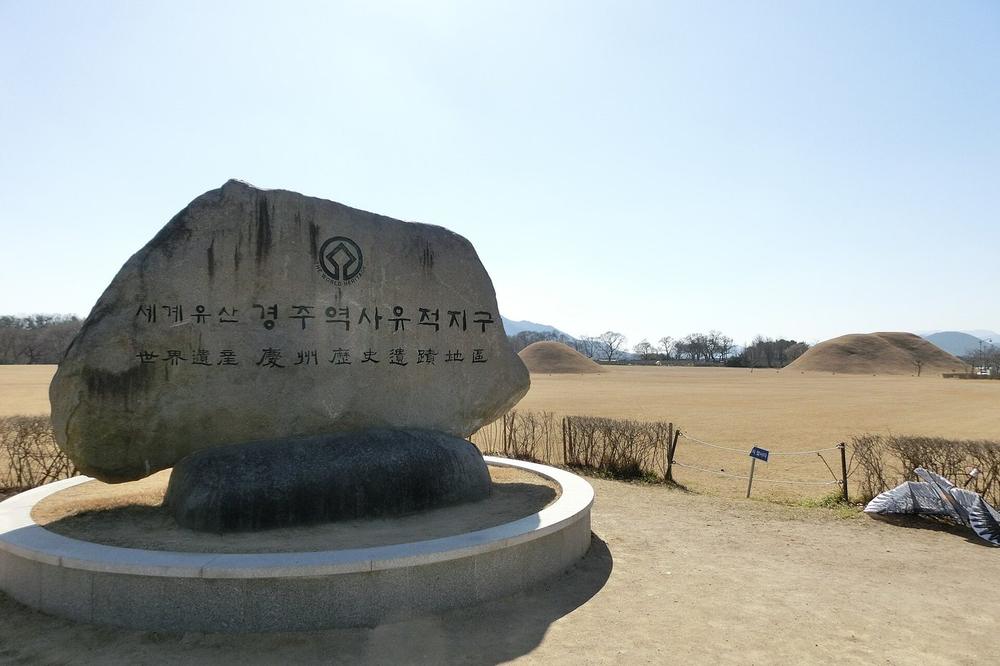
Down to Gyeongju before lunch. The town was the capital of the Silla kingdom for nearly a thousand years and the evidence is not in a museum, it is in the street plan: grass-covered royal tombs the size of small hills sit between the houses and the coffee shops. The afternoon is the tumuli park and Cheomseongdae on foot, and Donggung palace and Wolji pond after dark, when the water does the work.
Gyeongju: Bulguksa, Seokguram and the valley
Bulguksa at opening. The stonework of the terraces and the two pagodas in the main courtyard is eighth-century; the timber above it is not, and the guide will show you the join. Seokguram is up the mountain behind it, and the granite Buddha in its chamber is now behind glass in a climate-controlled room, which is a disappointment worth being warned about in advance rather than at the door.
The afternoon runs south into the Namsan valley, where the Silla carvings are still out in the open on the hillside, unroofed and unticketed. It is the walking half of the day and the reason two nights here is right rather than one.
Gyeongju to Busan
A short leg south in the morning — the same rail corridor, the last stretch of it. Busan is built on hills that run down into the sea and it does not have a centre in the way Seoul does; it has districts stacked above a port.
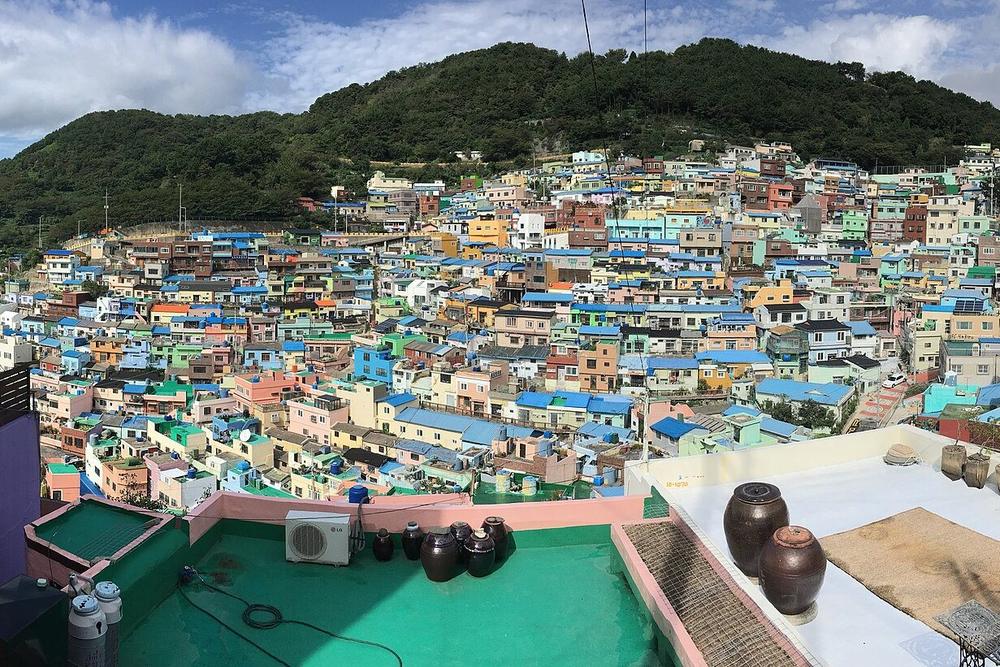
The afternoon is Jagalchi, which is a working fish market where the woman who sells you the fish takes it upstairs and it is cooked while you sit down, and then Gamcheon, a hillside of painted houses that was a refugee settlement during the Korean War and is now, uncomfortably, a photograph. We go late, when the coaches have gone and people are coming home.
Busan: temple, coast, and the last dinner
Beomeosa in the morning, up the flank of Geumjeongsan. It is a Zen monastery and a busy one on a weekend, which after the silence of the templestay is an instructive contrast rather than a repeat.
The afternoon belongs to the coast: the boardwalk around the headland at Igidae, from which you can see the whole of the city arranged along the water, or the ferry to Taejongdae if the sea allows it. Dinner is grilled eel or dwaeji gukbap, a pork soup that Busan is stubborn about, and neither of them is a tourist dish.
Depart Busan
Breakfast, then the transfer to Gimhae for a regional flight, or back on to the KTX if you are flying home from Incheon. The end-to-end run north is the same 2 hours 15 minutes at its fastest, and we book it with a margin rather than to the minute.
What it costs
| Party size | Comfortable | Considered |
|---|---|---|
| 2 travellers | USD 5,300 | USD 7,200 |
| 3 – 4 | USD 4,400 | USD 6,000 |
| 5 – 8 | USD 3,900 | USD 5,300 |
Korea is a tier B country for us, which is USD 340 to 460 per person per day for a party of four, land only. Nine days at the lower end of that band is where the from-price comes from.
Two people pay 36% more each than five do, because a car, a driver and a national guide cost the same whether two people or eight are using them. That single factor moves the number further than the hotel grade does, and it is the first thing to look at if the quote is over your budget.
Comfortable is good four-star in Seoul and Busan, and the hanok guesthouse in Gyeongju, which is better than any four-star in that town. Considered is five-star in the two cities — Korea has a lot of it and it is genuinely good value against Tokyo — and the same guesthouse in Gyeongju and the same room at the monastery, because there is no upgrade to either and we will not invent one. The full supplier-level breakdown is on the prices page.
What is and is not included
What the price includes
- Eight nights as listed, each property named in your quote
- One night of templestay in a working monastery, including both services and meals
- A national guide throughout, and a private car and driver on every road day
- All rail tickets on the Gyeongbu line, reserved, in standard class
- Entrance fees to everything named in the day-by-day, including the Changdeokgung garden timed entry, Bulguksa and Seokguram
- The DMZ half day with a guide, if you choose it on day three
- Meals as listed, and water in the vehicle
What it does not include
- International flights into Incheon and out of Gimhae or Incheon
- Travel insurance, which we require and do not sell
- First-class rail upgrade, at roughly the difference between KRW 53,900 and KRW 78,400 on the full run
- Meals not listed, and all alcohol
- Tips, which are far less expected in Korea than elsewhere in Asia and are never built into our prices
- Any K-ETA fee that applies to a 2027 departure
The journey in pictures
Who this journey is wrong for
- Anyone who wants the monastery night to be a hotel with a view. You sleep on a floor mattress in a shared building, you are woken before dawn, the bathroom is down the corridor, and there is no alcohol on the mountain. We can replace it with a second night in Gyeongju, but then this is a different journey.
- Anyone who needs a fixed dry window in late June or July. Korea’s jangma rains have no calendar — they start in June or early July and run anywhere from two to six weeks, and the end date is genuinely unpredictable. We will not promise you a rain-free fortnight in that window and you should distrust anyone who does.
- Anyone who came for Seoul. Five of the eight nights are outside it. If what you want is the shopping, the nightlife and the studio tours, book four nights in one hotel and skip the rest of this page.
- Travellers who cannot manage stairs and gradients. Busan is a mountainside, Seokguram is above Bulguksa, Namsan is a hill walk and Gamcheon is a long stair in either direction. There are lifts and cars for some of it, not for all of it.
- Anyone hoping to add Japan in the same nine days. Narita to Incheon is only 2 hours 40 minutes in the air, which is exactly why people try; the result is two countries half seen. The eighteen-day Japan and Korea journey is what that idea actually costs in time.
How this compares
| Journey | Days | Country | From |
|---|---|---|---|
| South Korea | 9 | South Korea | USD 3,900 |
| Japan and Korea | 18 | Japan, South Korea | USD 9,400 |
| Japan | 12 | Japan | USD 6,400 |
| Taiwan | 9 | Taiwan | USD 3,300 |
Korea is the cheapest of the three Northeast Asian countries we sell and, for a first visit to the region, the easiest to move around. What it does not have is Japan's density of things that survived the twentieth century, which is why the Gyeongju nights matter so much here: they are where the deep history is. Read the country page at destinations, South Korea before you fix a month, and when to go if you are weighing Korea against its neighbours in the same season.
Tell us your dates
Send the month, the number of travellers, and whether the monastery night stays in. A first draft comes back within two working days.
Questions travellers ask most
Do we need a K-ETA to enter Korea?
Not for a departure in 2026. The K-ETA requirement is waived for 67 countries and territories, including the United States, the United Kingdom, all EU member states and Australia, through 31 December 2026.
That waiver is temporary and has been extended before. For any departure in 2027 we re-check it at the time of booking and again before ticketing, and you should assume a registration may be required. The waiver is a separate matter from the visa-free stay itself, which is up to 90 days for most Western passports and is not affected.
Has the SRT and KTX merger changed how our tickets work?
Only in the background. Since 1 September 2026 the two high-speed operators run as one: the old SRT services are now sold as KTX-Sancheon, and Seoul Station and Suseo departures appear in a single Korail+ search rather than in two systems that did not talk to each other.
We reserve your seats before you arrive, so the practical effect on this journey is nil. It matters if you buy a rail pass yourself for extra days at either end, in which case check that Suseo departures are covered before you pay.
Can we skip the templestay?
Yes, and roughly one party in four does. The night goes back into Gyeongju, which means three nights there and a slower pair of days in the Namsan valley, or into Seoul if you would rather have a fourth city night.
What you lose is the one part of the week that is not arranged for visitors. The temple runs its own day whether or not you are in it, which is the whole point. Decide before we book: templestay places are limited and are not held on speculation.
Which months are right, and what about the rainy season?
April to June and September to November. Late April and May give you the blossom-and-green shoulder with mild days; October and early November give the clearest air of the year and the colour on Namsan and at Beomeosa.
Avoid mid-June to late July if a dry fortnight matters to you. The jangma rains begin in June or early July and last two to six weeks with no reliable end date — the official swimming season does not open until late July or August partly for that reason. August is hot and humid but not written off; the temperature is the problem then, not the rain.
Read next
Tell us about the journey you have in mind
Dates, party size and the places you care about are enough to start. You get a draft route and an indicative price, not a brochure.